Ari
CherryAri is a vulnerable opioid user whose need for shelter and relief from withdrawal draws him into a chain of dealings with Gary, the narrator, and Manny. His brief rescue in an abandoned house offers only temporary comfort: the same desperation that makes him dependent on other people also leaves him exposed to exploitation.
Identity and Circumstances
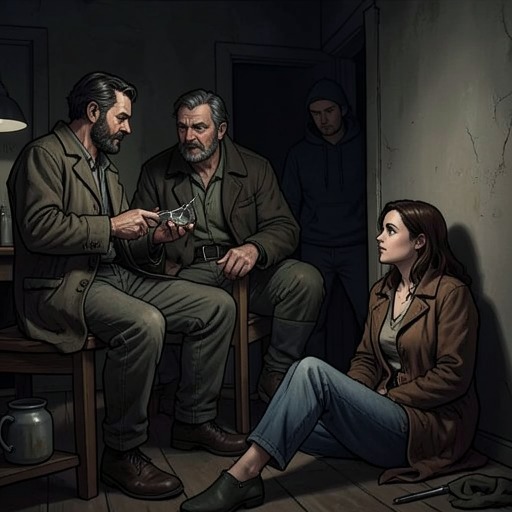
After his family threw him out, Ari came to live near Gary, who put him in an abandoned house. The shelter was bitterly cold. Gary had improvised a gas connection to the stove, whose four burners were left on; sitting beside it brought intense heat to the upper body, but remaining there too long still meant freezing. Ari wore his sleeping bag like a cape, a makeshift answer to a home that offered neither reliable warmth nor security.
Ari’s need was not only material. The narrator describes him as someone who believed he should never have to pay for anything or do anything useful for anyone. In the house, however, withdrawal stripped away any appearance of independence: he was sick, cold, and waiting for Gary. The account presents his self-reliance less as a strength than as a belief unable to protect him when he needed help.
The Narrator’s Intervention
The narrator gives Ari cigarettes while they wait. In a later visit, he finds Ari pacing in the cold, wrapped in the sleeping bag, with an upset stomach and a runny nose. The symptoms are familiar to the narrator, who says withdrawal came to him about once a week. Seeing another person suffer brings his own condition back into view, which is why he hates witnessing withdrawal in others: Ari’s misery reflects his own.
Ari apologizes for an earlier incident, saying he had not known what was happening. The narrator gives him an eighty and tells him he does not have to repay it. The help comes with a sharp boundary: Ari must connect him with someone decent, not another dealer like Gary. The narrator threatens to set the abandoned house on fire with Ari inside if the connection leads to another Gary, and insists that he will deal directly rather than conduct business through Ari. The exchange combines aid with distrust; Ari receives what he needs, but the narrator refuses to make him an intermediary.
Ari injects 40 milligrams and is relieved. He then calls Manny, who agrees that the narrator can come by, though Manny is all the way in Painesville. The narrator dislikes the long drive but makes it. The urgency of Ari’s withdrawal has thus opened a route to a new supplier, while the narrator’s insistence on dealing directly marks his effort to avoid repeating the failed arrangement with Gary.
Exploitation and Narrative Significance
That connection is dangerous. The narrator identifies Manny as an informant who had already sent many people to prison, and names Ari as one of his victims. Manny sold Ari a scale for ten dollars, with drugs on it. Ari thought the price was a bargain; five minutes after buying it, he was arrested for drug possession and possession of drug-related equipment with intent to resell. What looked like a cheap purchase was a trap designed to turn Ari’s need and limited judgment into evidence against him.
Manny’s protection appears selective. Police sometimes raided his room at Euclid Lodge, searched everyone, and took one or two young people away, while Manny and Chauncey never went to prison. The officers even had a room in the same corridor, directly opposite Manny’s. Ari’s story therefore sits within a wider pattern in which the people most exposed to the drug trade bear its legal consequences, while the informant who helps expose them remains untouched. His episode also sharpens the narrator’s precarious position: the search for drugs and relief leads him toward a person whose apparent usefulness is inseparable from the risk of betrayal.