Gilda
CherryGilda is a friend and companion within the narrator’s drug-using social circle, linked most closely to Roy and Libby. Her story is not presented as a self-contained biography: it emerges through parties, shared drug use, a short-lived shared home, and competing accounts of betrayal. Those fragments make her both a source of closeness and a figure around whom the group’s resentments gather.
Identity and Introduction
Gilda first appears with Libby at a Halloween party in Tremont, where Megan arrives in a Nazi costume. Gilda says that, as a Jewish person, she is not offended by it, and believes Megan is unlikely to encounter trouble. The episode does not make Gilda’s response the party’s final word: Jael is angry because her grandparents were deported. Megan removes the swastika armband but still has on the brown shirt and boots, with no change of clothes, so the group leaves. The competing responses distinguish Gilda’s personal reaction from another guest’s family history; the costume’s impact is not settled simply because Gilda is unoffended.
After the party, the group returns to the narrator’s apartment, where the cocaine has run out and Megan wants to go home. Gilda has already left the party early with Roy, whom she met there. Their departure introduces Roy as someone she can leave with readily, but the later account of their relationship is less secure: Libby alleges that Gilda continues to cheat on him.
Relationships and Conflict
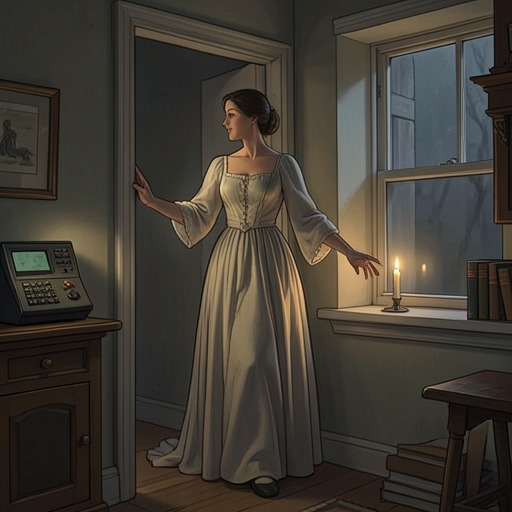
Gilda and Libby try living together after signing a lease. Their apartment has little furniture beyond their beds and an inflatable couch, a small television with a DVD player built into its base, and perhaps a hundred plastic martini glasses. The narrator says the home is uncomfortable to visit because it holds too many dreams that will not become reality. The sparse furnishings and accumulated plastic glasses give the shared space a concrete, provisional quality, while the narrator’s judgment emphasizes the distance between the life the apartment might promise and the life he sees there.
The arrangement ends when Gilda and Libby break the lease after a major argument; the narrator does not know, or does not explain, what began the dispute. Their accounts of each other make the rupture more vivid but do not resolve it. Libby says Gilda keeps cheating on Roy with Ricky, whom Libby considers disturbing; she says she saw him kiss a seventeen-year-old. Gilda, in turn, describes Libby as unstable and promiscuous. These are accusations reported through the narrator, not independently confirmed facts. Their mutual contempt suggests how intimate knowledge has become ammunition between former housemates.
At a Sunday-night 1980s party, Gilda and Libby dance together while Roy stays away, saying he is poor. The narrator drinks vodka at the bar and says he cannot dance. When the group leaves, the two women are excited and tell him that two men had come up behind them, boxed them in, and pressed against them while they danced. The incident places their closeness in a public setting and shows them sharing an account of unwanted attention as they leave together.
Heroin, Intimacy, and the Social Circle
The narrator’s connection with Gilda is also shaped by repeated drug use. When he has money on a Friday, he buys heroin and injects it with Libby and Gilda. Roy arrives later and injects heroin too; the group drinks Gato Negro and smokes all the cigarettes. The narrator says he wants to have sex with Gilda, but the account establishes his desire, not a relationship or an encounter between them. During the same gathering, Gilda spills half a bottle of wine on the carpet and calls herself clumsy. The domestic mishap sits alongside the group’s intoxication, making the scene simultaneously convivial and disordered.
At another point, the narrator and Libby are talking about whether their relationship is ending, while Gilda is in the living room and can hear them. The awkwardness of being overheard and Gilda’s frustration help turn the conversation toward taking heroin: the group decides that they would all feel better if they used. The narrator contacts Trois-Cents to buy it, and Libby and Gilda want to go along. Gilda is therefore not merely a witness to the couple’s argument; she is present within the circle’s response to discomfort, where heroin offers an immediate shared diversion rather than a resolution.
Narrative Role
Gilda’s scenes are conveyed through the narrator’s retrospective, partial viewpoint. Her opinions and conflicts reach the reader through what she says, what Libby reports, and what the narrator observes; the account does not provide an independent explanation of her motives or settle the allegations surrounding Ricky. This limited perspective matters especially after the shared apartment ends: the lease is broken, the argument remains unspecified, and the former housemates continue to describe each other in sharply hostile terms.
Across the party, apartment, dance floor, and drug gatherings, Gilda’s ties repeatedly overlap. Roy is a romantic partner whose absence and alleged betrayal become part of Libby’s complaints; Libby is first a housemate and dance companion, then an adversary; the narrator is a friend and heroin-using companion who also desires her. The scenes do not supply a final account of Gilda’s relationships. Instead, they show how a social world built on shared nights and shared drugs can produce genuine companionship alongside suspicion, exposure, and abrupt separation.