Roy
CherryRoy is the narrator’s longtime friend and housemate, a practical helper whose loyalty repeatedly collides with deception and betrayal. Across years of shared homes, drugs, money, and favors, he can be both the person who gets the narrator work or sends him supplies in Iraq and the person who distorts a story to Emily or steals from a shared grow operation. The narrator’s attachment persists through those reversals: even while recognizing Roy’s worst behavior, he continues to defend him and accept what the friendship offers.
Identity and Early Friendship
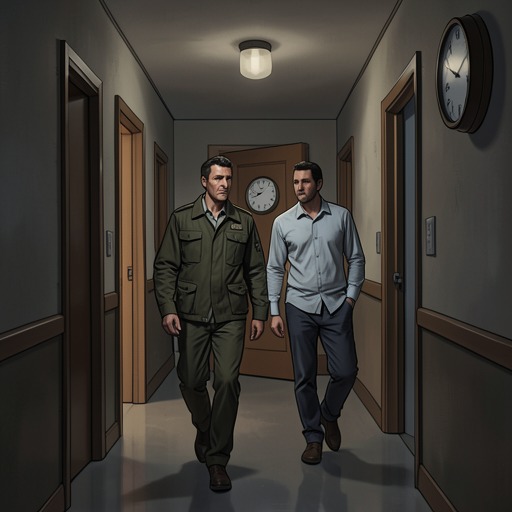
Roy is described as a tall Irishman with black hair, living in a shabby sports jacket he wears every day. He drinks large bottles of beer and rolls cigarettes with pipe tobacco. The narrator presents him as an established friend rather than a new acquaintance: he remembers birthdays, does not look for trouble, and can be counted on to show up. Roy also has a close family tie to Joe, his adopted cousin, with whom he paints houses.
The narrator’s account of Roy is affectionate but never uncomplicated. Early on, Roy rides in the front seat of James Lightfoot’s newly purchased, faded-blue GTI while the narrator sits in back. The three are high on Train Wreck smoked in a White Owl cigar, and James Lightfoot argues with Roy about Joe’s decision to join the United States Marine Corps. James Lightfoot insists that Roy should talk his cousin out of enlisting, while Roy regards Joe’s choice as more or less understandable. Their disagreement establishes Roy as someone who does not simply echo his friends, even when James Lightfoot frames disagreement as a failure of love.
Roy’s connection to the narrator’s other friends is practical and intimate. In May, the narrator moves into an apartment on Murray Hill with Roy, Joe, James Lightfoot, and others. Roy works painting houses with Joe, and the two earn a reasonable living. When Joe prepares to leave for Parris Island, Roy remains behind; he does not enlist in the Marines. Later, when the narrator himself joins the Army, Roy is present with Joe as they get drunk to mark the occasion. Their companionship is built around ordinary routines—work, drinking, and shared plans—as much as around any single dramatic episode.
Help, Loyalty, and Shared History
Roy uses his familiarity with the narrator to make things happen. When the narrator loses the chance to remain at university and needs work, Roy calls Gerasene’s pizzeria on his behalf and invents a story that the narrator broke his arm skateboarding at Cain Park. He then arranges a job for him at a restaurant on Mayfield. The narrator does not get the role he first tries—his manager moves him from busboy to salad preparation—but Roy’s intervention supplies a route into paid work when the narrator is otherwise adrift. The favor is characteristic: Roy is willing to speak for a friend, and willing to lie to do it.
The same familiarity continues across distance. During the narrator’s military service, Roy sends him a substantial care package: roughly thirty grams of marijuana baked into brownies, a Johnny Cash poster, three packs of Winston Red cigarettes, and Percodan 10 mg tablets hidden in an Advil bottle. The shipment comes through Roy’s girlfriend. When Roy realizes that she has written his real return address on the package, he sends her back to retrieve it; she brings it home, and Roy replaces the address with a false one before sending it again. The episode makes generosity inseparable from risk and evasion. Roy supplies precisely the things the narrator wants, but the package also documents the care taken to conceal who sent it.
Roy remains an important source of news about Joe while the narrator is deployed. After reading that Joe’s battalion has suffered heavy losses, including nineteen soldiers killed in a single week, the narrator tries to reach Joe by email and gets no reply. Roy tells him that Joe is alive and in one piece, and promises to pass along any further news. Here Roy’s role is direct and reassuring: he bridges the distance between the narrator at war and the cousin whose safety he cannot confirm for himself.
The Friendship’s Betrayals
Later, Roy’s conduct makes the narrator’s loyalty harder to sustain. The narrator has seen Roy steal Tramadol from a terminally ill border collie, an act that reinforces his judgment that Roy can be a bastard. Yet when Ricky threatens Roy, claiming military experience and promising to hurt him, the narrator takes Roy’s side and prepares to fight Ricky. The protection is not based on an idealized view of Roy; the narrator knows what he has done and still feels bound to act on their history.
That bond is also tested by gossip. Roy tells Emily that the narrator invited Zoë to eat pancakes, presenting the incident in a way that makes it sound like a secret romantic date. The narrator’s account emphasizes that he had invited several people and that Zoë was the only one who accepted; he admits, however, that he may have been in love with her and was pleased she came. Emily hears Roy’s version, confronts the narrator with a sarcastic remark about the pancakes, and leaves a few days later, taking household belongings with her. The narrator holds Roy responsible for distorting the story, though his own account preserves the awkwardness and uncertainty that Roy’s retelling removes. His affection for Roy does not prevent him from seeing the damage the gossip causes.
Roy’s reputation among their circle is similarly unstable. The narrator says that Roy has spoken badly about him behind his back, and later concludes that Roy was lying in a dispute involving Libby. Yet Roy still visits the narrator’s apartment, where he is introduced to the narrator’s drug supplier, Pills and Coke. Roy arrives in a reindeer sweater, a detail the narrator finds embarrassing, and asks whether the narrator is alone. He asks for a clean needle; when the narrator says he has only little-used syringes and bleach, Roy accepts that arrangement. After Pills and Coke sells him an Oxy 80 mg tablet, Roy and the narrator inject the dissolved pills together, Roy taking half of his tablet and the narrator taking all of his. The scene places Roy inside the narrator’s later drug economy not just as a visitor but as a fellow user, where intimacy and risk share the same room.
Partnership, Rupture, and Narrative Role
Roy also becomes involved in a marijuana-growing operation with the narrator and Emily. He was initially their partner in the grow room, but the narrator says that Roy stole equipment and was expelled from the arrangement. One of the operation’s three 1,000-watt lamps had to be given to Roy when the others told him to leave, leaving two lamps in their possession. The narrator is still stuck with the expensive tent Roy had insisted they buy, now an unwanted remnant of the partnership. At Home Depot in Severance, while the narrator tries to choose electrical wire for the operation, Roy needles him and exchanges knowing looks with Emily. The narrator experiences her apparent alignment with Roy as another rupture in a relationship already under strain. Later, when Roy robs them, Emily is astonished; the narrator’s account makes clear that the betrayal confirms what the earlier theft had already suggested.
Roy’s appearances are episodic, but together they show how the narrator’s dependence on familiar people can survive evidence of their unreliability. Roy provides work, drugs, news, and companionship; he also lies on the narrator’s behalf, spreads a damaging version of events, takes medication from a dying dog, and steals from a shared business. His favors do not cancel his betrayals, nor do his betrayals erase the history that keeps the narrator defending him. That unresolved pattern gives Roy his particular importance in the story: he embodies a friendship sustained less by trust than by habit, need, and the stubborn claim of shared years.