James Lightfoot
CherryJames Lightfoot is the narrator’s friend, a gentle and often troubled man whose loyalty appears in ordinary favors as well as in moments of crisis. A pacifist with a lazy eye and a half-sized heart, he is repeatedly treated as an easy target; yet he remembers birthdays, looks after people, and remains beside the narrator through addiction and instability. His friendship is neither simple rescue nor simple ruin: he can offer practical support, but his own distress and drug use also help pull them both back into self-destructive habits.
Identity and Background
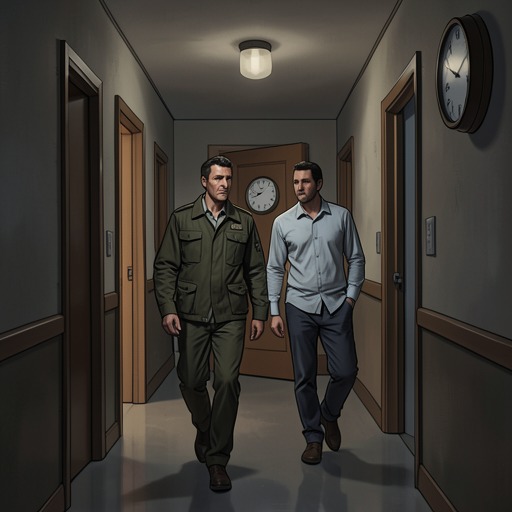
James Lightfoot is introduced as unusually considerate by the narrator’s standards. He remembers birthdays and does not look for trouble. The narrator describes him as a pacifist in the strictest sense, born with a lazy eye and a half-sized heart, and wearing his long brown hair down. His eye, the narrator says, had made his life difficult from the beginning. These physical vulnerabilities shape how others see him: he is thin, visibly unable to fight, and regarded as someone from whom little could be taken. The narrator recognizes the cruelty of that social arithmetic without pretending it protects James Lightfoot from it.
The house associated with James Lightfoot remains arranged as a family home, even though his mother no longer lives there. Photographs on the walls trace him from childhood through school, making his vulnerability seem longstanding rather than newly acquired. The pictures preserve a version of him before the adult scenes of arrests, addiction, and financial trouble. The narrator does not claim to know what caused James Lightfoot’s mental distress; he even wonders whether they were both born troubled, while questioning how much the narrator’s own war experience explains about himself. The uncertainty matters: James Lightfoot is presented through the narrator’s loyalty, but not reduced to a diagnosis or a single explanation.
Friendship and Everyday Life
A drive to the bank captures the intimacy and disorder of their friendship. James Lightfoot has just bought a faded-blue GTI for three hundred dollars. The narrator could have walked, but likes both James Lightfoot and the car, so he rides with him; Roy sits in front while the narrator is in the back. They are high after smoking a White Owl cigar filled with Train Wreck marijuana. James Lightfoot plays a noise album at full volume, its sound like static to the narrator, who suspects that James Lightfoot may be bluffing about enjoying it. The scene’s details make their companionship feel improvised and unguarded: a cheap car, an abrasive soundtrack, and friends getting high together.
On that same drive, James Lightfoot berates Roy over Roy’s cousin Joe deciding to join the United States Marine Corps. James Lightfoot wants Roy to dissuade Joe and treats that intervention as a duty owed out of love for their cousin. Roy sees the decision as more or less ordinary; James Lightfoot sees silence as a failure of care. His insistence reveals a moral seriousness that can become overbearing, but it also shows how readily he understands friendship and family as obligations to protect one another.
By May, James Lightfoot is among the people living with the narrator, Roy, and Joe in an apartment on Murray Hill. He belongs to a loosely assembled household whose members share space amid work, drinking, and unstable plans. Later, before the narrator returns to the armed-forces career center, Emily drives him to James Lightfoot’s mother’s house. The narrator and James Lightfoot get high while the narrator shaves at the kitchen sink. James Lightfoot tells him about Kashi, an Indian student in Cleveland whose student visa has expired and who is considering military service as a way to become an American citizen. The exchange places James Lightfoot in the narrator’s everyday circle during the period leading toward deployment, although the evidence does not suggest that James Lightfoot himself enlists.
Vulnerability, Arrest, and Practical Help
James Lightfoot’s life repeatedly brushes against the police and the consequences of unpaid fines. On one night when the narrator and Emily are out at a theater performance about Ella Fitzgerald, James Lightfoot tries to enter a building, mistakenly believing it to be the narrator’s. The narrator has missed his call. Police find a knife and drugs on James Lightfoot and arrest him. The episode turns on a small misrecognition—the wrong building—and on the missed phone call, leaving his attempt to reach the narrator unanswered at the moment it might have mattered.
Later, the narrator drives James Lightfoot to the Linndale police station to pay a fine. James Lightfoot has other outstanding fines and fears that entering a police station himself will result in his arrest, so he gives the narrator the money and asks him to pay it. The narrator has taken cocaine before leaving. At the station he hands over his driver’s license and then notices cocaine on the part of it he touched. He is embarrassed and anxious but stays; the officer returns without mentioning it, and the fine is paid. James Lightfoot’s dependence on the narrator here is concrete and precarious: an errand that should be routine requires someone else to cross the threshold for him, while the narrator brings his own drug use into the transaction.
The attempt to exchange checks exposes another constraint on James Lightfoot’s independence. Because he is unable to maintain a bank account, he asks the narrator to deposit checks he has made out to him and give him the equivalent cash. At the bank, staff refuse even though James Lightfoot is present with his passport and the narrator has enough money in his account to cover the checks. They treat the pair as undesirable, and they leave without cashing them. After driving James Lightfoot back to his mother’s house, the narrator phones the bank’s toll-free number, identifies himself as a veteran, and complains about the treatment. The complaint does not undo the refusal, but it shows the narrator taking James Lightfoot’s humiliation personally and trying, in his own way, to answer it.
Addiction and Mutual Dependence
James Lightfoot’s care for others coexists with serious emotional distress. The narrator calls him mentally troubled but admits to knowing neither the details nor any definite cause. He describes James Lightfoot as persistently unhappy because people treat him badly, and as someone who can seem almost normal before suddenly seeming not to be. The narrator also says James Lightfoot has a strong suicidal tendency. These observations are explicitly limited by the narrator’s uncertainty; they offer a portrait of suffering, not a complete account of its origins.
James Lightfoot later tells Emily about a free detoxification program at a hospital in downtown Cleveland, funded by the State of Ohio, and helps her learn that she can attend. When Emily enters treatment, the narrator is supposed to remain at home and endure opioid withdrawal. He does not manage it. James Lightfoot visits, and the two inject heroin together, allowing the narrator to avoid the painful withdrawal he had meant to face. James Lightfoot’s presence is thus both an act of companionship and a route back to drug use. The narrator says James Lightfoot remains his friend, but recognizes that spending time with him is a mistake when trying not to inject.
Their connection is not only a shared vulnerability. James Lightfoot buys much of the marijuana that the narrator and Emily grow, finds customers, and resells it. The narrator describes him as a significant help and says he can be organized when he is not too high. The contrast is central to his character: he can make himself useful, provide a link to treatment, and help sustain the household economically, while also being so distressed and entangled in drugs that his company undermines attempts at abstinence. The same friendship offers assistance and intensifies dependence.
Later Acts of Loyalty and Narrative Role
When the narrator needs cash to obtain cocaine from Rider, James Lightfoot lends him one thousand dollars. Rider eventually supplies cocaine that has been badly cut, and the narrator brings it to James Lightfoot. The loan is a substantial practical gesture, made when the narrator is under pressure and fears the onset of withdrawal; the poor quality of the drugs then turns the exchange into another episode of suspicion and disappointment. James Lightfoot’s generosity does not resolve the narrator’s predicament, but it places him once more among the people the narrator calls on when need becomes immediate.
In a later scene, James Lightfoot is driving while the narrator sits in the passenger seat wearing an Indians cap and eating an apple. James Lightfoot raises the possibility that cameras may be mounted on streetlights. The brief image differs from the earlier chaotic car ride: the narrator is eating an ordinary piece of fruit, while James Lightfoot is alert to the possibility of surveillance. The supplied episodes do not establish the ultimate outcome of this scene, but the detail preserves their recurring proximity to risk.
James Lightfoot’s narrative importance lies in the way the book refuses to separate tenderness from damage. He argues with Roy because he believes love demands intervention, pays forward care by directing Emily toward treatment, and lends the narrator money; he also joins the narrator in injecting heroin and remains part of the couple’s drug economy. The narrator’s affection for him persists alongside frank recognition of his sadness and destructive influence. Rather than presenting friendship as a cure, the narrative shows it as a bond that can carry people through immediate trouble while leaving the deeper cycle intact.