Black
CherryBlack is a recurring but guarded figure in the narrator’s drug-dealing and heroin-buying network. His importance emerges less through a fully explained personal history than through the shifting routes by which heroin and information pass among him, Raul, and the narrator—and through his eventual imprisonment, which redirects the narrator to Raul.
Place in the Network
In a period of less than two months, Pistol, Cookie’s brother, offered to sell the narrator heroin, then compromised himself by shooting Manny. Black subsequently called the narrator. Pistol later returned under house arrest, and the narrator was expected to deal with him again. The rapid succession of offers, violence, and changing restrictions establishes the instability of the network in which Black operates, though the account does not specify what Black’s call concerned.
Black also appears in a conversation about K-Mart, a man suspected of passing information to the police. After K-Mart described approaching a car while its occupant waited for Pistol and trying to talk about drugs, Black looked at Raul. Raul said he believed K-Mart. The exchange places Black among those weighing a possible informant’s account, but does not establish what Black himself thinks or knows.
Information, Trust, and Uncertainty
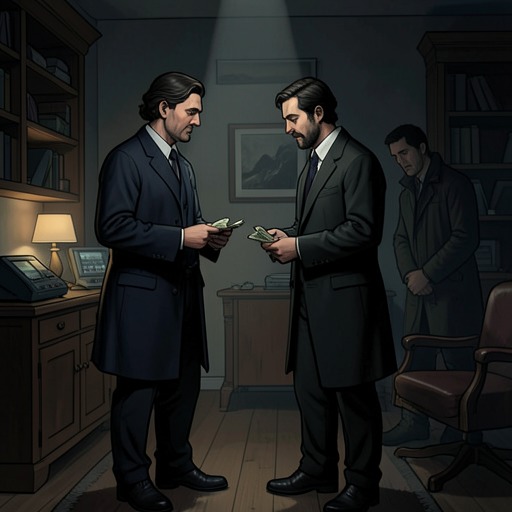
After Mike was robbed of 28 grams of cocaine, the narrator accompanied him to his blue Mercury, left with him, and later gave him another pill at home. The narrator then called Black, who said he had found something and that the narrator could meet him if he wanted. The narrator agreed to come, bought a gram, and mentioned the robbery to Black. Black said he knew nothing about it; the narrator did not believe him, although he considered that disbelief unimportant. Black’s claim and the narrator’s suspicion remain unresolved: the episode supplies no confirmation that Black had information about the robbery or was involved in it.
That uncertainty is part of Black’s narrative function. He is a potential source of drugs or leads, but the narrator’s access to him does not produce reliable knowledge. The drug economy’s practical exchanges—calls, meetings, purchases—coexist with suspicions that cannot be settled from the narrator’s limited account.
Imprisonment and Aftermath
Black’s imprisonment changes the narrator’s immediate route to heroin. One rainy evening, as the narrator left a psychiatrist’s office, Raul called to say Black was in prison. Raul minimized the situation and predicted Black might be released on bail within days, or perhaps a week or two. In the meantime, Raul offered to sell the narrator heroin, and the narrator asked to see him immediately.
They arranged to meet at the exit from St. Clair Avenue. Raul arrived close to ten at night and explained that he had been in his uncle’s car when his uncle was arrested, and that the police had kept them there. The narrator paid him and received a packet wrapped in white plastic that looked like a piece of a grocery bag. Black’s absence thus becomes concrete not through details of his arrest, which are not given, but through the replacement arrangement: Raul supplies the narrator while Black is incarcerated. The account leaves Black’s release and later role unsettled.