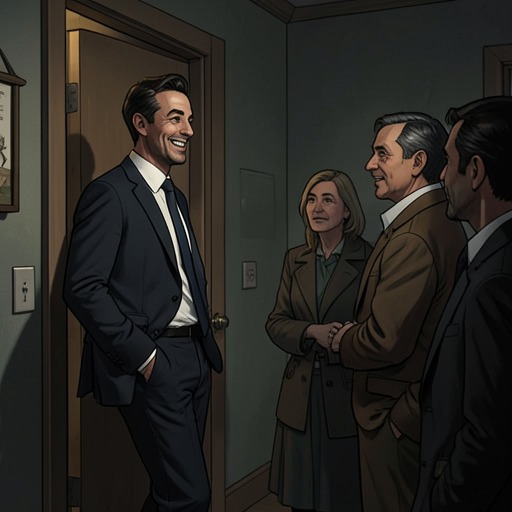
Pierre Barque
DingoPierre Barque is an old friend of the narrator, a painter whose defining trait is an almost boundless cordiality. After years apart, he reappears near the Forêt de Fontainebleau, enters the narrator’s household, and resumes a place in its daily life. His cheerful domestic habits and freely improvised painting stand in comic contrast to the calamity that ends his visit: Dingo seizes Barque’s portrait and disappears with it into the forest.
Identity and Character
Barque is introduced as a small, corpulent man with a round, frank face and a manner free of bitterness or visible worry. His warmth is not presented as a passing mood but as the constant that organizes his personality. The narrator describes his cordiality as absolute and disproportionate, something so integral that removing it would be like removing life itself. Barque sings habitually, greets the narrator with exuberant familiarity, and uses one affectionate nickname for a wide range of people: friends, celebrated painters and poets, generals, and accommodating café waiters. The breadth of that usage makes it less a marker of status than an expression of his indiscriminate good will.
That cheerfulness has been tested by an extraordinary sequence of losses. Over the course of a year, Barque lost his father, mother, two sisters, a beloved mistress, and an annuity of three thousand francs committed to a risky speculation. The narrator presents these as successive blows, yet Barque did not allow them to subdue him; after each, his gaiety became more boisterous. His resilience is therefore conveyed not as a claim about hidden strength but through the striking mismatch between accumulated misfortune and his increasingly lively response.
Reunion and Life in the Household
The narrator encounters Barque after roughly six years without seeing him. Barque is standing beside his chair on a café terrace among local rentiers, cyclists, and motorists, making friendly, comic gestures to attract the narrator’s attention. Their reunion is physical as well as verbal: Barque grips the narrator’s hand so forcefully that the narrator nearly cries out. The greeting immediately restores their intimacy, and Barque’s familiar manner overrides the long gap in their contact.
When asked about his life, Barque proudly says that he is a painter. He explains that since becoming an artist he spends only about three months of the year in Paris and travels during the rest. Asked where he goes, he answers in terms of everywhere rather than naming a particular destination. His mobility contrasts with the settled household life he soon adopts. That very evening, he arrives at the narrator’s home with what he calls his trunks and installs himself there.
Barque’s presence becomes part of the household’s daily rhythm. In the mornings he comes downstairs in slippers and a nightshirt for chocolate, then butters his bread with the same attentive care he gives to preparing absinthe at a café. The narrator compares the methodical work to a skilled laborer applying paint to a board, turning an ordinary breakfast task into a small display of craft. Barque also shows a pronounced taste for family life: when the narrator’s wife is slow to come downstairs, he leaves his place at the table, goes to the entrance hall, and calls up the staircase. His stay is thus marked by unceremonious inclusion in domestic routines rather than by the formalities of a guest.
Painting and Artistic Practice
Barque’s work outdoors does not follow the visible subject as a strict model. In the forest, he selects a motif after studying it through his hand, bent into the shape of a telescope, but treats the motif only as inspiration. Instead of painting the rocks and trees before him, he paints seascapes with gray or blue water and sailing boats. On other days he paints hares against a distinctive terry-cloth background, or red lobsters arranged on a tablecloth or plate. These recurring subjects reveal an artistic practice that freely transforms its surroundings rather than simply recording them.
The narrator’s account presents Barque as content to work in the open air instead of being confined to a studio. His painterly choices are comic in their looseness, but they are also consistent: the immediate landscape provides a starting point, not a rule. Barque brings this freedom to a portrait of Dingo when the dog finally accompanies the two men. His first attempt nearly turns Dingo into a hare, an error prompted by Barque’s familiarity with painting hare fur. He then lays on strokes of chrome yellow to brighten the tone, so that the portrait begins to resemble a canary. The sequence makes the act of painting itself visible as a process of misrecognition and adjustment, rather than presenting the finished likeness as effortless.
Barque and Dingo
Barque’s friendly gestures do not produce a strong response from Dingo. He strokes the dog along the back and head, but Dingo receives this cordial patting with remarkable indifference. The contrast is pointed because Dingo is ordinarily quick and forceful in expressing affection or dislike, by growling, barking, showing his teeth, or licking. Barque’s touch fails to stir him any more than raindrops had on another occasion. Their relationship in this episode is therefore not a reciprocal display of attachment: Barque offers warmth, while Dingo remains unmoved.
The portrait brings that difference into a more consequential encounter. After Barque steps back to judge the effect, Dingo approaches and sniffs the canvas. He continues sniffing, then takes the painting in his mouth and shakes it violently, repeating the kind of destructive treatment he had once given furs. Barque cries out and tries to retrieve the work, but Dingo has already run away. Barque pursues him through the forest with his brushes and palette still in hand; Dingo disappears among the trees, carrying the canvas.
Ending and Narrative Role
Dingo returns only two days later, by which time Barque has left. The account gives no explanation for Barque’s departure and does not say what became of the portrait. The abrupt ending leaves the painting’s destruction and the painter’s absence as the episode’s unresolved consequences. It also reverses Barque’s easy domestic incorporation: the man who had arrived with his trunks and settled into the narrator’s family routine is gone before the dog returns.
Barque’s episode combines reunion, household comedy, artistic eccentricity, and an abrupt loss. His story is not defined by a change in temperament: the same generous cordiality that governs his greeting, his family habits, and his response to misfortune remains in view throughout. Instead, the ending places that sociable steadiness beside Dingo’s indifferent affection and destructive force. Barque’s lively artistry enters the household as part of his open, adaptable character, then disappears from the scene with the canvas that Dingo carries away.