Lina Lauréal
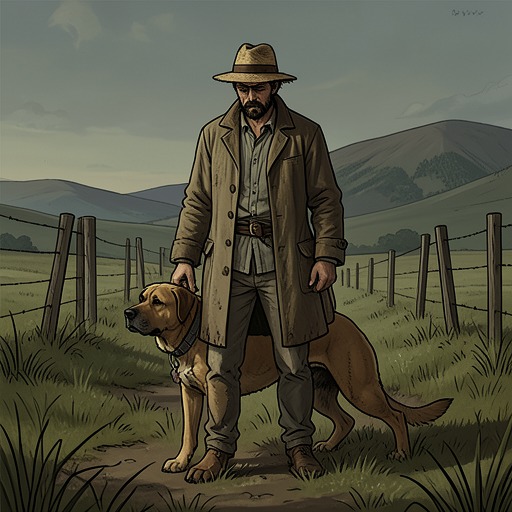
DingoLina Lauréal is a touring actress living in poverty and suffering from tuberculosis, whose brief encounter with Dingo reveals a gentler side of his independent nature. When the dog disappears in Paris, he follows her home and stays with her until the narrator comes to retrieve him. The episode also turns the narrator’s assumptions inside out: what he expects to be an encounter with a fashionable dog-owner proves to be a visit to a struggling woman whose warmth toward animals is one of her few evident comforts.
Identity and Circumstances
Lina is an actress whose working life takes her on tour between railway stations, hotels, and theaters. She tells the narrator that she has played, is playing, and expects to play many roles, describing her profession with lively attention. The account gives no titles or details of particular performances, but makes clear that acting is the organizing fact of her life: touring is not an occasional adventure but the work she depends on.
That dependence does not make the road glamorous. When the narrator asks whether she is ill and whether touring is too demanding, Lina answers that it is the best thing for her. The heated railway carriages and the good meals at hotels are comforts she hopes to keep. She speaks without irony, and the narrator understands from those modest examples how much deprivation her answer contains. In his later reflection, he pictures a life in which warmth comes chiefly in second-class train carriages and a full meal in inexpensive restaurants near stations. The contrast between her cheerful account and the narrowness of the comforts she names shapes his response to her.
Meeting Dingo
After Dingo disappears in the Champ-de-Mars district, the narrator searches for him, alerts the police, and returns home without finding him. The dog is still gone the next day. Two days after the disappearance, the narrator receives a letter signed by Lina, who explains that Dingo followed her through the street and would not leave her as she went home. Unable to bring him back herself, she asks the narrator to collect him.
Lina says she first met Dingo on rue Le Peletier. He approached her, wagging his tail and looking at her; she petted him and looked around for an apparent owner, but found no one. She told him to go and find his master, yet he placed himself in front of her and continued to follow—sometimes walking ahead, turning back to make sure she was still there. Concerned that he might be taken to the pound, and thinking he could be hungry, she let him come upstairs. She did not call him or order him to follow. In her account, his persistence is his own choice.
At home she gave him bones and bread, which she made into a meal, and he settled on her bed. When the narrator reaches her room on rue Clauzel, Dingo greets him exuberantly, putting his paws up to his shoulders and licking him. Lina has already given the absent dog’s owner what he needs to recognize that Dingo has found shelter; the dog himself completes the introduction. His greeting also makes the reunion an unmistakable scene of affection rather than a simple recovery of lost property.
Lina’s Room and the Narrator’s Reassessment
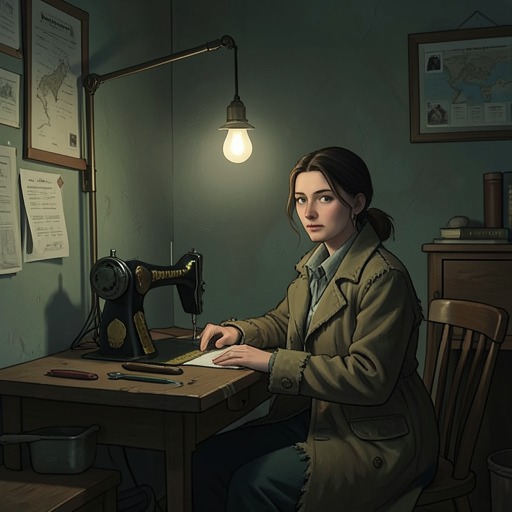
The narrator arrives with suspicions about Lina and imagines a comfortable, overly theatrical interior. Instead, he finds two poor women in a modest room: Lina’s sister is sewing while Lina receives him in a loose dressing gown. The furnishings and clothes are worn, and the narrator admits that he had not anticipated feeling pity. His initial response is mixed: he is glad to have Dingo back, yet resents the sadness the visit brings into that happiness. The change in his attention—from speculation about Lina’s motives to recognition of her hardship—is central to the episode.
Lina’s appearance confirms the narrator’s concern about her health. Her hair is dyed blonde and she is heavily made up, while her old dressing gown has lost its former richness. Beneath the theatrical presentation, he notices her drawn face and frail hands. A cotton dressing covers her chest, and a dry, persistent cough interrupts her speech. The narrator concludes that she has tuberculosis. Lina’s sister, thin and quiet, continues sewing and looks toward her with concern when she coughs. The scene presents illness not as an abstract label but as a condition visible in Lina’s exhausted appearance and woven into the daily work and care of the shared room.
Relationship with Dingo and Narrative Significance
As Lina recounts their meeting, she strokes Dingo’s back. Her affection for animals is plain: she tells the narrator that she loves them and has had cats, though touring meant she had to leave them behind. Dingo, meanwhile, moves between Lina and her sister, noses the theater clothes, and waits impatiently by the door. When the narrator prepares to leave, Dingo returns to Lina, rises toward her, and tries to lick her face. The narrator reads the gestures as a farewell and a thank-you. He wonders whether Dingo chose Lina for her kindness or her misery, as he had earlier chosen Piscot and his children; the text leaves the precise reason open.
The narrator’s thoughts after leaving extend the encounter beyond the room. He imagines the hardships Lina faces as the company disperses after performances and she is left alone in a hotel room. This is his sympathetic reflection, not a further episode she recounts. On the walk home, Dingo is joyful, obedient, and tender. For a time afterward he behaves with exemplary restraint in Paris, walking in the Jardins du Trocadéro and remaining attentive to the narrator. The return to ordinary life does not erase the brief attachment: the meeting shows that Dingo’s loyalties can form spontaneously, and that his attention can reach a person whose precarious circumstances the narrator initially failed to see.