Irène Legrel
DingoIrène Legrel, the thirteen-year-old daughter of Édouard Legrel and Mme Legrel, is introduced as an affectionate child whose delight in Dingo briefly draws the narrator’s household close to hers. Her wish to show the dog her sheep leads to a loss that marks a lasting break between the families: Irène weeps, her parents try to comfort her, and the narrator and his wife never visit again. A later report of Irène’s marriage supplies the story’s only glimpse of her adult life.
Identity and Family
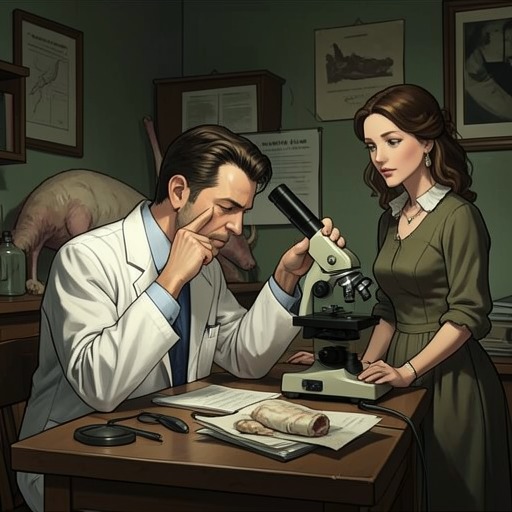
Irène lives with her parents in a household the narrator describes as unusually close and tender. Her father is a celebrated scientist; her mother manages the small fortune she brought to the marriage and supports the family’s comfortable, hospitable home. The couple receive Édouard Legrel’s disciples and friends generously and have quietly helped young people entering a difficult scientific career. Their daughter is presented within this supportive family circle, not as an isolated figure: her parents’ attention to her is apparent both in their indulgence of her wishes and in their effort to console her after the loss of the sheep.
The narrator characterizes Irène as an adorable child of thirteen. The family’s home, set in a garden near the Viorne, is a place where Édouard Legrel works and where the narrator’s party is welcomed. The account gives no independent portrait of Irène’s interests or daily life beyond the scenes with Dingo and the later news of her marriage. What it does establish is her place in a household built around affection, hospitality, and her father’s scientific work.
Meeting Dingo
When Irène first sees Dingo during the visit, she immediately admires him and asks where such dogs come from. She tells her father she would like one like him. Édouard Legrel responds cautiously that they will see, then remarks that Dingo is not a dog for little girls. The exchange sets out the difference between Irène’s immediate enchantment and her father’s unease about granting her request; it does not establish whether he would otherwise have agreed to give her a dog.
Dingo, meanwhile, stays close to Irène. The narrator says that he was particularly amiable with the hosts and that he set about winning her favor. He plays with her gently and respectfully, like a well-behaved young companion. Each affectionate gesture delights her: she claps her hands, jumps with excitement, and repeatedly draws her father’s attention to Dingo’s appearance and kindness. Her response is open and physical, while Dingo’s careful gentleness makes their brief companionship seem especially well matched.
Irène’s enthusiasm continues after the group walks in the garden. She proposes that, after lunch, they take Dingo to see her sheep. Édouard Legrel agrees. The suggestion is not framed as a challenge or an attempt to test the dog; it follows naturally from her pleasure in sharing Dingo’s company and introducing him to something of her own. Yet the plan brings together the child’s affection for the dog and the animal’s powerful response to sheep, a danger the narrator recognizes only when it is too late to prevent what follows.
The Sheep and the Rupture
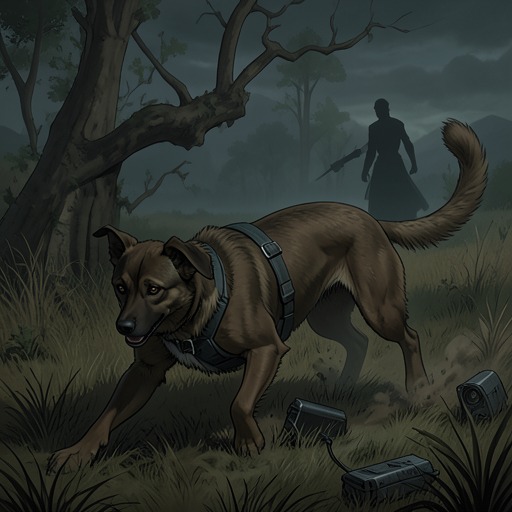
As the narrator watches Dingo, the dog suddenly stops, alert to the sheep tethered about a hundred metres away. The narrator understands at that moment that his own imprudence has brought the situation about and calls urgently to Dingo. Irène’s proposed meeting with the sheep thus becomes the point at which the household’s welcoming visit turns into a painful encounter. The account centers the narrator’s belated fear and Irène’s later grief; it does not portray her as responsible for what happens.
After the sheep’s death, Irène collapses on a stone bench, crying and overcome with sorrow. Her mother takes her away, promising that she will receive another sheep, and Édouard Legrel offers two in an effort to comfort her. The narrator watches Irène leave with her head bowed against her mother. The parents’ promises cannot undo the loss, and the scene makes the emotional consequence plain without showing any reconciliation between Irène and Dingo.
The narrator and his wife do not receive the promised letter and do not go to the Legrels’ the following Sunday. They never visit again. He later meets Édouard Legrel, who remains courteous and cordial, but says that something between them has ended. He locates that change in the death of the sheep. Irène’s distress is therefore part of a larger rupture in the narrator’s relationship with the family, although the account does not say that she herself made the decision to end the visits.
Later Life and Narrative Role
The narrator learns from newspapers that Irène married six months before he recounts the news. Her husband is a young naturalist whom the report presents as a scientist of great promise; he has already attracted attention with a work on the digestion of the cockroach. The narrator was not invited to the wedding. A witness, M. Perrier, joked that it was a marriage of the cockroach and the spider, an ironic flourish attached to the naturalist’s subject rather than further information about Irène’s married life.
Irène’s appearance in the story is brief but consequential. Her eager friendship with Dingo gives the visit a moment of warmth, while the sheep’s death exposes the danger of bringing the dog’s predatory nature into a domestic setting. Her tears register the personal cost of that encounter, and the subsequent silence between the households gives the episode a lasting social consequence. The retrospective account offers no further access to Irène’s feelings, choices, or life after marriage; it leaves her as a child remembered at the moment when affection, animal instinct, and an irreversible loss converge.