Harvest Labor Custom
HarvestHarvest Labor Custom is the village’s collective practice of bringing in the harvest, with work distributed across the community and supper earned through sustained labor. It makes the barley field both a workplace and a meeting ground: the harvest depends on many hands, while its rhythms of cooperation, talk, and shared expectation express the villagers’ customary relationship to one another and to the land.
Seasonal Work and Shared Obligation
The custom begins with the crop’s readiness and the community’s need. In one difficult summer, the lower, shaded ground and neglected stony slopes produce weak barley, while the higher field ripens later and appears more promising. The villagers wait for its green to turn tawny and for the ears to dry before bringing out their blades. With the year’s grain not yet sufficient, harvest is not optional celebration but necessary work: everyone able to help is expected to earn supper through labor, and the village’s reduced numbers leave little room for anyone useful to stay away.
The harvest follows a practical division of tasks. Children range ahead to find thistles and clear nettles, teasels, and docks from among the ears. The broadest-shouldered workers swing sickles and scythes through the standing crop, while hares, partridges, and sparrows flee before the blades. Wives and daughters bind the cut stalks into sheaves, deliberately leaving a share of the grain for later gleaning; older men arrange the sheaves into stooks as the sun dries what has been gathered. Each part supports the next, joining the crop’s reaping to the village’s customary use of what remains.
Work as Common Life
The field brings the village together within common ditches and shared hopes. The work is strenuous, but it is described as satisfying in contrast with winter labor and digging, and the company gives it a social ease that harder, more isolated tasks lack. The workers lift their heads together at calls from the woods, look toward the sun when a cloud darkens it, and set their tools clacking in unison. Harvest creates a temporary space in which nearly everyone is present and what is said can be heard across the working line.
That openness permits a bawdy, teasing form of sociability. As the barley falls, villagers gossip, bait one another, and joke about courtship, marriage, and household life. The joking is not separate from the labor: the shared field and the common pace make public teasing possible. In this way the custom sustains more than the crop. It renews familiarity among neighbors, including those who do not entirely like one another, by placing them together in a common task.
Shares, Gleaning, and Customary Rights
The way the barley is handled reflects the community’s expectations about access to its produce. The binders work on the principle of “ten for the commons and one for the gleaning,” leaving grain for the villagers to gather after the reaping. The day’s harvest therefore leads toward the rest day and then to gleaning, which the villagers expect to begin with their Gleaning Queen bending to pick the first grain. Harvest labor and gleaning belong to a connected seasonal order: collective work gathers the crop, while customary sharing leaves a portion available to the community.
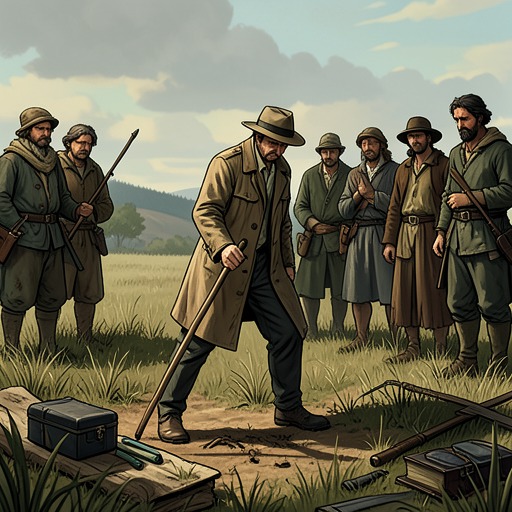
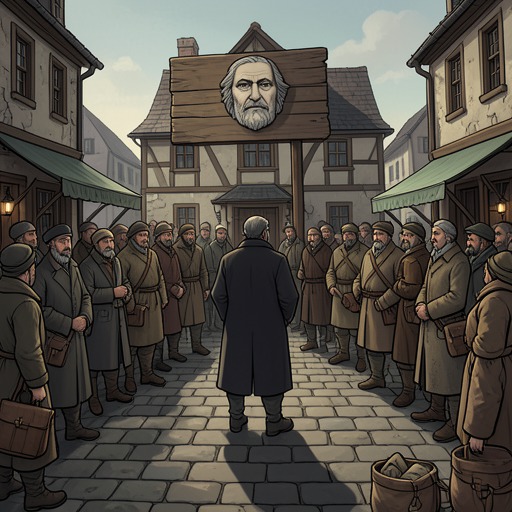
These expectations become especially visible when Philip Earle measures the fallow field and counts the villagers, arriving at fifty-eight. His survey makes the community fear that Charles Kent may sell the land. The villagers understand their subsistence differently from a market in which flour, meat, and cheese are weighed and sold: here, produce is divided into portions for the larder. Their customary claim is not established by deeds, but by the work of gathering crops and by the repeated practices attached to the fields. The harvest thus exposes a conflict between land measured as property and land experienced through labor, shared provision, and customary use.
Scarcity, Change, and the Custom’s Significance
The harvest’s sociability cannot remove the material risks that shape it. A poor yield threatens the food and drink on which the village relies, and the dwindling workforce makes each person’s contribution more important. After Philip Earle’s measurements, the villagers become quieter and more scrupulous as they finish the barley, aware that they are being watched. Their anxiety also sharpens their defense of gleaning: when the master’s white doves descend on the stubble and take fallen grain, young men send children to drive them off, treating that response as evidence of the villagers’ tenancy.
The community eventually persuades itself that Charles Kent is too just a man to sell its fields. It looks forward to the rest day and the customary gleaning, expecting the seasons to continue in their familiar sequence. That confidence is fragile. At a later harvest feast, Charles presents a future of shepherding, shearing, and textile work as a more dependable alternative to uncertain crops, bad weather, and disease. The proposal recasts the work of the fields, but its consoling promise of leisure leaves the underlying change plain: the sheaf is giving way to sheep. Against that prospect, Harvest Labor Custom signifies both the practical strength of collective effort and the form of community threatened when land use is reorganized around a different economy.