Women’s Studies Resource Centre
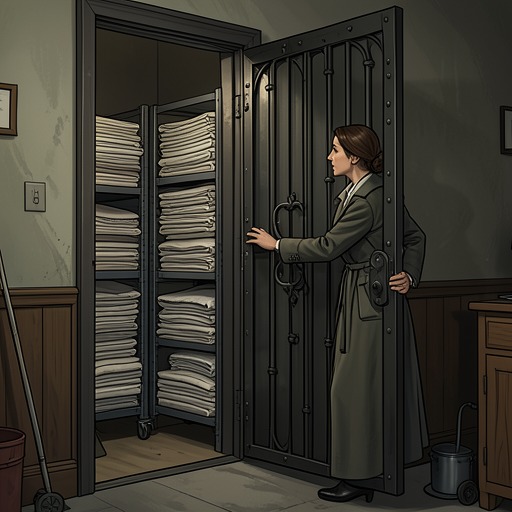
PossessionThe Women’s Studies Resource Centre is a modest scholarly space at Lincoln whose importance lies in the contrast between its limited means and the historical material entrusted to it. Its archive holds fragments of Christabel LaMotte’s papers and a short run of Blanche Glover’s diary; later, Maud Bailey uses the Centre’s records to investigate Glover’s death and LaMotte’s missing past. The room is not simply a repository: its smallness, incomplete collections, and women-centered purpose expose the conditions under which women’s scholarship and literary legacies have had to survive.
Setting and Institutional Role
The Centre is described as pitifully small, a physical measure of the disregard that Leonora Stern suspects universities show toward Women’s Studies. Its work nonetheless reaches beyond its walls: Maud identifies herself to Professor Blackadder as being from the Lincoln Resource Centre for Women’s Studies, and the Centre’s connection to the university places its researchers in contact with the larger world of Ash scholarship and its institutional rivalries.
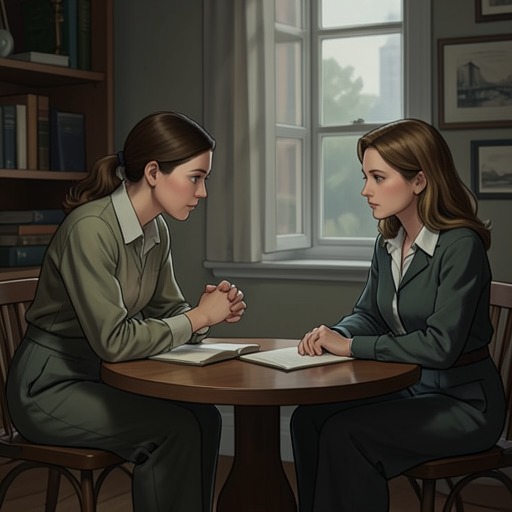
The resource room also functions as a workplace and a place of welcome. When Leonora arrives, she asks whether she can stay for a night or two and have a carrel in the archives; her expansive presence seems to fill the undersized Centre. Maud is apprehensive about Leonora’s visits, yet also delighted by them, and the room becomes a setting for their friendship and exchange of research. Its restricted space holds both the practical labor of scholarship and a sustaining women’s intellectual community.
The Archive and Its Gaps
The Centre’s archive contains the papers that had been on LaMotte’s desk when she died. LaMotte had asked for them to be sent to her niece May Bailey in the hope that she might learn to care about poetry. May did not become a literary scholar: she married a cousin, moved to Norfolk, and raised ten children. Maud, her descendant and LaMotte’s great-great-great-niece, persuaded her father to deposit the papers at the Archive when she came to Lincoln.
The surviving collection is small but varied: manuscripts of the Tales, undated lyrics on loose slips, a commonplace book, a few letters from friends, and successive revisions of The Fairy Melusina. LaMotte rewrote that poem at least eight times, changing it repeatedly. The record is therefore not a single settled text but evidence of sustained revision and artistic labor. The archive also holds just one of Glover’s diaries, covering three years; Maud’s account makes clear that no care was taken of the papers, and that nothing more has since come to light. What survives is inseparable from what has been lost.
Research, Testimony, and Institutional Exclusion
Maud works in the Centre’s apple-green chair and orange-table setting while examining a box-file on Glover’s suicide. The file contains a newspaper report, an inquest transcript, the copy of Glover’s note found on a table at Bethany and weighed down by a granite stone, and a few letters to a former pupil. Maud searches these meagre remains for clues to LaMotte’s whereabouts between the Yorkshire journey and the inquest. The Centre’s holdings make investigation possible, but cannot restore a complete account: the researcher must work from sparse testimony and acknowledge the silences around it.
Those absences are not only accidental. Beatrice Nest, discussing Ellen Ash’s journal, considers the prospect that Ellen knew future biographers would come rummaging through private papers. She believes Ellen burned many letters, while some were buried with Ellen; she disagrees with Mortimer Cropper about who destroyed them. The Centre’s work thus belongs to a wider contest over preservation, privacy, and scholarly access. A surviving document may be evidence, but its custody, destruction, or concealment also records choices about who should be allowed to know.
The Centre’s scholarly purpose is set against the structural exclusion of women from academic authority. Beatrice recalls that women at Prince Albert College were barred from the main Senior Common Room until the late 1960s, while decisions of consequence were made in a pub from which women were excluded. She describes dependence, gratitude for employment, and the way age could turn a woman into a target of institutional suspicion. Her delayed work on Ellen’s journal reflects not simply individual hesitation but the conditions in which women scholars had to establish their legitimacy and decide whether an edition respected its subject.
Significance
The Women’s Studies Resource Centre joins material scarcity to intellectual persistence. Its small archive preserves manuscripts, revisions, and traces of women’s domestic and creative lives that might otherwise have disappeared; its missing papers and partial diaries equally resist any claim to complete knowledge. Maud’s search through Glover’s records demonstrates both the value and the limits of such a collection: it offers evidence, but not a full explanation of LaMotte’s lost interval.
The Centre’s modest scale also sharpens the contrast between the care devoted to women’s records and the institutional prominence of male-centered literary scholarship. Its researchers must make visible the history of exclusion while handling private papers whose survival depends on previous acts of keeping, burning, or burial. The room is therefore at once a research base, a community space, and a reminder that recovering women’s literary histories requires attention not only to what the archive contains, but also to the material and institutional forces that have determined what remains.