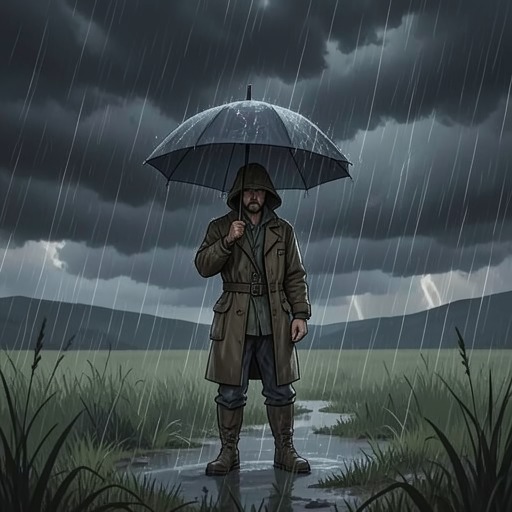
Baie des Trépassés
PossessionBaie des Trépassés is a Breton shore presented as both a real coastal place and a threshold in the imagination. Its competing explanations, stories of the dead, and recurring association with crossing between worlds make it a setting where the novel brings folklore into contact with history, writing, and the present-day investigation by Maud Bailey and Roland Michell.
Name and Setting
In Sabine de Kercoz’s journal, the bay’s name moves Christabel LaMotte because it suggests not merely a Bay of the Dead but a place for those who have crossed the barrier between this world and another. Sabine’s father offers a more material explanation: the shore is exposed to the wreckage of ships and people cast up after breaking against the reefs at Pointe du Raz and Pointe du Van. Yet he also recognizes the bay as a place traditionally understood to join two worlds. The natural danger of the coastline and its otherworldly reputation therefore coexist rather than cancel one another.
The journal links the bay to wider stories of crossings: Virgil’s grove of the Golden Bough and Tam Lin’s journey beneath the Hill. In ancient Celtic tradition, the dead were sent from the bay on their last journey to Île de Sein, where Druid priestesses received them; men were forbidden to set foot on the island. Some legends located a route from there to an Earthly Paradise of golden apples, reached amid wind, storms, and dark water. The bay thus belongs to a geography in which a recognizable shore opens onto mythic destinations and ritual passage.
Folklore and Oral Storytelling
Gode’s tales give the bay a narrative life that Sabine struggles to preserve on the page. Sabine records that her father had tried to take down Gode’s stories verbatim, retaining their rhythms without addition or omission, but that the life seemed to leave the words once written. Sabine had begun her journal partly to learn how to record what she heard, following Christabel’s advice; she then found that the effort to write accurately could itself diminish her listening and Gode’s telling. Her hesitation makes the bay’s folklore more than local color: it exposes the friction between a living oral performance and a written record that can preserve words while losing their manner of life.
One embedded tale brings the bay into a story of pursuit and the dead. At Toussaint, a man wakes to tapping hands, stamping feet, and unfamiliar voices, then follows a small dancing figure toward the shore. At the bay, mist lies over the water; the man sees the dead riding the incoming waves and finds a boat crowded with unseen forms. The tale turns the bay’s threshold quality into an encounter with a multitude of souls, rendering passage not as a solitary crossing but as a terrifyingly crowded one.
The Bay in the Later Investigation
When Maud and Roland visit, the bay appears on a mild, sunny day. They stand among the dunes and watch the Atlantic waves; Maud asks whether the place would seem magical or sinister without its name, while Roland notes that its currents could make it dangerous to a sailor. Their exchange sets the physical coast beside the imaginative force that has gathered around it. The place does not need to look uncanny to carry its accumulated meanings.
Roland consults the Guide Vert, which traces the name to a proposed corruption of “boe an aon,” meaning a bay of a stream, into “boe an anaon,” a bay of suffering souls. The guide also associates the City of Is with the marshes at the river mouth. Roland plays on the overlapping associations of passing and trespass, and says that names accrue meaning: the two have come because of the name. The visit consequently follows not only geography but a chain of language, legend, and remembered interpretation.
At the dunes, Roland touches Maud’s hand, and she takes hold of his. The gesture occurs in the same place where the novel’s earlier accounts have made the boundary between worlds imaginable. The bay’s narrative function is therefore not confined to the historical or folkloric past: it also becomes the setting for a present relationship, joining the characters’ scholarly pursuit to a moment of personal closeness.
Narrative Significance
Baie des Trépassés gathers several kinds of uncertainty into one location. Sabine’s account preserves disagreement over the name and its origins; Gode’s story makes the dead present through oral narrative; and Roland and Maud encounter a landscape whose visible calm coexists with dangerous currents and a dense history of meaning. None of these accounts simply resolves the others. Instead, the bay shows how place can be shaped by physical conditions, inherited stories, translation, and the act of reading.
Its repeated association with passage also links the novel’s concerns with memory and transmission. The dead travel toward Île de Sein in legend, while stories themselves move from Gode’s voice into Sabine’s journal and from local tradition into a modern guidebook. Each passage preserves something and changes its form. The bay is thus both a setting and a model for the novel’s movement between past and present, spoken account and written evidence, and the material shore and the worlds imagined beyond it.