North Yorkshire Moors
PossessionThe North Yorkshire Moors are the setting of Randolph Ash’s 1859 solitary walking tour and amateur marine investigations, and one of the first landscapes Mortimer Cropper retraces in his pursuit of Ash’s life. The Moors matter as more than biographical scenery: their paths, coastal formations, and streams turn scholarship into travel, while Cropper’s return to them makes the act of following Ash both an archive-based inquiry and a physical practice.
Landscape and Ash’s Journey
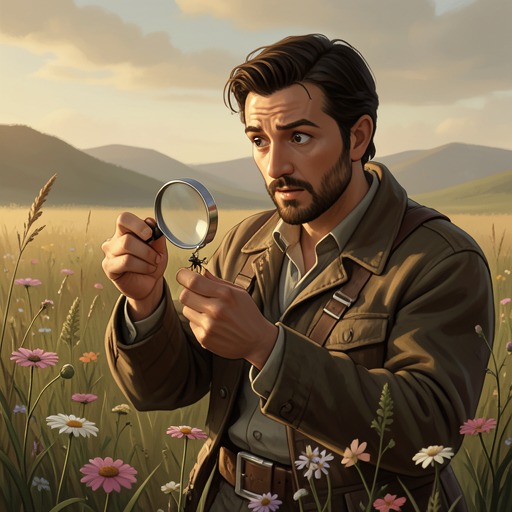
In 1859, Ash combined solitary walking on the North Yorkshire Moors and coast with amateur marine biologising. The account places walking and observation together: the landscape was not merely a route through which he passed but a setting for attention to natural forms, an activity that also informed his identity as a poet and observer.
The Moors belong to a wider geography of Ash’s travels, but they were distinctive as the site of this walking tour. In revisiting Ash’s destinations, Cropper treats the actual terrain as a complement to written evidence: roads, rock formations, streams, and the coast supply the material details of a journey that scholarship might otherwise know only through records and literary work.
Cropper’s Return
Cropper’s first expedition in Ash’s tracks took him to the North Yorkshire Moors and coast. He repeated the tour in 1949, searching out the pubs and rock formations, Roman roads, and pearly becks associated with the journey. This return, nearly ninety years after Ash’s tour, makes the landscape a meeting point between two acts of observation: Ash’s original walking and Cropper’s deliberate reconstruction.
The journey also shows Cropper’s characteristic method. He followed Ash’s travels as opportunities arose rather than in chronological sequence, moving among places associated with the poet and comparing what he encountered with the surviving record. His pursuit extended to Amsterdam and The Hague, Iceland, and other destinations; the Moors stand at its beginning as the first place where his biographical interest became a route physically walked.
Place, Evidence, and Biography
Cropper’s attention to local features gives the Moors a practical role in literary biography. Pubs and roads mark human passage, while rocks and becks register the landscape itself. Their specific presence resists a purely abstract account of Ash’s travels: reconstructing a life requires engagement with the places where it unfolded, even when the later scholar experiences them under different conditions and in a different century.
The contrast between Ash’s solitary tour and Cropper’s repeated, research-driven visit also gives the place a double history. The same landscape holds Ash’s original encounter with the coast and Cropper’s subsequent attempt to retrace it. In this way, the North Yorkshire Moors connect literary work, natural observation, and the material practice of scholarship without making the later journey identical to the earlier one.