Finistère
PossessionFinistère is the western Breton setting where Maud Bailey and Roland Michell’s historical investigation meets the landscape of Breton legend. During their journey, the coast provides more than a destination: the Bay of Audierne is associated with the submerged city of Is, and the nearby Baie des Trépassés is named the Bay of the Dead. The region becomes the place where the travelers begin reading Sabine de Kercoz’s account of Christabel LaMotte’s visit in 1859.
Geography and Mythic Associations
Maud and Roland describe their intended journey as a way to see Finistère and the Bay of Audierne, traditionally understood as lying above Is. They also invoke the Baie des Trépassés, whose name translates as the Bay of the Dead. These place-names bring myth and mortality into the research itinerary: the travelers are not merely following archival clues but entering a region whose geography already carries stories of what is lost, hidden, or beneath the surface.
The Journey Through Brittany
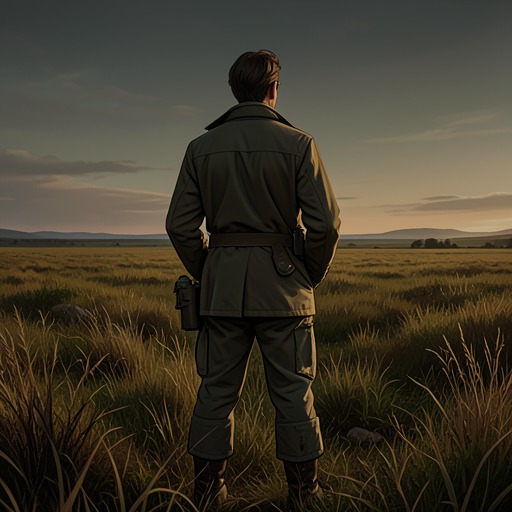
The following day, Maud and Roland drive through Brittany toward Finistère. Their route takes them through the forests of Paimpont and Brocéliande before reaching the enclosed bay at Fouesnant. The narrative marks the journey as a movement to the “end of the earth,” giving the coastal destination a threshold-like quality without separating it from the practical work that brought them there: they are seeking evidence about LaMotte’s past.
Reading Sabine’s Journal
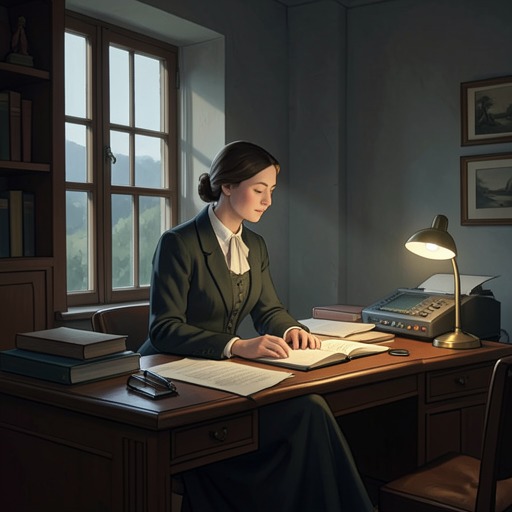
At a hotel at le Cap Coz, overlooking the bay, Maud and Roland spend the next three days reading Sabine de Kercoz’s journal intime. Ariane has told Maud that the journal covers almost all of LaMotte’s 1859 visit and has supplied a photocopy, describing the sharing of research as cooperation. The journal changes the journey from a search for a lost family home into an encounter with a written record: LaMotte’s family home has burned down, but Sabine’s pages preserve an account of her visit.
Narrative Significance
Finistère gathers the novel’s material and legendary strands in one setting. The burned house represents the irrecoverability of the past in physical form; Sabine’s journal offers a textual trace, to be read rather than simply visited. The travelers’ three days with the journal also create a deliberate pause in the narrative: what they think about its contents is deferred, while the account itself becomes the next text presented to the reader. The coast thus serves both as a real destination in the investigation and as a threshold into the history the investigation is about to disclose.