Yorkshire Coast
PossessionThe Yorkshire Coast is a working landscape in Possession: Randolph Henry Ash studies it as a naturalist, while Roland Michell and Maud Bailey later retrace parts of his route as literary investigators. Its cliffs, marine organisms, and changing shoreline are not merely scenery. They supply evidence, prompt connections between texts, and make gradual transformation visible on a scale larger than any single human life.
Setting and Natural-History Expedition
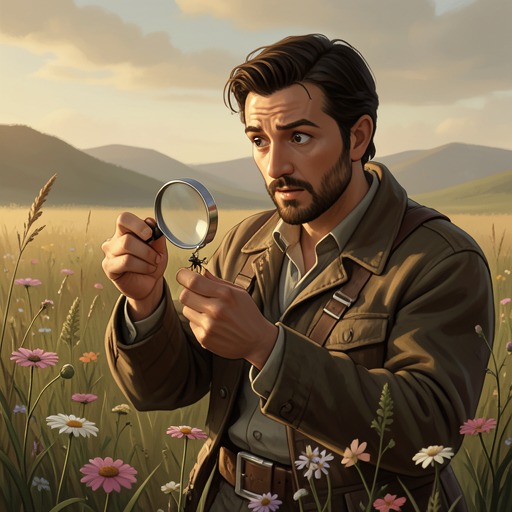
In June 1859, Ash spent a month travelling alone in North Yorkshire, walking along shores and cliffs and studying geology and marine life. He had been expected to travel with Francis Tugwell, the clergyman and author of Anemones of the British Coast, but Tugwell’s illness prevented the plan. The expedition took place amid growing attention to natural history: On the Origin of Species appeared in 1859, and Ash’s friend Jules Michelet was then writing works devoted to the elements, including La Mer. Critics later associated Ash’s period of study with a turn in his poetry from historical subjects toward nature, although Roland resists treating that change as the effect of a single trip. He instead situates Ash within a wider intellectual movement.
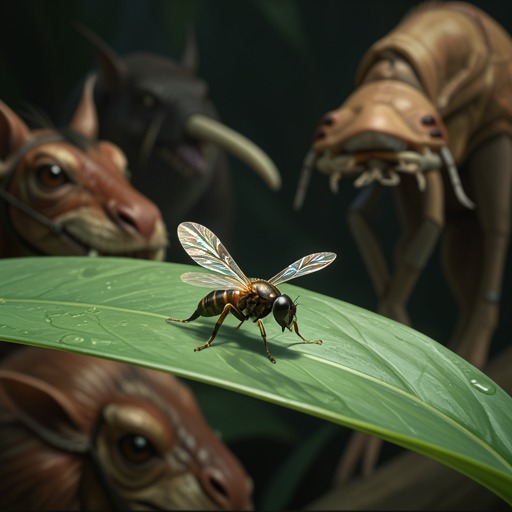
Ash’s letters to his wife, Ellen Ash, preserve the expedition’s ordinary routines as well as its ideas. He describes reading Lyell in the evenings and conducting dissections in the daylight between walks and dinner. At first he had used tall specimen jars; he replaced them with plain yellow pie dishes arranged across the available surfaces of his dining room. In them he kept sea creatures including Eolis pellucida, Doris billomellata, Aplysia, several kinds of polyps, and compound ascidians. The smallness and variety of these organisms sharpened a question he could not resolve: their intricate functioning suggested design, yet the evidence for gradual development under ordinary causes also weighed on him.
The coast itself gave Ash a further lesson in geological change. Walking from Scarborough toward Flamborough Head, he considered its chalk cliffs and the formations carved by the elements. The King and Queen were two notable rocks, but only the Queen remained standing. Reading Lyell’s account of the coast’s gradual dilapidation, Ash observed how salt spray decomposed the land. The shore offered no fixed backdrop: its visible forms registered the cumulative action of natural processes.
Natural Inquiry, Faith, and Change
Ash’s coastal research belongs to the novel’s sustained encounter between scientific observation and religious belief. He regarded the organisms he dissected with both precision and evident regard for their complexity. Concern about accusations of cruelty led him to test whether apparent responses to injury in primitive organisms occurred after death; he concluded that the movements were automatic responses rather than pain as human beings understand it. His investigations thus rely on experiment and observation, not simply on an assumption about what life must feel.
Reproduction and regeneration particularly interested him. Influenced by Richard Owen’s work on parthenogenesis, Ash experimented with hydras and plumed worms that could grow new heads or segments through budding. He also studied how jellyfish appeared as unfertilised buds of polyps, and how fragments of hydra and polyp could become new organisms. These observations made him consider whether life might be continuous and interdependent, and whether that continuity could alter the meaning of individual death. The natural world does not settle his religious questions; it gives them new forms. The evidence for gradual change presses against inherited certainties, while the organization and persistence of living forms continue to invite reflection on design and survival.
The coast therefore carries more than one kind of history. Its rocks change through gradual erosion, while Ash’s scientific understanding develops through repeated study. His letters show him moving between empirical detail and questions about creation, time, and mortality rather than choosing one register to the exclusion of the other. The landscape’s slow alteration makes change perceptible without making it simple or spiritually conclusive.
The Later Investigation
In the novel’s contemporary strand, Roland and Maud return to Ash’s Yorkshire journey as researchers trying to establish whether Christabel accompanied him. Roland proposes that she may have contemplated joining Ash on the expedition, but recognizes the limits of the case: an appealing fit is not proof. Their method is comparative. They look for correspondences between Ash’s letters and LaMotte’s poems and tales, hoping that a sequence of parallels may become more persuasive than any isolated resemblance.
One clue links Ash’s account of a Yorkshire figure called a Hob, said to cure whooping cough, with a tale written by LaMotte. Another connects Ash’s interest in drowned Yorkshire villages to the legendary City of Is and to Lyell’s writing. Such correspondences matter because they join natural and literary records without demonstrating by themselves that LaMotte travelled with Ash. The investigators must distinguish a pattern worth pursuing from certainty about what happened.
Their planned fieldwork gives this interpretive problem a route through actual places. Maud drives Roland from Lincoln to the Hoff Lunn Spout hotel, on the road between Robin Hood’s Bay and Whitby. Though the hotel had existed in 1859, Ash’s letters do not mention it; he stayed at The Cliff in Scarborough and had lodgings in Filey. Roland and Maud have five days. They allocate the first two to Filey, Flamborough, Robin Hood’s Bay, and Whitby, then plan to retrace Ash’s inland walks beside rivers and waterfalls, leaving a final day open for discoveries that their schedule cannot predict.
Narrative and Thematic Significance
The Yorkshire Coast brings the novel’s archival inquiry into contact with a landscape whose evidence is real but incomplete. Ash’s letters record what he studied and where he walked, yet they do not establish whether LaMotte was present. Roland and Maud’s task is consequently neither simple recovery nor free invention: they test literary connections against the surviving documents and the route itself, while keeping conjecture distinct from proof.
The coast also links the scales of the book’s concerns. Specimens in pie dishes make biological processes available to close observation; cliffs and rocks show change accumulated across a far longer span. Ash reads both as evidence, but neither dissolves the tension between scientific explanation and religious belief. For Roland and Maud, the same terrain becomes a map for following textual correspondences. The Yorkshire journey thus joins ecological attention, historical research, and the limits of interpretation: the place can prompt a hypothesis, but it cannot supply the missing certainty on its own.