Cárdenas
SatanCárdenas is the Cuban hometown where Ramondo Cardoso returns carrying a dangerous caméo, and where its apparent power first becomes a public calamity. The city’s streets and religious sites gather together the story’s competing explanations: a family reunion and an unexplained death, Catholic alarm and Yoruba divination, and a precious object that seems to draw people into its orbit.
A Hometown and Its Sacred Center
The episode is dated August 18, 2002. That Sunday, Ana Maria Gomez Cardoso has returned from the Feast of the Assumption Mass and is going about her ordinary routine in her home in the alley behind the Cathedral of the Immaculate Conception. Cárdenas is identified by its local nickname, the City of Crabs. The location is particular and intimate: a residential lane immediately behind the cathedral, where the church’s presence is part of the neighborhood’s everyday geography.
Ana Maria keeps her door unlocked. When a man appears at the threshold, she is startled; she does not immediately recognize her son, whom she has not seen for twenty years. Their reunion makes Cárdenas more than a destination on Ramondo’s route home. It is the place where a long separation ends, and where return to family is followed, within days, by disaster.
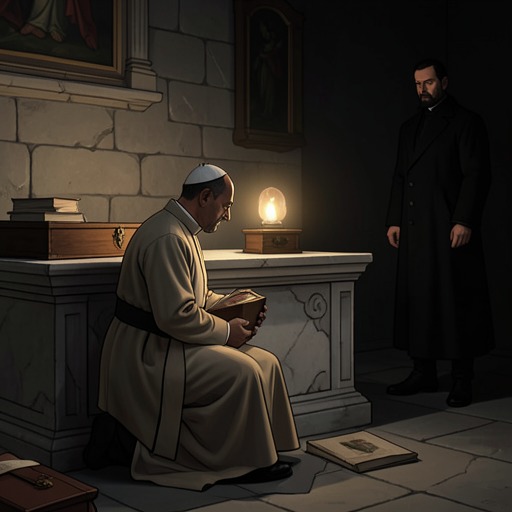
The city also provides the setting for a meeting between two religious authorities. In the aftermath of the fire, a Catholic priest comes from the cathedral to Ana Maria’s home, while Rodrigo Lerbier, a babalao, is recognized by people in the gathered crowd and greeted with deference. The narrative presents his standing among these neighbors as comparable in importance to that of the priest. Cárdenas’s religious landscape is therefore not reduced to a single institution: the cathedral and Yoruba practice both shape how the community confronts what it cannot explain.
Ramondo’s Return and the Caméo
Before reaching Cárdenas, Ramondo has decided against trying to sell the caméo hurriedly in the United States. He fears being cheated or killed if he attempts a sale in Mexico, and instead hopes that people in Havana may recognize the value of the rare object. He travels first to Mexico and then, with help from a clandestine smuggler, crosses from the Yucatán Peninsula to Cayo Largo under cover of night. A cousin serving in Cuba’s security service helps him evade Cuban customs and police surveillance. The route gives his homecoming a precarious context: he arrives not openly through ordinary channels, but by means that conceal both his passage and the caméo.
A few days after his return, a bright red light appears in the darkness behind the cathedral. Cats run off and dogs bark; residents come out onto their balconies, notice no visible explanation, and go back inside. An anguished woman soon rushes from a house to press the bell hidden behind the cathedral’s apse. The setting shifts from the open, shared space of the lane to Ramondo’s room, where the priest finds evidence of an intense but confined fire. The caméo, bought by Ramondo in Kansas City, lies beside the burned chair and gives off an ominous glow. The house has not caught fire, although the event appears to have destroyed Ramondo. The neighborhood’s first response is therefore a physical puzzle as much as a spiritual crisis: a deadly blaze that seems not to have spread.
Ana Maria identifies the stone as the devil’s eye. The priest makes signs of the cross, while the people outside speak fearfully of a flaming stone or an apparition. Their reactions give the alley a double role: it is the ordinary residential setting of the mother and son’s reunion, but also a place where the familiar limits of domestic safety appear to fail. The account does not resolve the event through a conventional explanation; instead, the caméo remains at the center of both public fear and religious interpretation.
Rodrigo Lerbier and the Yoruba Temple
Rodrigo is in Cárdenas by chance. Although he lives in Havana, he has temporarily returned to his native city to visit his sick mother. He recognizes the remains in Ramondo’s room as those of his former classmate, and remembers a warning from the Letra del Año: El que lleva candela en las manos, no se puede esperar. He also associates the year’s governing divinity, Chango, with lightning and war. Yet the priest points out that there has been no storm. The contrast matters: an image of lightning offers Rodrigo one possible frame, but the scene supplies no storm that would make it an ordinary natural explanation.
The caméo’s influence does not end with the incident at Ana Maria’s house. Rodrigo carries the object wrapped in a handkerchief and senses what he understands as its negative energy. He considers whether Santería could turn the stone’s unusual power to the benefit of its practitioners, if it were kept in a sacred place. In a divination at his modest Yoruba temple in Havana, he consults Ifá using palm nuts. The vision he experiences warns him that the stone belongs to evil forces and can either transform reality for someone who knows how to use it or destroy someone who does not. It also warns that the object would require offerings if kept in a Yoruba place of worship. These later events extend the significance of Cárdenas: the city is where Rodrigo encounters the caméo’s lethal consequence, before carrying the question of its nature to Havana and his religious practice.
A City in the Caméo’s Wider Passage
The caméo’s connection to Cárdenas resurfaces in Rodrigo’s recollection of its disappearance. In March 2003, he reasons that the theft from his temple must have happened during the early-morning darkness. He had brought the object from the capital before dawn, placed it in the modest sanctuary, and then gone to sleep at his mother’s home. Someone following him could have entered the temple soon afterward, while the streets were still empty. His reconstruction links the sacred interior to the city’s streets and to the domestic space of his mother’s home, without identifying the thief.
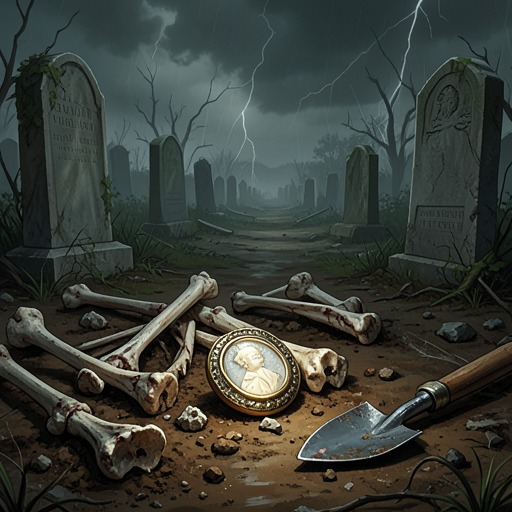
Rodrigo also wonders whether the thief knew that the caméo had not been declared to the authorities and that Rodrigo was not, strictly speaking, its legal owner. The questions remain unresolved, but they establish Cárdenas as the beginning of a chain of suspicion: the unexplained death of Ramondo, the stone’s passage into Rodrigo’s keeping, and its later removal from the temple. When Loïc reflects on the caméo’s route, he considers the possibility that intervention by the FBI before it left the United States would have prevented it from reaching the satanist sect in Florida. Cárdenas thus anchors a larger movement across borders, while remaining the place where the stone’s danger first becomes unmistakable to Rodrigo.
Narrative Significance
Cárdenas is rendered through a small number of closely connected places rather than through a broad portrait of the city: the unlocked doorway, the lane behind the cathedral, the room where the fire occurs, and the Yoruba temple associated with Rodrigo’s later account. Each site alters the caméo’s meaning. At the doorway it accompanies a homecoming; in the room it becomes the focus of a death that resists ordinary explanation; in the temple it becomes an object of divination, fear, and eventual theft.
The city also brings together the story’s Cuban family and religious connections. Ramondo returns to his mother after twenty years away; Rodrigo recognizes his old classmate; the Catholic priest and the babalao face the same event from different traditions. These relationships make Cárdenas a point of convergence, not merely a stop along the caméo’s travels. Its importance lies in the lasting sequence set in motion there: Ramondo’s return, the fire, Rodrigo’s encounter with the stone, and the subsequent disappearance that carries the mystery beyond the city.