Montreal, Quebec
SatanMontreal, Quebec, is a recurring present-day setting for Loïc’s work, relationships, grief, and dreams, rather than a fully panoramic portrait of the city. Its significance lies in the way ordinary urban routines become thresholds: translation at a screen gives way to a dream of his childhood village; a literary gathering begins a consequential romance; and a newspaper report in nearby Outremont turns family estrangement into immediate bereavement. Montreal holds these episodes together even as the story carries Loïc toward the Laurentides, Cuba, and the past he is trying to recover.
Urban Setting and Narrative Role
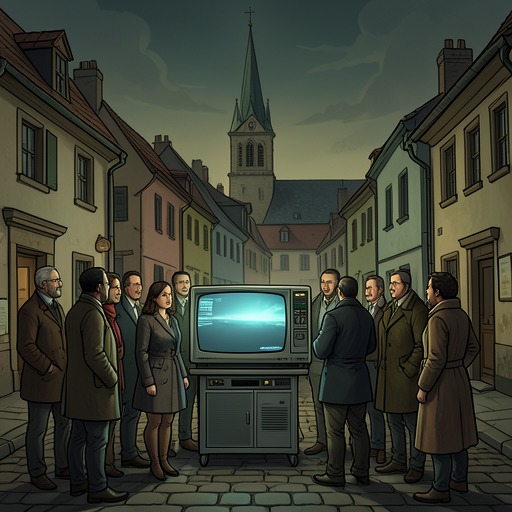
The city enters the narrative through specific occasions and rooms, not through an extended account of its streets or institutions. In September 2001, Loïc is exhausted from struggling to finish a translation. The work keeps moving across his screen until the screen seems to dissolve into the sky, and his dream relocates him to his native village, before its church. Familiar people gather around him and wait for a speech, while the wind lifts and scatters the papers he is trying to collect. He wakes, falls asleep again, and remains troubled by a persistent anxiety. Montreal is the starting point for this dream, but the dream’s destination is elsewhere: the city’s solitary workday opens onto unresolved ties to home and memory.
The same pattern returns in autumn. Loïc dreams that he is trapped between a wall of fire and shattered windows; panic drives him into the open air, where he falls while an inner voice declares that it is the end. He wakes in his bedroom, shaken by the lasting impression that he has plunged into death. The stillness and dimness around him oppose the dream’s destruction. In these Montreal-framed episodes, the city is less a scenic backdrop than the ordinary world to which Loïc returns after visions that unsettle his sense of safety and time.
Work, Writing, and the Literary World
Montreal also supplies a public setting for Loïc’s literary and intellectual life. At a literary cocktail gathering held alongside the city’s book fair, he notices Laurence at the bar and approaches her. Their first exchange begins with recognition on her side: she tells him that she knows who he is. The encounter grows from a social event organized around books into a relationship that later becomes central to his life. The scene places Loïc among people he already knows, but its decisive movement is toward a woman who has recognized him before he has understood their connection.
The city’s working life is more solitary. In 2001, Loïc labours over a translation that he finds difficult to finish, and the task carries into sleep rather than providing a clean boundary between work and rest. Later, as he investigates the family origins explored in Régis’s papers, he uses online access to search the Library of Congress and other Midwestern records from home. The contrast is pointed: Régis had pursued the same history through sustained research but was unfamiliar with the newer World Wide Web and resistant to personal computers. Loïc’s research thus belongs to an urban, technologically connected present, while its subject reaches back to nineteenth-century events far from Montreal.
Outremont: Bereavement and Family Papers
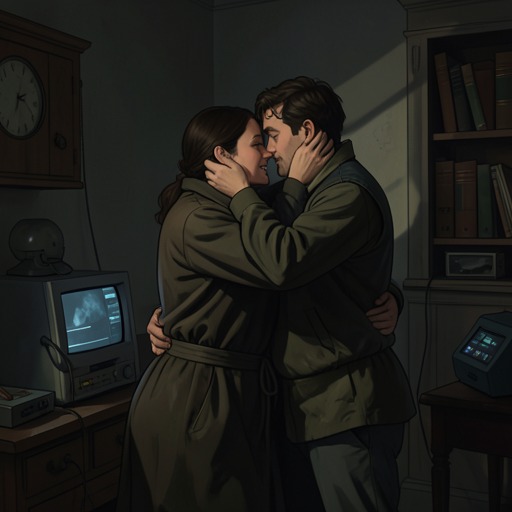
A particularly concentrated Montreal-area episode unfolds in Loïc’s condo on rue Champagneur in Outremont. He learns from the morning newspaper that Régis has died, and the news leaves him pacing, stopping at the window, and struggling to think. His grief has not yet broken into tears; shock instead fills the room with unanswered questions. Only the previous day, Régis had sent him a letter enclosed with two postcards, in the manner he habitually used, and said that he planned to come to Montreal to see him. Loïc had tried to call and left a message. The intended meeting is therefore transformed into an absence before it can take place.
The phone rings again, this time with a journalist asking about the sudden and mysterious death. Loïc refuses to speculate, says that he knows no more than the press has reported, and ends the call. His impatience with the journalist’s questions contrasts with the private urgency of the letter and the unanswered message: public curiosity presses for an account of Régis’s death, while Loïc is still trying to comprehend that his cousin intended to return to him. The condo becomes the setting where the news, the missed contact, and the family’s unfinished conversation converge.
Afterward, Loïc’s work among Régis’s papers deepens the loss into an inquiry. The more he reads, the more he recognizes the scale of Régis’s investigation into the origins of the D’Anjou family of Touladi. He considers whether that research was also an effort to reconcile himself with roots he had long sought to transcend or set aside. For Loïc, the search bears on the ambivalence of Quebec identity and on Régis’s fear that the French lineage across the Atlantic was undergoing decline. The papers make Outremont a place of inheritance in a double sense: Loïc receives both the burden of a dead cousin’s research and the questions that research leaves open.
Relationships and Departures
Montreal’s literary gathering is the beginning of Loïc and Laurence’s relationship, but later scenes place the couple in motion beyond the city. During a trip to Cuba, they stay at the Meliá Las Américas in Varadero, where Loïc recognizes his cousin Isabelle dancing at a cabaret. He hesitates to approach her, concerned that a family intervention might intrude on her apparent romance and unsettle Laurence, who has heard little about Isabelle. This episode shows how the relationships formed around Loïc’s Montreal life remain entangled with the family history he is pursuing, even when the action has moved to the Caribbean.
By their final evening in Varadero, Loïc and Laurence have already decided to marry and are considering ceremonies in Quebec and France. Their holiday has become more than a pause from Montreal: within a fortnight together, revelations about the Founder’s cameo have advanced Loïc’s investigation. He comes close to obtaining the object from a Cuban religious leader, but later wonders whether possessing it might have exposed him to its curse. He also decides against telling Isabelle what has happened, fearing that the story would seem incredible and further discredit him in the eyes of her father, Georges. The couple’s departure for Montreal closes the Cuban episode without closing the questions it has raised.
The City Among Other Geographies
Montreal’s importance becomes clearer through contrast with Loïc’s other settings. After the abortion of the child he and Brigitte had conceived, their relationship ends, and he withdraws to a newly acquired chalet in the Laurentides, beside a lake and away from the road. There he seeks solitude, a return to the natural surroundings of his childhood, and distance from the possibility of another romantic entanglement. He describes himself as socially stripped of his former roles, earning a living by anonymous administrative translation. This retreat is not another Montreal scene, but it clarifies the urban life from which he has withdrawn: work and professional identities no longer provide a stable sense of belonging.
The narrative repeatedly moves between Montreal’s present-tense routines and other places that press upon them: the childhood village in Loïc’s dreams, Touladi in the papers he inherits, the Laurentides chalet of his isolation, and Cuba, where the cameo’s path crosses his own. The city is consequently a hinge rather than a destination. It is where Loïc translates, encounters Laurence, receives news of Régis, and resumes the inquiry into his ancestry; yet the questions that occupy him cannot be contained there. Montreal gives the story a contemporary point of return, while each return carries more of the past into the room.