Plains of Abraham
SatanThe Plains of Abraham is a landmark where the novel makes private loss intersect with public history. Montcalm’s death there in September 1759 gives the site an enduring national significance; centuries later, Lucille (Alzheimer's patient) is found there in the snow, and her death becomes the focus of rumor and public accusation. The place links these events without making their meanings identical: its past intensifies the later tragedy, while the competing stories told about both expose how history is remembered and disputed.
Historical Setting and Memory
In his research into the Castelmont family, Loïc learns that the Countess of Castelmont was related through her mother to the Marquis of Montcalm, who died at Québec in the Battle of the Plains of Abraham in September 1759. The connection makes Loïc reflect on the cameo as the apparent center of converging, ill-fated histories. The Plains thus enters the novel not merely as a battlefield but as a point where family history, political fate, and the object’s suspected curse seem to meet across time and distance.
Lucille’s Death at the Site
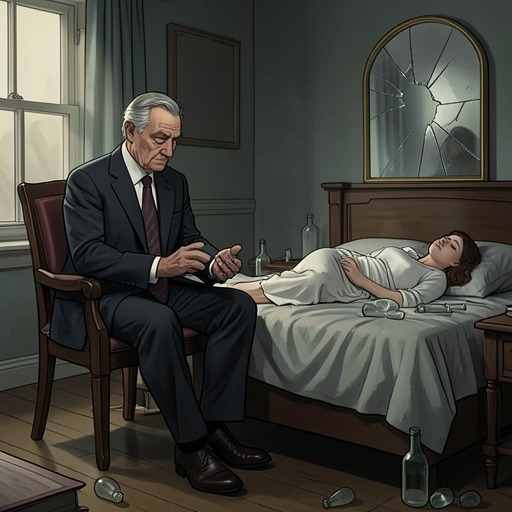
In late December, while the household sleeps, Lucille leaves the house at night. She is scarcely dressed beneath a sheet wrapped around her, and the alarm system is disabled. At daybreak, she is found dead from the cold on the Plains of Abraham. Loïc later recognizes that she lies at the place where Montcalm fell, joining her death to the site’s older historical memory. The scene also recalls an earlier death in the snow in the American Midwest, where a young woman had been found holding a baby. These echoes make the location part of a recurring pattern of loss and uncertain remembrance in the novel.
Rumor and Public Judgment
Lucille’s death quickly becomes more than a private family event. In the winter storms around Québec City, gossip and suspicion gather around the circumstances: Georges D’Anjou, her husband, is questioned in public opinion, as are their daughter Isabelle D’Anjou and the wider family. Rumors of negligence and possible assistance in Lucille’s death circulate through talk and sensational radio commentary, while an alleged affair between Georges and Clémentine is also raised. The novel presents the Plains as the setting of the death, but the subsequent public story is built elsewhere, through repetition, insinuation, and media amplification.
The scrutiny widens further when a journalist revives the story of Roger Bolduc, who disappeared in New York City during the 2001 World Trade Center attacks. That separate family mystery adds to the scandal surrounding Lucille’s death and enlarges its reach beyond the local community. The Plains of Abraham therefore anchors a tragedy whose public meaning is repeatedly reshaped: the historical weight of the site gives the death an especially resonant setting, while rumor threatens to overwhelm what can actually be known about it.