Missouri
SatanMissouri is where a family’s disputed American past takes physical form: in 1842, a ranch near Carthage is reportedly attacked and burned, and weeks later a living infant is found near Florissant beside a young woman dead in the snow. The state connects the violence surrounding the Castelmont family to the cameo carried with the child, but the evidence is contradictory. As Loïc reconstructs the story from Régis’s papers and scattered records, Missouri becomes both the place where an origin can be traced and the place where the truth may have been deliberately erased.
Frontier Settings and Historical Geography
The novel places the ranch near Carthage, in an isolated part of Missouri close to Oklahoma, within a region shaped by westward settlement. The Santa Fe Trail ran between Missouri and New Mexico, and the account Loïc reads describes raids on both travel routes and white settlements across the Midwest. This geography supplies a context for the ranch’s apparent vulnerability, but it does not settle who attacked it or why.
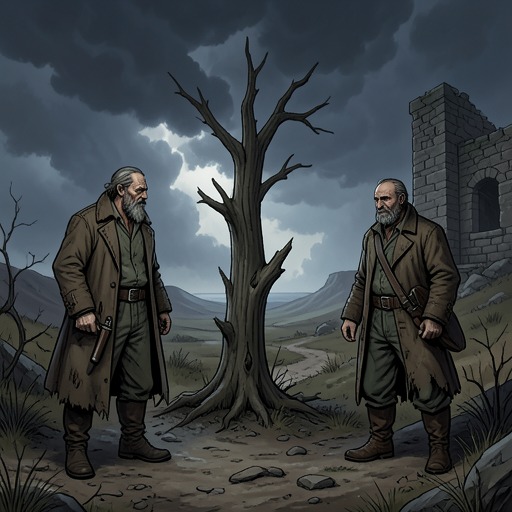
The ranch scene is set at dawn on November 2, 1842. About fifteen mounted riders approach through the edge of the forest toward a building emerging from the mist. Two shots kill the shepherd dogs; then flaming arrows strike the buildings and Sioux warriors rush the ranch. The owner, a sixty-year-old settler, arms himself and orders his workers to bring the available rifles and revolvers, release the livestock and horses as a barrier, and get the women and children inside. He changes position as he fights, but is surrounded and killed. These details first present Missouri as a frontier of armed danger, where the rancher’s force and preparations cannot prevent the household’s destruction.
The Ranch and the Foundling
A later account relocates the story from the burned ranch to Florissant, north of St. Louis, on November 28. Religious of the Sacred Heart of Jesus hear a dog barking persistently outside their convent and follow it through heavy snow. It leads them to a young woman, described as mixed-race, who has recently died. A baby still lies in her frozen arms, weakly whimpering. The woman has given the infant the clothing she had been wearing to protect it from the cold; attached to the baby’s wrappings is a torn silk purse containing a finely made cameo.
The record cannot establish whether the woman was the child’s mother, where either came from, or how the baby reached Florissant from the vicinity of the ranch. It does say that the infant is to be baptized once adoptive parents are found, and that the unidentified woman is buried in the parish cemetery of Saint-Ferdinand. A small wooden cross at her neck marks her faith; the account honors her as an unknown saint for saving the child. In this telling, the convent and parish offer shelter and burial where the woman’s name and history remain unavailable.
Missouri in the Castelmont History
Other archival clues connect the child’s appearance in Missouri to the Castelmont family. Loïc identifies Louis de Castelmont, a French aristocrat who had taken refuge in the United States and become a pioneer in the West, as a likely match for the Castlemount named in the ranch report. The family history supplies a possible reason for his presence there: after escaping revolutionary France, Louis crossed to America, worked his way through Louisiana, moved west through Texas, and eventually settled near Carthage, where he became a prosperous farmer. The story thus makes Missouri the end point of his migration and the site of the episode that may have cut off his claim to his family’s inheritance.
The cameo gives the foundling’s arrival in the region a further connection to that lineage. A manuscript discovered among Régis’s papers says that the living infant found near Florissant had a cameo pinned to its swaddling clothes. Separately, a copy of the Founder’s Missouri baptismal register entry, from Florissant in 1842, had been found in a family safe. Together, the records lead Loïc to see the cameo as evidence that the family’s ancestor was connected to it from birth. The objects and documents point toward Missouri as more than a temporary refuge: it may be where the Founder’s American origins and the cameo’s passage into the family first intersected.
Conflicting Reports and Unresolved History
The ranch’s reported destruction is never established beyond doubt. A brief newspaper dispatch describes a raid, but a subsequent correction says the sheriff had not confirmed an Indigenous attack, that natural causes might have started the fire, and that no bodies had been found in the ruins. It even suggests the ranch may have been empty. The correction leaves a central discrepancy: the violent scene and apparent deaths in the first account are followed by an official version that removes both the attackers and the victims.
Loïc suspects that the correction may have concealed a massacre and that the woman escaped with the child to seek protection from the Catholic Church rather than local authorities. He also considers whether Charles de Castelmont arranged the attack to kill Louis, eliminate his descendants’ inheritance claim, and recover the paired cameo. In that reconstruction, the woman’s flight with the infant and jewel would explain why a search of the ranch found nothing, while a fire could have destroyed evidence. But Loïc finds no conclusive document proving that Charles ordered Louis’s death; the silence about the victims, the missing bodies, and the sheriff’s correction leave the theory conjectural.
Missouri’s narrative significance lies in that unresolved overlap between place and proof. Near Carthage, a disputed attack may have destroyed a household; near Florissant, a dead woman’s act of protection preserved a child and a jewel. Loïc’s later research brings the two locations together through old reports, family papers, and the baptismal record, but cannot make the gaps disappear. The state is therefore both an archive of the family’s beginnings and a landscape whose most consequential event remains uncertain.