Édifice Langevin
SatanÉdifice Langevin is the Ottawa setting for the federal government’s anxious vigil on November 15, 1976, when the Parti québécois is poised to win the Quebec election. The building’s offices and shared public spaces bring national crisis into intimate proximity: Loïc watches the result unfold while concealing his sympathy for Quebec independence from the federal colleagues around him, including his cousin and mentor Régis. Langevin becomes more than a government workplace; it is the enclosed stage on which political allegiance turns into private separation.
Setting and Political Function
That evening, Loïc is in his office at Édifice Langevin, facing the Parliament buildings across the street. The Westminster carillon marks six o’clock from the tower’s great clock as the polling stations are about to close. The precise civic time intensifies the pause: the result is not yet settled, but the election already seems capable of changing Canada’s future. A recent poll has given Quebec independence supporters nearly half the vote, unsettling the political establishment in Ottawa, which had not expected the possibility to become so immediate.
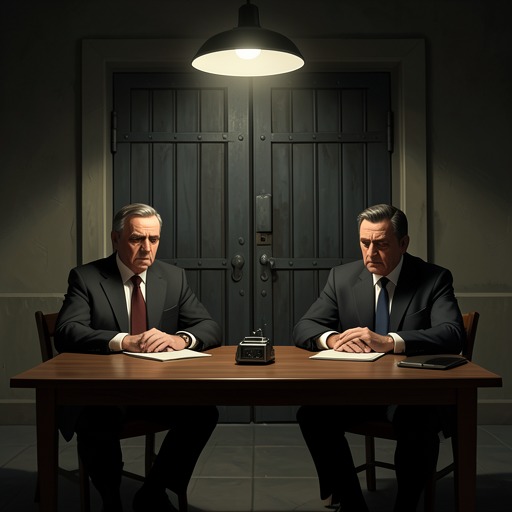
The building contains the Prime Minister’s working environment as well as the offices and gathering places of his staff. Régis has been working through the weekend on possible statements for Pierre Elliott Trudeau. Called upstairs to a meeting with Trudeau and senior advisers, he returns to Loïc visibly flushed and reports that he argued against what he calls the soft line. He regards the Parti québécois’s secessionist program as betrayal, and Trudeau agrees with him. The two cousins are then assigned to prepare a cable for the event of a Parti québécois victory: it must recognize the legitimate election of a sovereigntist government without either congratulating it or taking a hostile swipe at it. Langevin is thus where the possible break in the country is translated into the restrained language of official response.
The Building Under Election-Night Pressure
As the results arrive, Langevin’s rooms register the crisis in different ways. In the cafeteria, people speak about the count in subdued voices, their faces marked by apprehension. Loïc notices acquaintances who appear ready to talk, pays for a sandwich, and leaves rather than risk conversation. His movement through the building is already a form of concealment: even a casual exchange might expose the position he has kept to himself.
The tension rises in the Prime Minister’s quarters as the separatist lead becomes a confirmed victory. Staff gather around a television, while the buffet and opened bottles of liquor and wine in the press secretary’s office go largely untouched. People mutter and rage; Loïc avoids meeting anyone’s eyes, wary of spontaneous talk that could betray him. The building’s routine spaces have become politically charged. The cafeteria offers no neutral refuge, and the television in the government’s inner rooms makes the unfolding result impossible to treat as distant news.
When René Lévesque addresses his jubilant supporters at the Centre Paul-Sauvé in Montreal, his declaration of pride in being Quebecois reaches the Langevin staff through the televised coverage. The celebration outside the building is sharply opposed to the stunned atmosphere inside it. For Loïc, the distance is not simply between Ottawa and Montreal: he feels removed from his own place and generation, as though the crowd’s collective exhilaration belongs to another world. The building’s closed rooms make that distance palpable without resolving it.
Loyalties Within the Office
Langevin concentrates a conflict that Loïc and Régis do not openly discuss. Loïc understands his Quebec identity as rooted and longstanding, while his loyalty to Régis has grown through their family bond and their work together in the Prime Minister’s cabinet. He sees independence as emancipation; Régis sees it as a rupture and a danger. Both remain in service to the same political leader, but the same workplace cannot reconcile their opposing convictions. The silence between them becomes an additional constraint, as each instinctively censors what might otherwise be said.
Their disagreement reflects the wider family divisions circulating through the building. Secretaries and close advisers have relatives on opposing sides of the Quebec–Ottawa dispute; the political conflict crosses family lines even among those working at the centre of federal power. For the cousins, however, the divide is especially intimate because it remains unspoken. The formal assignment to draft a measured response does not make their private positions any less incompatible; instead, it places them together at the very moment when those positions matter most.
After Radio-Canada announces that the Parti québécois will win a majority of seats, Régis can no longer remain at Langevin. He has tried to drown his anxiety and indignation in scotch, briefly meets with Trudeau, and then leaves. Loïc barely has time to greet him. Pale and trembling, Régis says that he is not surprised: he has felt catastrophe approaching for a long time. His departure turns the building’s political strain into a visible break between the cousins, even though neither has fully stated the disagreement aloud.
Narrative Significance
The election-night sequence makes Édifice Langevin a space of suspended time and divided belonging. Its clock marks the approach of the result; its television confirms what its inhabitants dread; its offices turn that result into the language of government. Yet official procedure cannot contain the personal consequences. As Langevin’s staff struggle to maintain composure, Loïc recognizes that his former ease within a collective identity may be gone: his sense of self has separated from the triumphant we heard in Quebec.
The building also frames an irony in the wider political scene. Trudeau himself briefly stumbles in front of reporters, saying he would continue to preach separatism before correcting himself to call it an error. That slip prompts laughter among his opponents and recalls an earlier version of the Prime Minister who had once imagined an independent Quebec republic. Within Langevin, as in Loïc and Régis’s relationship, identities and loyalties do not remain as settled as their formal roles suggest. The building’s decisive significance lies in holding those contradictions together for one election night: federal authority, family intimacy, and Quebec’s competing futures occupy the same cramped professional world, while Loïc emerges from it more isolated than before.