Château des Castelmont
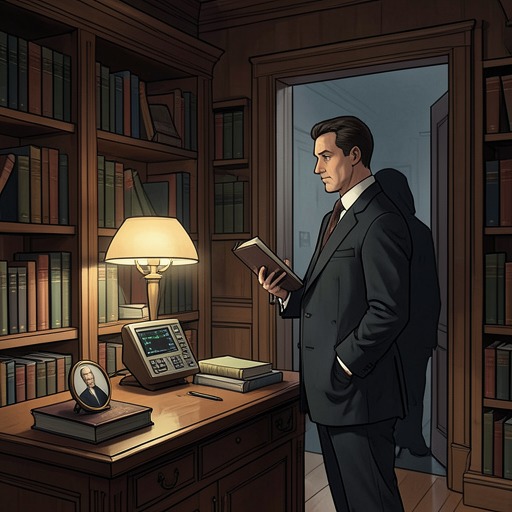
SatanChâteau des Castelmont, also known as Château Barzac, is the Castelmont family estate and vineyard whose history gives physical form to the family’s divided inheritance. The site is associated both with the 1794 massacre of members of the family during the French Revolution and with the later rivalry between the twin brothers Charles de Castelmont and Louis de Castelmont. When the narrative returns to Barzac in June 2003, the estate’s history converges with the D’Anjou family’s investigation of a cameo.
The Estate and Its Family
The château is identified with Château Barzac, a pomerol vineyard belonging to the Castelmont family. Charles de Castelmont, the elder twin, inherited the property from his father, who had taken over a vineyard in ruin after the war and restored it. The estate is therefore not merely a family residence: it is an inheritance shaped by agricultural recovery and passed down amid competing claims to family property.
The family history attached to the château is marked by violence and separation. In 1794, while the Castelmont twins were in Paris with their mother, their father, sisters, and younger brother were killed at the château by revolutionaries. The twins survived away from the estate, but their relationship was already intensely hostile; their mother was described as the one person able to restrain their mutual hatred. The château thus stands at the center of a family catastrophe that left the surviving brothers divided over what remained of their inheritance.
Massacre and Inheritance
The twins’ escape did not settle the family’s succession. Louis later returned to America and continued to pursue his inheritance through legal and political approaches, while Charles retained powerful connections in France. Their struggle extended beyond the château: Loïc’s reconstruction of the family history suggests that Charles may have arranged an attack on Louis’s Missouri ranch, apparently in pursuit of his brother and possibly the paired cameo. This account is presented as an inference from the surviving fragments, not as a fully established explanation.
The château’s significance consequently reaches beyond the deaths that occurred there. It anchors a history in which property, family legitimacy, and the paired cameos become entangled. The violence at Barzac is the beginning of a prolonged conflict whose later episodes unfold elsewhere, but whose inheritance questions remain attached to the Castelmont estate.
Barzac in the 2003 Narrative
The novel returns to Barzac in June 2003, bringing the historical family story into the same narrative present as Loïc’s research into the cameo. Charles has learned that Loïc is married to Laurence, the daughter of the Count of Albignac, and that Loïc’s mother was a D’Anjou. Recognizing Loïc as a relative of Régis who had worked in Ottawa, Charles fears that he may know more about the cameo investigation than Charles had allowed for.
Charles’s confidence is complicated by news that the cameo he received from New York is a counterfeit. He laughs at the thought that the Quebec family has revered the imitation as a treasured link to a distinguished French lineage. The Barzac setting therefore connects the old family conflict to a new discovery: the estate’s heir confronts the possibility that both the artifact and the history built around it have been misunderstood.
Narrative Significance
Château des Castelmont functions as a repository of family memory, but that memory reaches the reader through incomplete evidence: correspondence, legal papers, memoir extracts, and Loïc’s deductions. Its past is not presented as a single, settled account. The massacre, the twins’ rivalry, the disputed inheritance, and the uncertainty over the cameo’s fate accumulate into competing explanations of what happened and why.
The estate also gives the novel’s historical and contemporary strands a shared location. The family’s losses at Barzac precede the later pursuit of the paired cameos, while the 2003 return to the estate places that legacy beside the discovery of a counterfeit. In this way, the château is both a specific family property and the point from which a long-running dispute over inheritance, identity, and the truth of the family story continues to radiate.