Founder’s House at Touladi
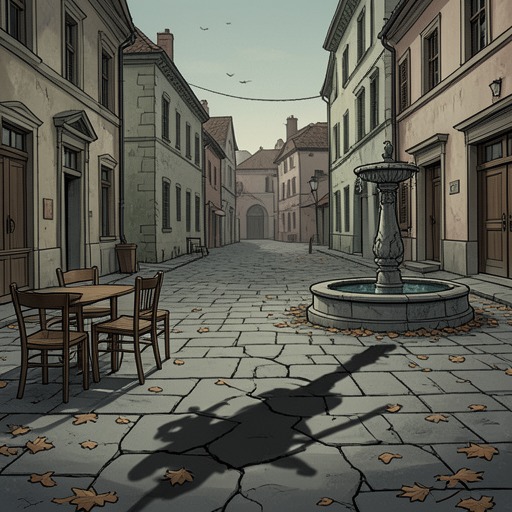
SatanFounder’s House at Touladi was both the ancestral residence associated with the Founder and a setting that held Loïc’s childhood memories. Its destruction erased the last substantial physical trace of the D’Anjou family’s place in Touladi, while the house’s appearance again in a dream makes it a charged space of memory, loss, and frustrated speech.
Ancestral Home and Decline
The house stood empty and became badly dilapidated after Marie-Louise D’Anjou died and Laurette moved away. Although Romuald Bolduc wanted to buy it, the D’Anjous refused. The refusal could not preserve the building: a fire eventually ravaged the old ancestral home from end to end.
The D’Anjous were furious and suspected, with near certainty, that the fire had been deliberately set by Romuald, who was systematically acquiring houses and properties throughout the village. Yet suspicion was not proof. In a small community so completely dominated by Bolduc, the family struggled to see how it could gather the evidence needed to accuse him.
Sale and Lost Memorial
The task of selling the burned house and its land fell to Loïc, much to his distress. He sold reluctantly, to the point of nausea, to his wealthy uncle Romuald, because no other buyer came forward. The family had kept the property for a time, but pressure from the municipality helped force a sale: Romuald was mayor, and the D’Anjous did not intend to rebuild in the near term.
A memorial stele was proposed for the site. The D’Anjous agreed to sell on the condition that the municipality erect a monument in memory of the village’s founder, but Romuald opposed the plan and succeeded in having it rejected shortly before his death. The outcome made the loss more than architectural: the house vanished, and the proposed public marker of the Founder’s memory was never built. The Founder’s portrait, meanwhile, had been moved to Québec City, to the judge’s home.
The House in Loïc’s Dream
That night, the destroyed house returned in a dream. Loïc found himself inside it with Guillaume D’Anjou, who looked at him intently with luminous pale-blue eyes. Guillaume then began to disintegrate, thinning like a sheet of paper before lifting into the air and drifting from room to room; Loïc flew after him as the familiar house transformed into an amphitheater filled with indistinct people.
The dream turns the house into a scene of attempted testimony. Loïc feels that the watching crowd expects a declaration and that he needs to make one, but no words come. As he struggles to keep flying, hands reach for his legs and feet, and he beats his arms and legs in desperation to rise again. The home that once held his childhood thus returns not as a refuge restored, but as a setting where family disappearance and the difficulty of giving them lasting witness take shape.