Québec City
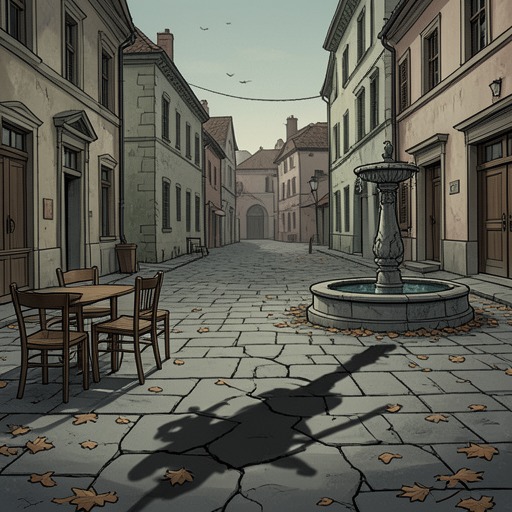
SatanQuébec City is the novel’s urban counterweight to Touladi, a place where the D’Anjou family’s wealth and authority meet the Bolducs’ long-standing grievance, and where intimate crises repeatedly become public stories. Its Grande-Allée house, clubs, streets, institutions, and historic open spaces give those conflicts distinct stages: a family announcement behind closed doors can become newspaper management, while private grief can be recast as a citywide scandal.
Family Power and the Cameo
The D’Anjous’ imposing home on Grande-Allée is a center of family authority. In September 2001, Georges D’Anjou gathered his family in its salon and announced that the cameo had disappeared from its bank vault. The news turns a prized heirloom into an immediate source of suspicion. The house is not merely a residence: it is where the family receives alarming information and where its hierarchy shapes who may speak and who is expected to accept decisions.
The family’s place in Québec City is inseparable from the feud with the Bolducs. Loïc hesitates over whether to call his cousin Roger after years without contact. Roger has married Isabelle, a D’Anjou cousin on Loïc’s maternal side, but the D’Anjous resent her marriage into the Bolduc family. Their antagonism reaches back nearly a century and has political roots; it is sharpened by Roger’s connection to Romuald, remembered among the D’Anjous as a grasping adversary. The city is thus the setting for a family conflict whose long history makes even a telephone call feel burdened by inherited hostility.
In the autumn of 2001, Roger’s disappearance is measured against familiar Québec City routines. He is no longer seen at the golf course, the Garnison Club, or his usual restaurant on rue Saint-Jean. His car remains in Sillery, while an account of his departure places him at the city’s intermodal station with a briefcase on September 10, boarding an express bus to Montréal. These ordinary landmarks become clues, and the gap between what is known and what is guessed gives rumors room to grow. Stories of an affair circulate; his absence from the World Trade Center victims list encourages the D’Anjous to suspect that he sold the cameo and escaped. Isabelle is shunned, harassed by Roger’s siblings, and eventually cuts off contact with them.
Georges responds to the threat of uncontrolled disclosure by commissioning a carefully limited account in Le Soleil. The article states that Roger was in New York on the day of the attacks, was not on the list of victims, and had not been proved dead; it also says the family has asked police to investigate. Georges hopes to forestall a more damaging version in the local press, but the controlled statement may itself invite wider attention. In Québec City, family authority and media access offer him some means of managing the story, not control over what the public will make of it.
Inheritance, Politics, and Public Memory
The city also frames the earlier history of Loïc’s adoptive family. At Guillaume D’Anjou’s funeral, limousines belonging to Brunswick executives join the Cadillacs of the Bolduc brothers-in-law and the well-appointed cars of the D’Anjous from Québec City. The procession marks Guillaume as the last heir of the Founder in Touladi, while also bringing the families’ competing positions into view. Régis cannot attend: he is in California for a conference on cybernetics as a delegate to a government commission reforming education in Québec. His absence places the funeral against a wider institutional and intellectual world beyond the family gathering.
The transfer of the cameo after the funeral deepens the city’s association with inheritance and exclusion. Georges takes it to Québec City almost as soon as Guillaume has been buried. Loïc does not object to the need for a transfer so much as to its timing and manner: to him, the hurried act shows disrespect for the newly buried heir. The gesture also confirms his precarious standing. The D’Anjous do not treat him as a full participant in decisions about their legacy, since he does not bear their name.
Québec City recurs as a place from which the past is examined and retold. In the autumn of 2001, Loïc sorts through Régis’s papers and reconsiders how the cameo may have influenced his life. He reads earlier experiences differently when viewed together, as if separate turns of chance have acquired the shape of necessity. The narrative then reaches back to spring 1985, when Loïc was at the Assemblée nationale du Québec during the decline of a party and cause he had embraced since youth. He describes himself as repeatedly present near major historical events without playing a central part, more witness than actor. The city’s political institutions consequently echo his own sense of marginal involvement: history unfolds around him, and he records its pressure without directing it.
A later return to Québec City in 1996 connects Régis’s inquiry into the Founder’s origins to international networks. His research has nearly stalled as he ages, but a trip to Paris for a Francophonie parliamentary meeting brings him into conversation with French senator Victor Bourdieu. Their exchange moves from steam locomotives and the philosophy of machines to engraving on fine stone. Québec City is the point from which Loïc later assesses this renewed investigation, linking Régis’s intellectual pursuits to the family’s unresolved history of the cameo.
Home, Illness, and Loss
Grande-Allée reappears as the D’Anjou household’s private refuge after the public shock of Roger’s disappearance. In June 2002, Isabelle receives a letter from the Office of the Chief Medical Examiner in New York confirming that fragments of her husband’s bones were found in the World Trade Center wreckage and identified by DNA. The letter says nothing about the cameo. The family had almost given up hope of finding Roger, while still hoping the jewel might emerge as the Ground Zero search continued. The news confirms his death without resolving the object’s fate.
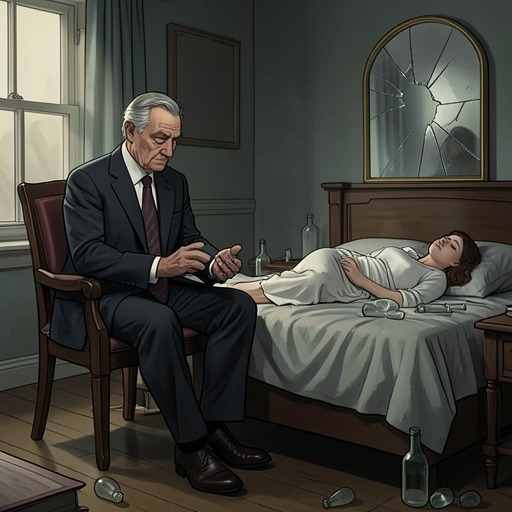
Isabelle’s return to her parents’ house makes the home a site of care and concealment. After an overdose nearly kills her early in 2002, her parents bring her back to Grande-Allée so they can watch over her. She remains depressed, takes solitary walks on the Plains of Abraham, and spends much of the day shut in her room with her laptop. Georges is troubled by her unspoken complicity in the events surrounding Roger and the cameo, but her fragility makes him reluctant to press her for a confession. The household’s long-serving Clémentine belongs to this domestic history: employed by the D’Anjous from 1947, she has cared for successive generations and remains devout amid a social world that has largely discarded religious observance.
In 2004, Québec City’s commercial streets become the setting for a different kind of disorientation. Lucille goes sale-hunting in department stores and luxury boutiques, wanting clothes that do not feel endlessly familiar. Isabelle is away in Cuba, and Lucille worries that her daughter’s Cuban lover may one day arrive with her. On the return journey, Lucille suddenly cannot determine which direction leads home. Streets and intersections cease to make sense; she hesitates, crosses a yellow light late, nearly enters a one-way street from the wrong direction, and pulls over in alarm. The episode makes the familiar city’s routes a measure of her failing orientation.
By the end of December, Lucille leaves the Grande-Allée house at night while the alarm is disabled. Barely dressed and wrapped in a sheet, she walks into bitter cold and wind from the river. At daybreak she is found dead on the Plains of Abraham, the same historic ground where Montcalm fell in 1759. Loïc later recognizes the location, and the correspondence between the snowy death and an earlier discovery of a dead young woman with a baby in her arms gives the scene a stark echo of the novel’s past. The Plains, usually a public landscape, become the terminal point of Lucille’s private illness.
Rumor and the City’s Afterlife
Lucille’s death does not remain private. In the winter of 2011, rumors, old rivalries, and suspicions gather around her body’s discovery: she was the wife of a judge, found dead and partly unclothed in the snow. Attention turns first to Georges, then to Isabelle, and finally to the whole family, with Lucille’s alcoholism and Isabelle’s drug addiction exposed as material for public accusation. Local talk radio amplifies insinuations and vulgar conjecture. As with Roger’s disappearance, the city’s appetite for explanation converts a family tragedy into a public trial, regardless of whether the circulating claims are established.
In September 2011, almost ten years to the day after the New York attacks and the destruction of the World Trade Center, Loïc and Laurence attend Georges’s funeral in Québec City. Loïc has followed the scandal around Lucille’s death with mounting distress and feared that the old story of the cameo would also become public. After Georges is cleared, the case concerning Roger’s death is not reopened. The funeral brings the city’s overlapping histories back together: the missing husband, the contested jewel, the judge’s family, and the rumors that have repeatedly threatened to escape private control. Québec City matters not only as the D’Anjous’ home but as the place where inheritance becomes accusation, memory becomes evidence, and public opinion presses upon the living long after a family’s losses.