Republic of Cuba
SatanThe Republic of Cuba is more than a destination on the map: it is the homeland to which Ramondo Cardoso flees with a stolen cameo, the setting for a frightening fire-lit episode in Cárdenas, and the refuge Aurelio risks his life to reach. Its locations connect separate strands of the novel through movement across borders: from the United States and Mexico to the island, and from Cárdenas and Havana to the resort island of Cayo Largo. The Republic of Cuba offers return and shelter, but arrival does not immediately end the danger carried by the cameo or the past.
An island imagined as refuge
The island first matters as the destination Cardoso hopes will offer a safer future than the United States. In Kansas City, as he considers how quickly to sell the cameo, he grows uneasy about the object’s unknown origin and possible power. His Yoruba-influenced understanding of enchanted objects and lingering curses makes the jewel seem dangerous, not merely valuable. When a sudden premonition prompts him to flee, he leaves his shop with the cameo hidden in his pocket and heads for a trusted taxi driver, a fellow Mariel emigrant who had reached the United States in 1980.
Cardoso does not attempt a rushed sale before leaving the country. He first escapes to Mexico, where he considers selling the jewel but fears being cheated or killed by criminal networks. The Republic of Cuba, by contrast, represents both his native home and the possibility of finding people in Havana able to recognize the cameo’s value. This hope is not uncomplicated: returning requires clandestine arrangements, and the island remains under the United States embargo. The destination promises familiarity and opportunity, but the journey itself depends on evasion and risk.
Cárdenas: homecoming and alarm
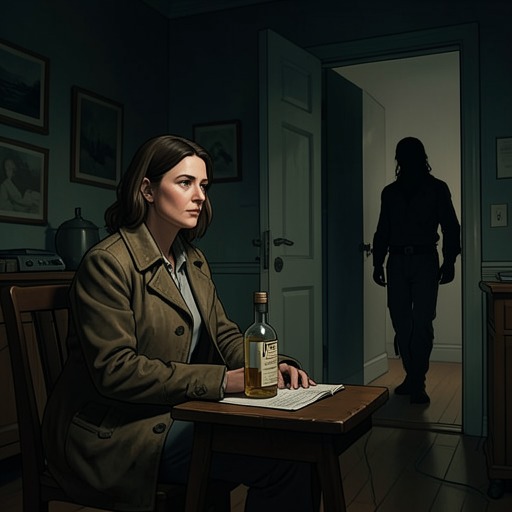
On August 18, 2002, Cardoso’s mother, Ana Maria Gomez Cardoso, is at home in Cárdenas after attending Mass for the Assumption. Their home stands in an alley behind the cathedral of the Immaculate Conception, in a city also known by the nickname Ciudad del Cangrejos. She nearly faints when a man appears in the doorway she habitually leaves unlocked; she recognizes her returning son, and he confirms that it is Ramondo. The scene makes the return intensely domestic: after clandestine travel, Cardoso comes back not first to a market or official institution, but to his mother’s threshold.
The passage does not let that homecoming settle into safety. A few days after Cardoso reaches his native city, a vivid red light cuts through the dusk behind the cathedral. Cats scatter and dogs bark; people come out onto their balconies, notice an apparent smell of burning, and retreat indoors when they see nothing clearly wrong. A woman’s piercing screams soon draw them back to attention. She rushes from a house toward the church and repeatedly presses a bell concealed behind the cathedral’s apse, panicked as if she had seen the devil. The account locates the disturbance in the streets around Cardoso’s home and the church, leaving its cause to the unfolding narrative rather than explaining it away as ordinary neighborhood commotion.
Routes across water and borders
Cardoso’s route back is shaped by the sea as much as by national boundaries. In Mexico he finds a clandestine boatman who regularly crosses the Caribbean Sea from the tip of the Yucatan Peninsula to Cayo Largo, carrying supplies under cover of night to the embargoed island. A cousin working in the Securidad helps Cardoso evade Cuban customs and police surveillance. His arrival is therefore not a straightforward homecoming: it depends on smuggling networks and a family connection inside the very security apparatus he must avoid.
A separate crossing gives the Straits of Florida a more desperate role. In September 2014, Aurelio reaches Key West after walking for days and nights, keeping away from major roads and avoiding contact while disguised in a hooded jacket and dark sunglasses. He finds an old, poorly secured boat on the beach and pushes it into the water at night. With a rotten piece of board for an oar and a light wind blowing toward the Republic of Cuba, he sets out across roughly 150 kilometres of dark water without knowing whether he will reach the other shore. The boat is an improvised means of escape, and the crossing exposes him to the chance of death as well as the possibility of reaching home.
Aurelio’s crossing follows a moment of religious conversion. He has recognized the evil of the satanic sect in which he has participated, invoked Jesus Christ, and escaped its installations near Miami. On the boat, memories of abuse and violent rituals return to him; he understands himself as having helped deliver Satan to the sect in an onyx cameo. His hope of reaching the Republic of Cuba is bound to a further intention: to find his mother and seek out Rodrigo Lerbier, the babalao who had introduced him to Santería, and ask his forgiveness. In Rodrigo’s later account, pleasure boaters find Aurelio adrift, tow him to the boundary between the United States and the Republic of Cuba, and he reaches a deserted beach near Varadero, exhausted but alive.
Havana and Cayo Largo: refuge becomes testimony
Aurelio eventually appears at Rodrigo’s home in Havana, arriving in September as a ragged, bewildered stranger whom Rodrigo barely recognizes. Once he identifies himself, he can explain the escape and the change that began when he heard a conversation between a sect leader and a senior Freemason. What he had accepted for years suddenly became clear to him; he turned to Christ and resolved to get away. The Republic of Cuba thus becomes the place where flight gives way to confession: Aurelio seeks Rodrigo not simply as a guide to religious practice, but as someone from whom he must ask pardon.
In February 2015, Loïc and Laurence are again in Cuba, having fled winter for Cayo Largo. They are staying at the El Pelicano resort when Rodrigo arrives unexpectedly at their breakfast table. He wears an opaque black eye covering rather than his customary babalao clothing and asks to speak with them that evening about the cameo. Rodrigo then recounts what happened when Aurelio came to his Havana door months earlier. The island’s separate sites are joined by this act of retelling: Aurelio’s attempted escape, his arrival in Havana, and the cameo’s history are brought before visitors on Cayo Largo.
Narrative significance
The Republic of Cuba gathers together two different kinds of return. Cardoso comes back to the city where he was born, hoping to turn a stolen object into a new opportunity and finding his mother waiting in familiar surroundings. Aurelio reaches the island after rejecting the sect that has controlled and abused him, hoping instead for his mother, religious help, and the chance to seek forgiveness. The distinction matters: Cardoso’s return is driven by the cameo’s value and danger, while Aurelio’s is presented as an effort to escape its spiritual shadow.
The island’s geography also makes refuge provisional. Cárdenas’s home and cathedral are unsettled by an unexplained disturbance; the crossings to Cayo Largo and Varadero depend on secrecy, improvised transport, or rescue; Havana becomes a place of recognition and testimony rather than an uncomplicated sanctuary. By returning repeatedly to Cuban locations, the novel links the physical movement of the cameo and its pursuers to more inward journeys: toward family, confession, and a possible release from the past.