
Grown-Up Indifference versus Childlike Wonder
The Little PrinceThe conflict between adult practical thinking and the childlike seriousness of a sheep eating a rose, resolved later by the narrator's defiant insistence on importance.
increasing Bearing strength in each event
 decreasing
Bearing strength in each eventdecreasingAdult Dismissal
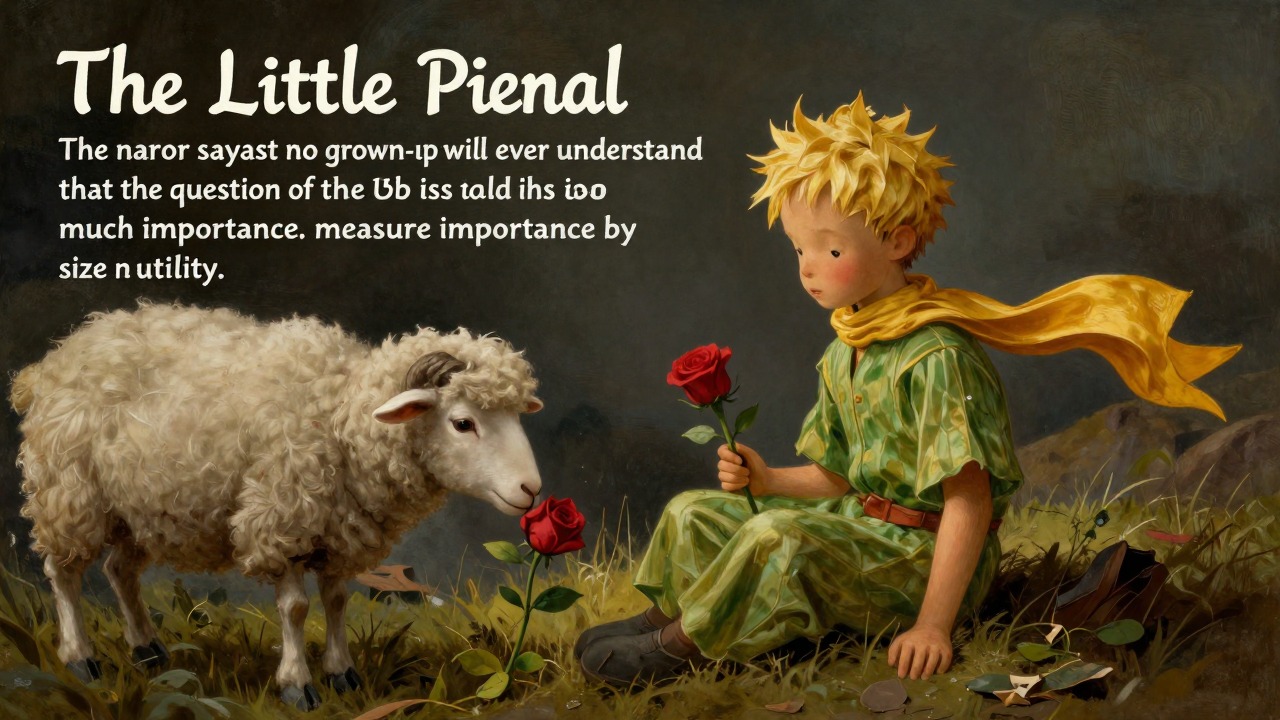
Adult Dismissal
Context
The narrator says that no grown-up will ever understand that the question of the sheep and the rose is of so much importance. Adults measure importance by size and utility.
Development
For a grown-up, a sheep eating a rose is negligible. For the narrator, it changes everything. This clash of scales is the central conflict of the epilogue.
Significance
Adult dismissal defines the enemy of wonder. The narrator positions himself against a practical, reductive way of seeing.
Child's Seriousness
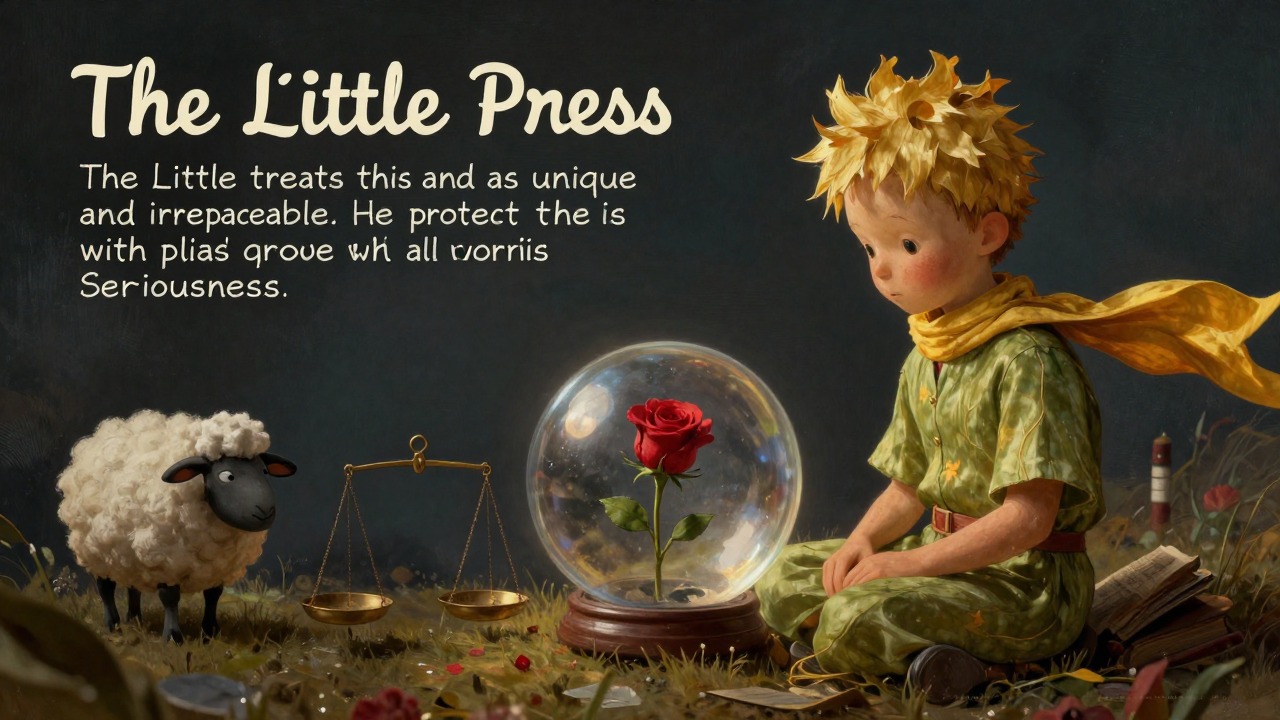
Child's Seriousness
Context
The Little Prince treats his Rose as unique and irreplaceable. He protects her with a glass globe and worries about the Sheep. This is a childlike seriousness.
Development
The narrator adopts the prince's scale of value. He lets a small flower matter more than every adult concern. The child's seriousness becomes his own.
Significance
Child's seriousness is the ethical core of the story. It says that love makes things important regardless of size.
Importance Declared
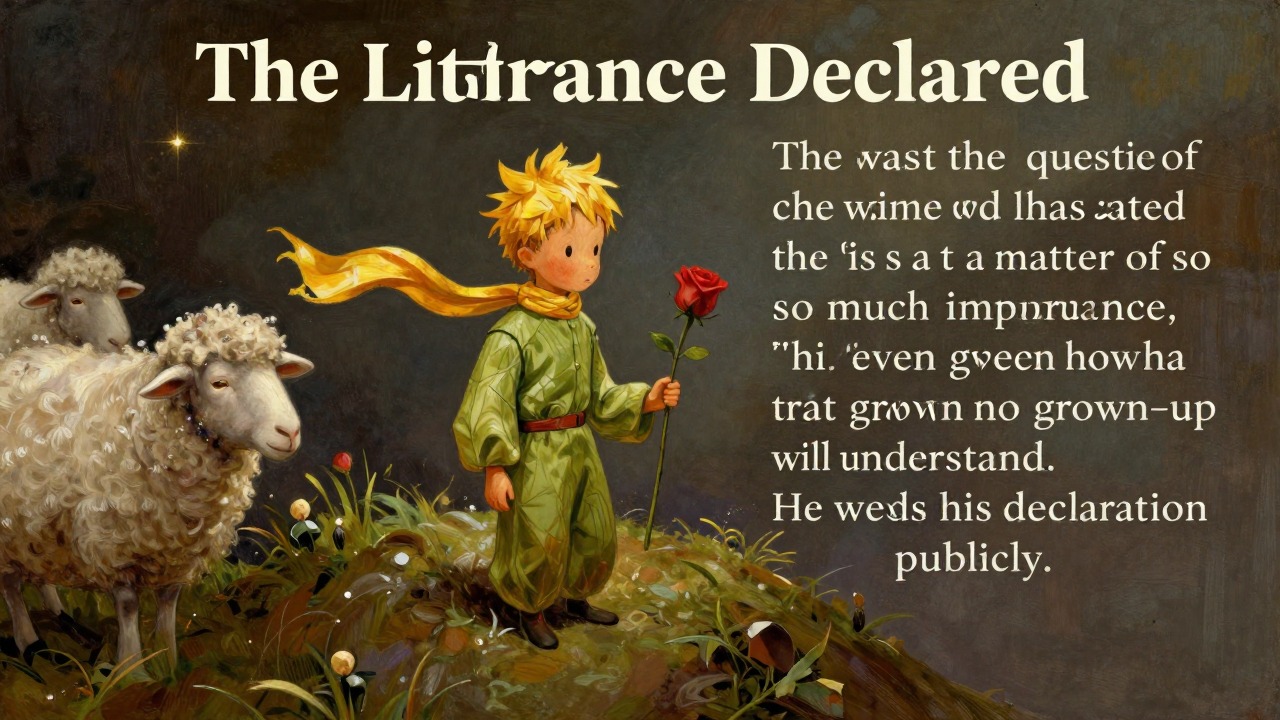
Importance Declared
Context
The narrator asserts that the question of whether the sheep has eaten the rose is a matter of so much importance, even though no grown-up will understand. He makes his declaration publicly.
Development
The declaration is an act of rebellion against adult indifference. The narrator does not apologize for his obsession; he celebrates it. He invites readers to share it.
Significance
Importance declared is the narrator's manifesto. He chooses the fragile and invisible over the solid and obvious.
Universe Changed
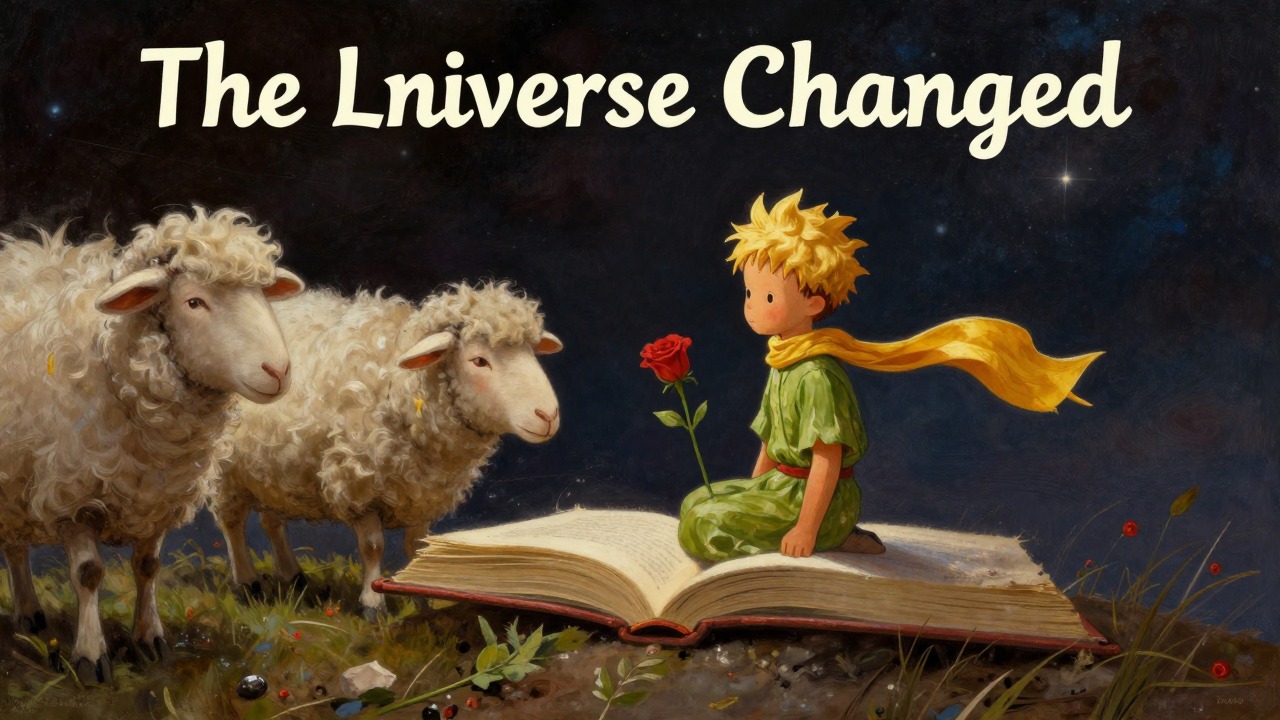
Universe Changed
Context
The narrator warns that if a sheep no one has ever seen has taken a single rose, then nothing in the universe can be the same. The scale is cosmic.
Development
This is an impossible notion by adult standards, yet the narrator embraces it. Small causes have infinite consequences. The universe is not indifferent; it is sensitive to a flower's fate.
Significance
Universe changed challenges grown-up metaphysics. It offers an alternative physics where love determines reality.
Understanding Through Love
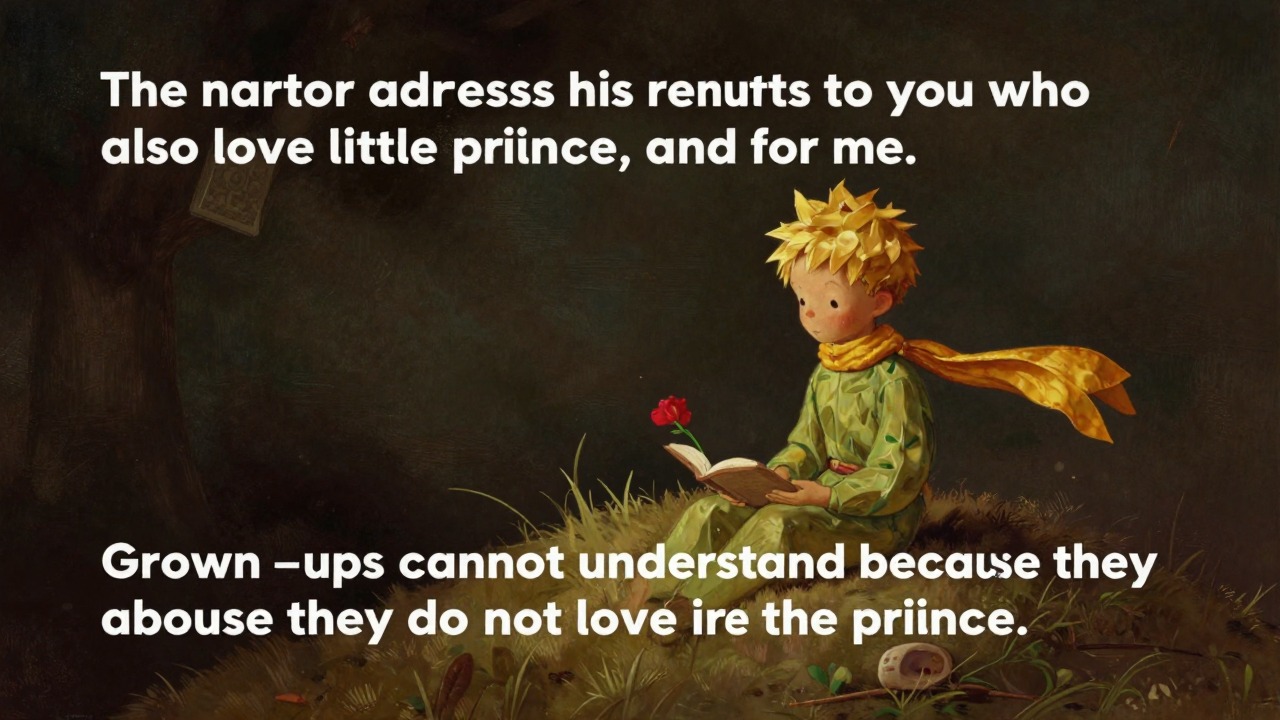
Understanding Through Love
Context
The narrator addresses his remarks to "you who also love the little prince, and for me." Understanding is reserved for those who share the affection.
Development
Grown-ups cannot understand because they do not love the prince. The epilogue's final instruction—wait under the star—is nonsense to the indifferent but vital to the faithful.
Significance
Understanding through love resolves the conflict not by argument but by community. The readers who love become the true grown-ups of the story.
when grown-ups fail to see the importance of the flower
when the Little Prince's worldview treats the flower as precious
in the epilogue, when the narrator insists on the flower's significance
when the narrator says nothing can be the same if the sheep has eaten a rose
at the close, when only those who love the Little Prince understand
