
The Survival of Meaning in an Absent Presence
The Little PrinceThe tension between the Little Prince's physical absence and the vivid meaning he leaves behind, resolved through the bells and the landscape.
increasing Bearing strength in each event
 decreasing
Bearing strength in each eventdecreasingEmpty Desert After Loss
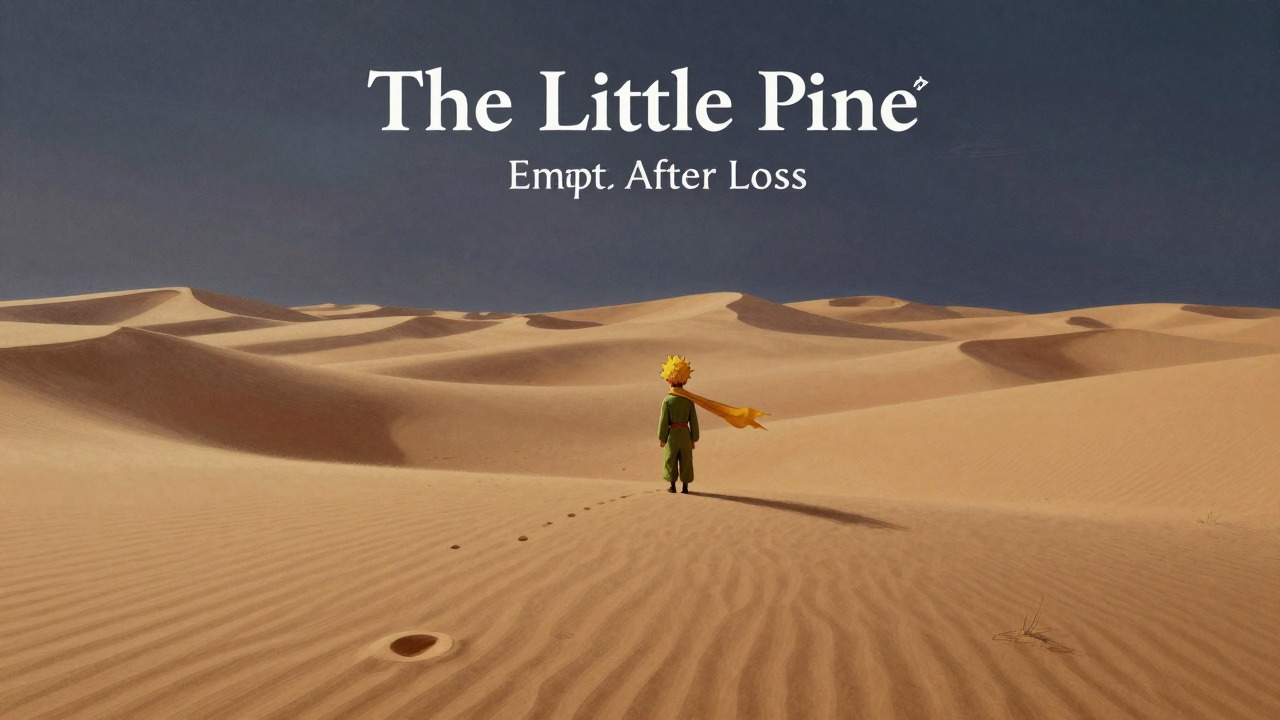
Empty Desert After Loss
Context
The desert seems empty after the prince's disappearance. There is no body, no footprint, no sign. The narrator faces a landscape stripped of presence.
Development
This emptiness could lead to nihilism, a universe where the prince was never real. But the narrator resists that conclusion. He searches for meaning in the absence itself.
Significance
Empty desert after loss is the starting point of the conflict. The epilogue asks whether meaning can survive when its source is gone.
Absence as Proof
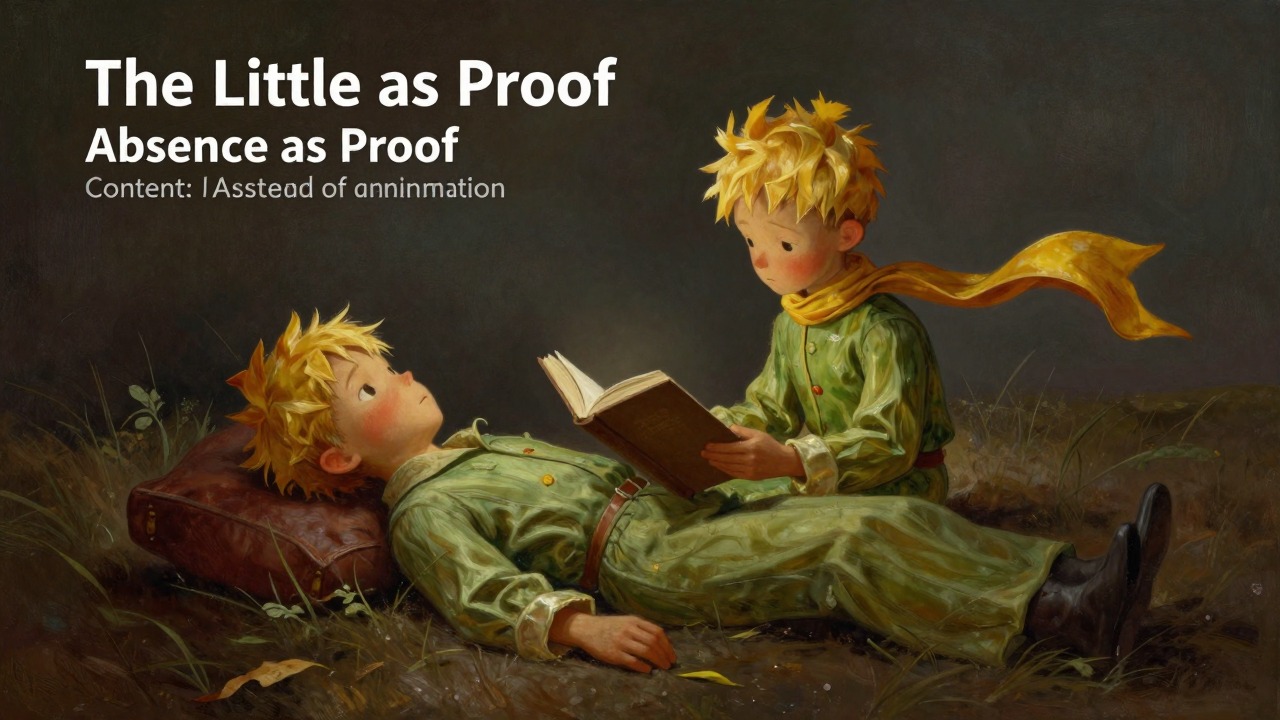
Absence as Proof
Context
The narrator chooses to read the missing body as evidence of return. Absence, instead of annihilation, becomes confirmation of continued existence.
Development
This is an interpretive leap. A logical reader might conclude the body was simply lost; the narrator concludes a miracle. Meaning is generated by belief.
Significance
Absence as proof transforms the prince's departure into a travel narrative. It allows the narrator to preserve the prince's presence in another form.
Stars as Carriers

Stars as Carriers
Context
The absent prince is replaced by the presence of bells in the stars. The cosmos is no longer silent; it speaks through chimes.
Development
The bells carry the prince's laughter, his personality, his survival. The stars are not just faraway suns but transmitters of meaning. Absence has become a medium, not a void.
Significance
Stars as carriers show how meaning can be transferred to a larger context. The prince is not less present; he is everywhere.
Landscape Charged
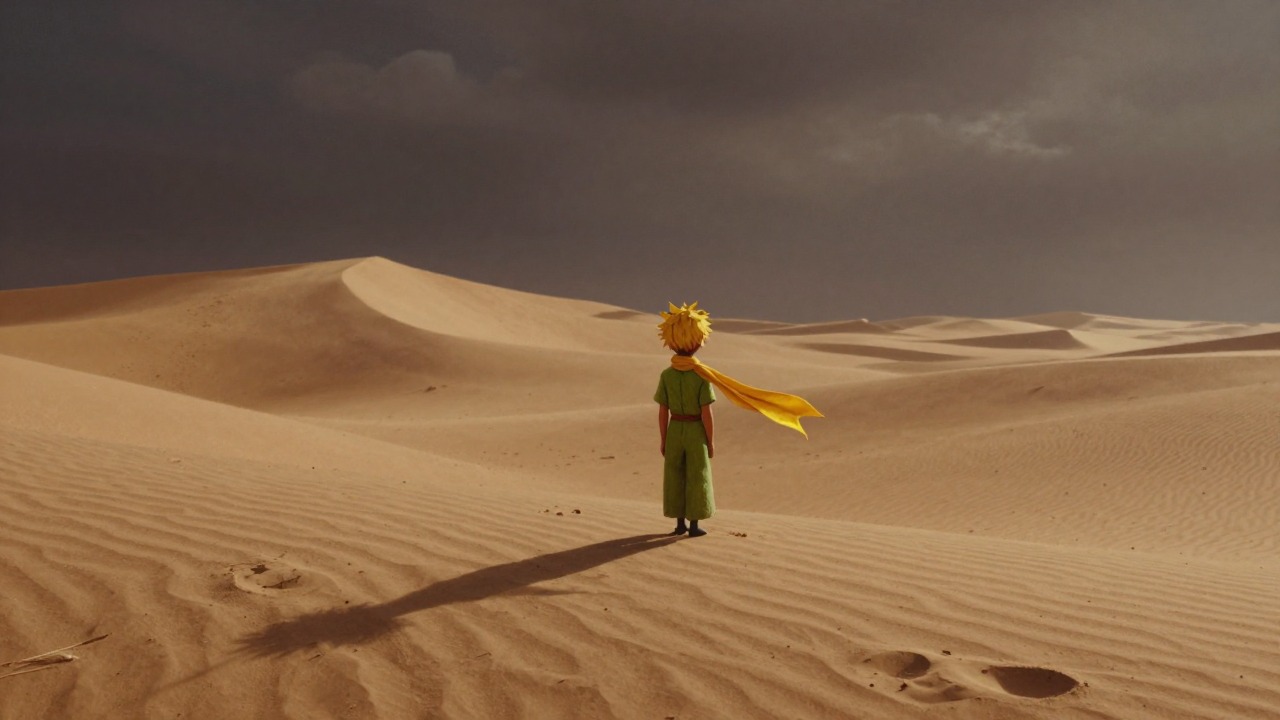
Landscape Charged
Context
The same desert that seemed empty after loss becomes the loveliest and saddest landscape because it held the prince. Meaning is baked into the sand.
Development
The narrator can look at the spot and feel both beauty and grief. The place itself tells the story. The loveliness comes from the memory; the sadness from the absence.
Significance
Landscape charged is a resolution: meaning survives by anchoring itself in places and images. The earth retains the prince's trace.
Vigil as Meaning
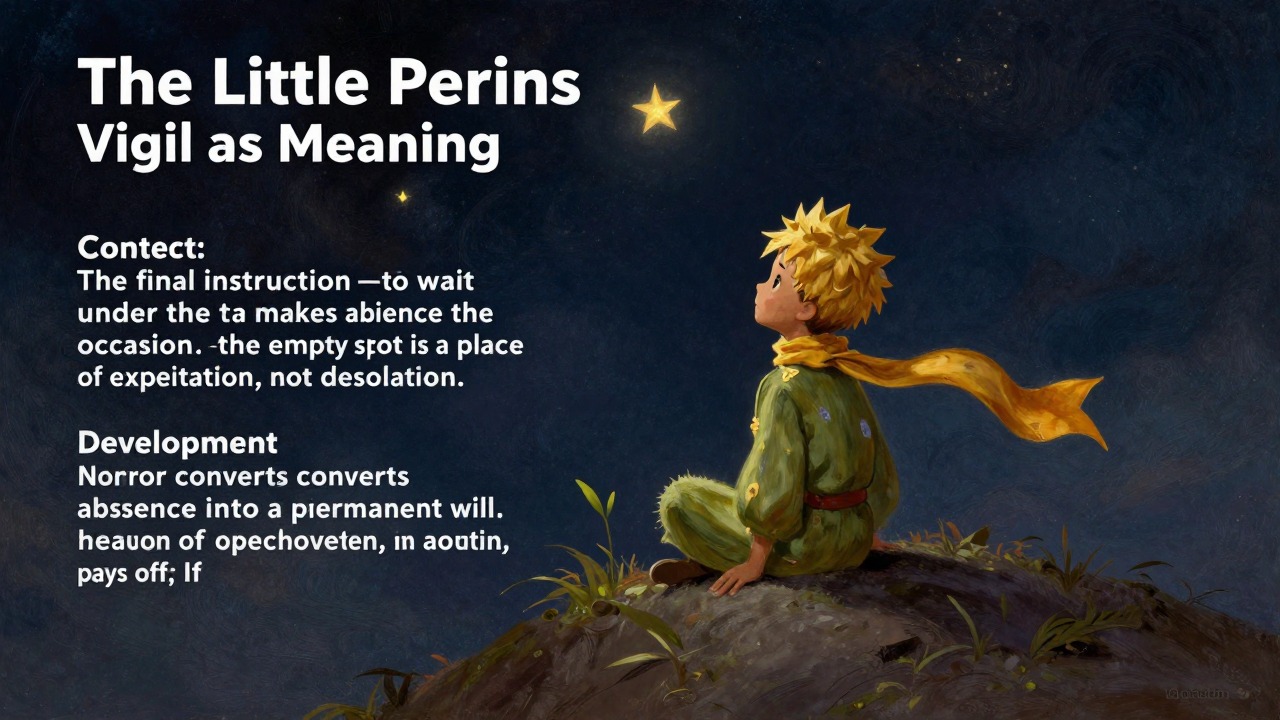
Vigil as Meaning
Context
The final instruction—to wait under the star—makes absence the occasion for continued meaning. The empty spot is a place of expectation, not desolation.
Development
The narrator converts absence into a permanent vigil. If the prince returns, the waiting pays off; if he does not, the waiting itself is meaningful. The act of watching keeps the prince alive.
Significance
Vigil as meaning completes the survival of meaning. The absent presence is now a shared practice for all readers.
right after the Little Prince disappeared
when the narrator reasons that no body means the prince returned
when the narrator begins hearing bells in the stars
when the narrator redraws the desert and calls it loveliest and saddest
when the narrator tells future travelers to wait under the star
