
The Essential Invisibility of What Matters
The Little PrinceThe epilogue dramatizes how the most important events—a sheep and a rose on a faraway planet—are invisible yet change everything.
increasing Bearing strength in each event
 decreasing
Bearing strength in each eventdecreasingInvisible Event
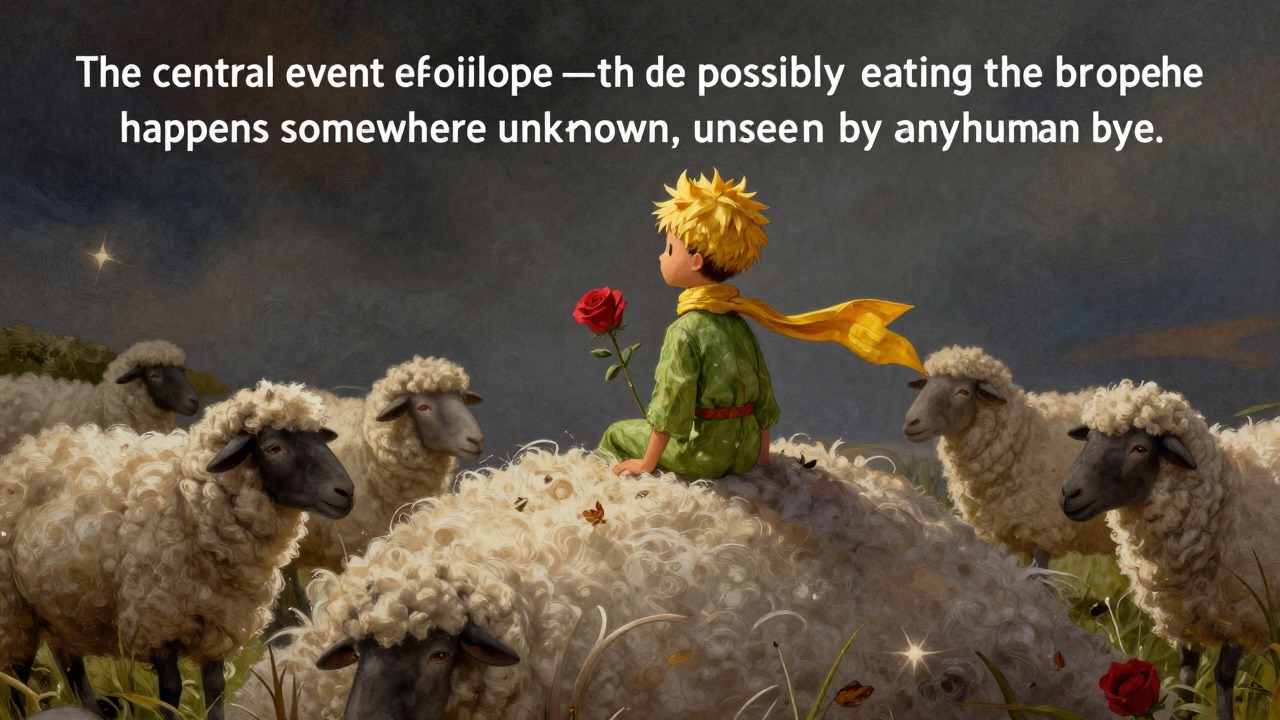
Invisible Event
Context
The central event of the epilogue—the Sheep possibly eating the Rose—happens somewhere unknown, unseen by any human eye. It is the most important fact and yet completely invisible.
Development
The narrator states that nothing in the universe can be the same if this hidden event occurred. Significance does not require visibility. A private tragedy on a distant planet alters everything.
Significance
This is the epilogue's declaration of invisible ontology: what matters is not what can be seen.
Invisible Bond
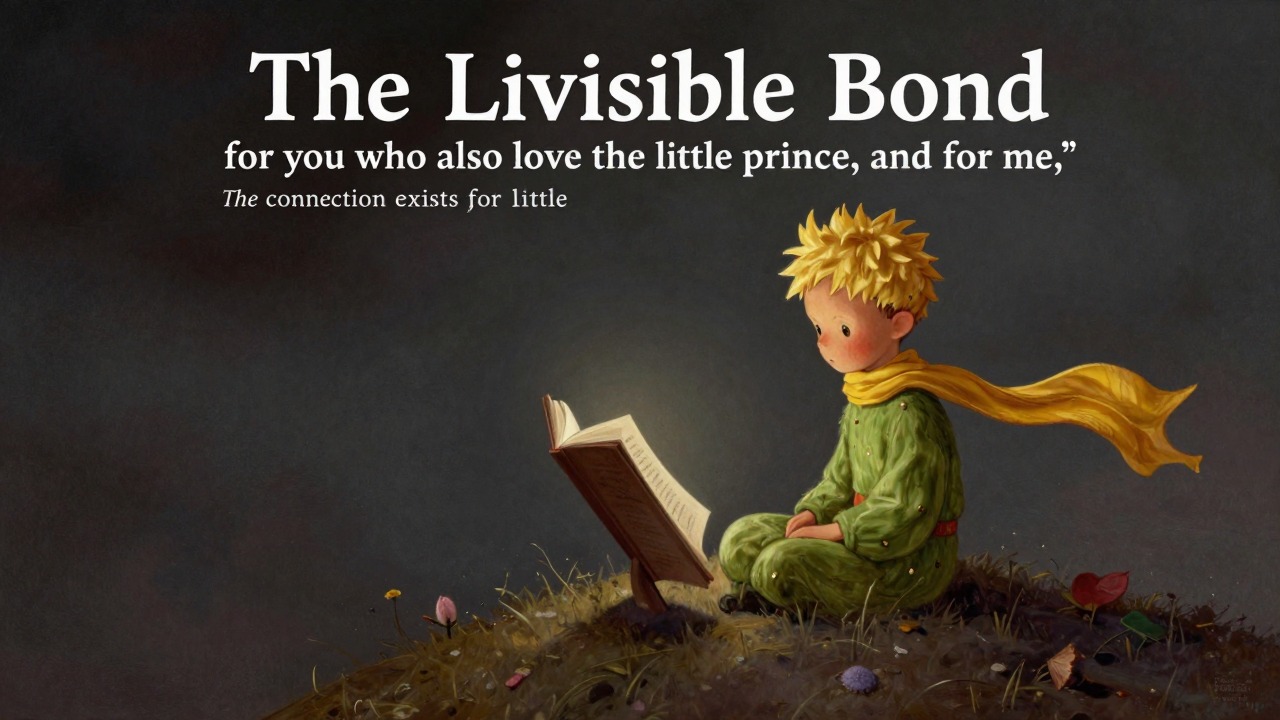
Invisible Bond
Context
The narrator says "for you who also love the little prince, and for me," establishing a bond that has no physical basis. The connection exists in affection alone.
Development
Readers have never seen the Little Prince, yet they love him. The bond between narrator and reader is mediated by an absent, invisible child. This bond is more real than many visible relationships.
Significance
The invisible bond exemplifies the theme: love and meaning are carried by what cannot be seen.
Grown-Ups' Blindness
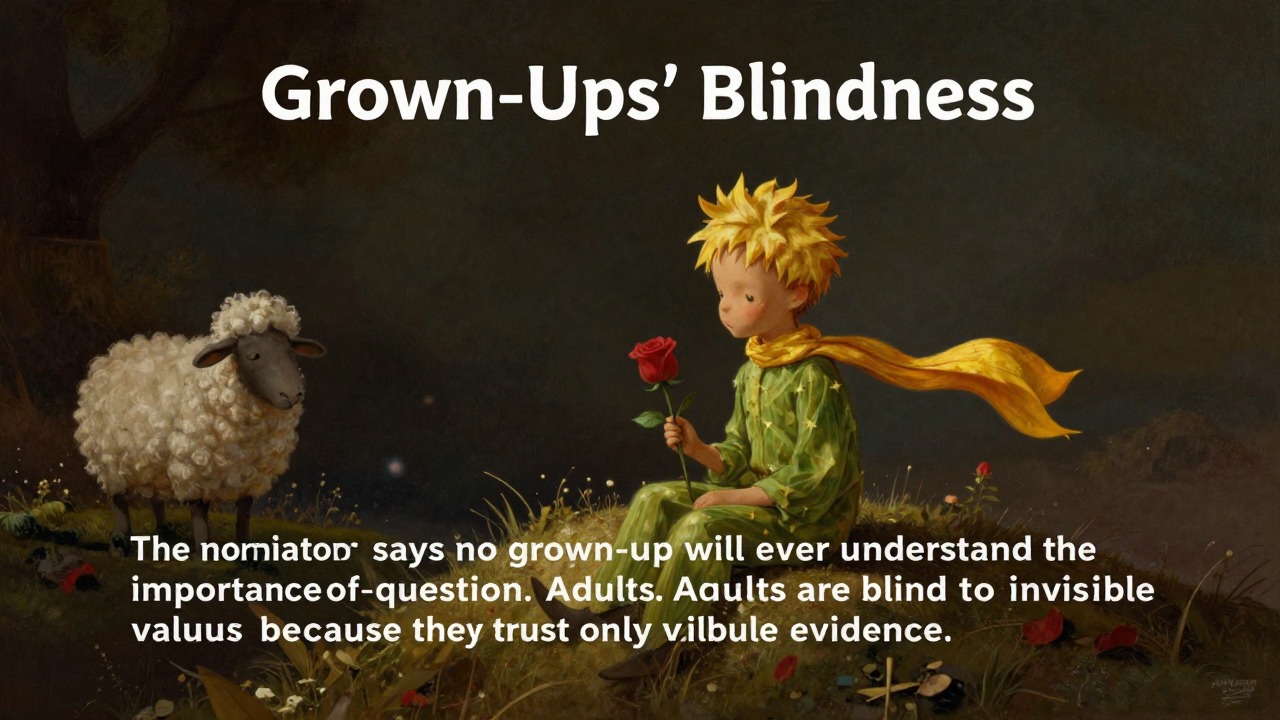
Grown-Ups' Blindness
Context
The narrator says no grown-up will ever understand the importance of the sheep-and-rose question. Adults are blind to invisible values because they trust only visible evidence.
Development
This blindness is a moral failure, not a cognitive limit. The narrator contrasts adult vision with the child's ability to see what matters. The epilogue sides with the invisible.
Significance
Grown-ups' blindness clarifies the stakes: the rest of the story is an argument for a different way of seeing.
Invisible Presence
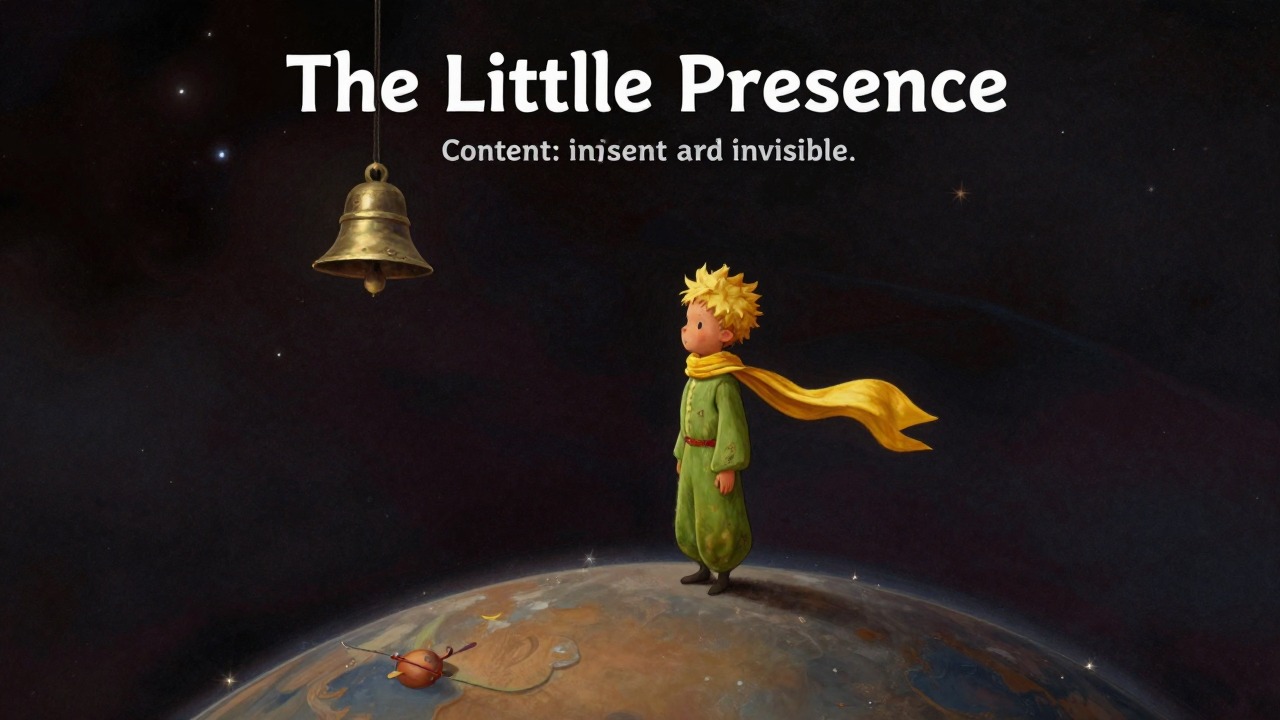
Invisible Presence
Context
The prince is absent and invisible, but the narrator feels his presence in the bells of the stars. The absence is not a void; it is a different mode of being.
Development
The prince's planet cannot be seen, yet the narrator's universe is shaped by it. Invisibility does not negate existence; it simply changes how the prince is encountered.
Significance
Invisible presence proves the theme's positive side: what matters can sustain us despite being unseen.
Faith in the Unseen
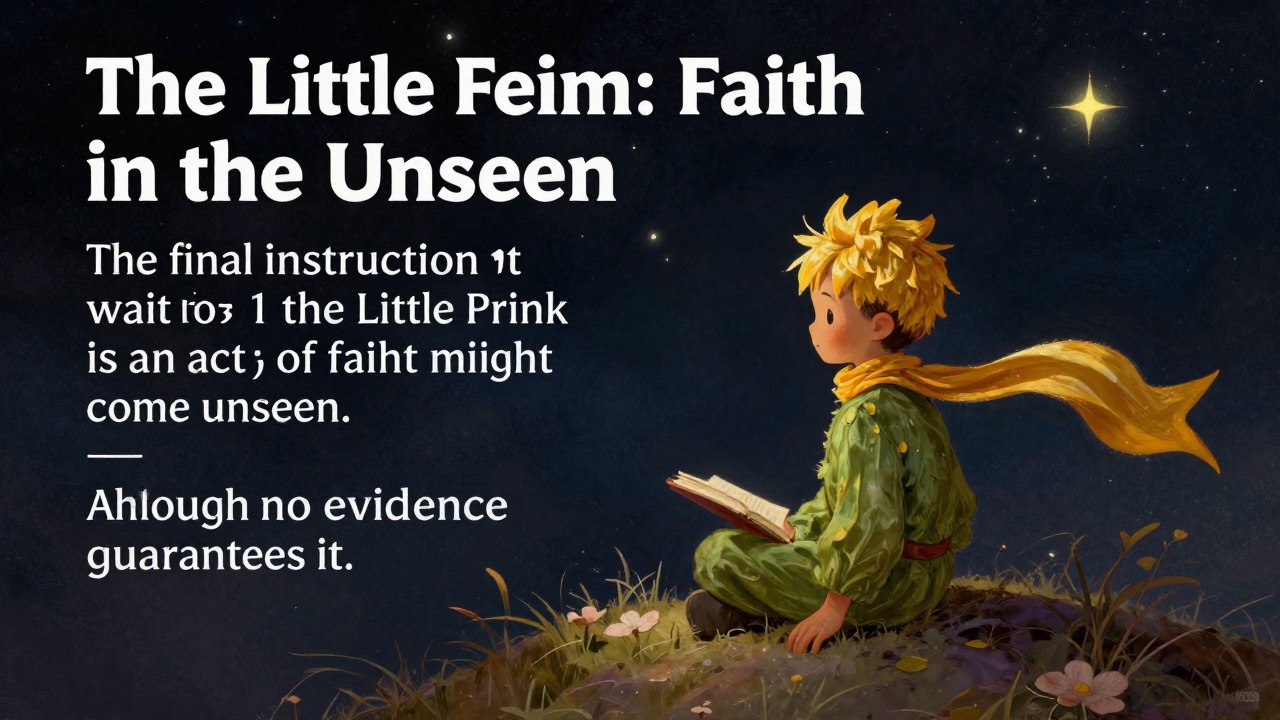
Faith in the Unseen
Context
The final instruction to wait for the Little Prince is an act of faith in the unseen. The narrator believes the prince might come back, although no evidence guarantees it.
Development
By waiting under the star, the narrator enacts the theme. He accepts that the most important things are beyond sight and proof. The reader is asked to share that faith.
Significance
Faith in the unseen is the epilogue's final chord. It turns invisibility from a wound into a promise.
when the sheep may have eaten the rose somewhere unknown
when the narrator links the reader to the Little Prince
when the narrator notes that no grown-up will understand
when the Little Prince remains present in the stars
when the narrator asks readers to wait under the star
