
Grief Transmuted into Beauty
The Little PrinceThe narrator's sorrow is transformed into a beautiful image of stars as bells, showing how absence can become an aesthetic and emotional gift.
increasing Bearing strength in each event
 decreasing
Bearing strength in each eventdecreasingSorrow as Raw Material
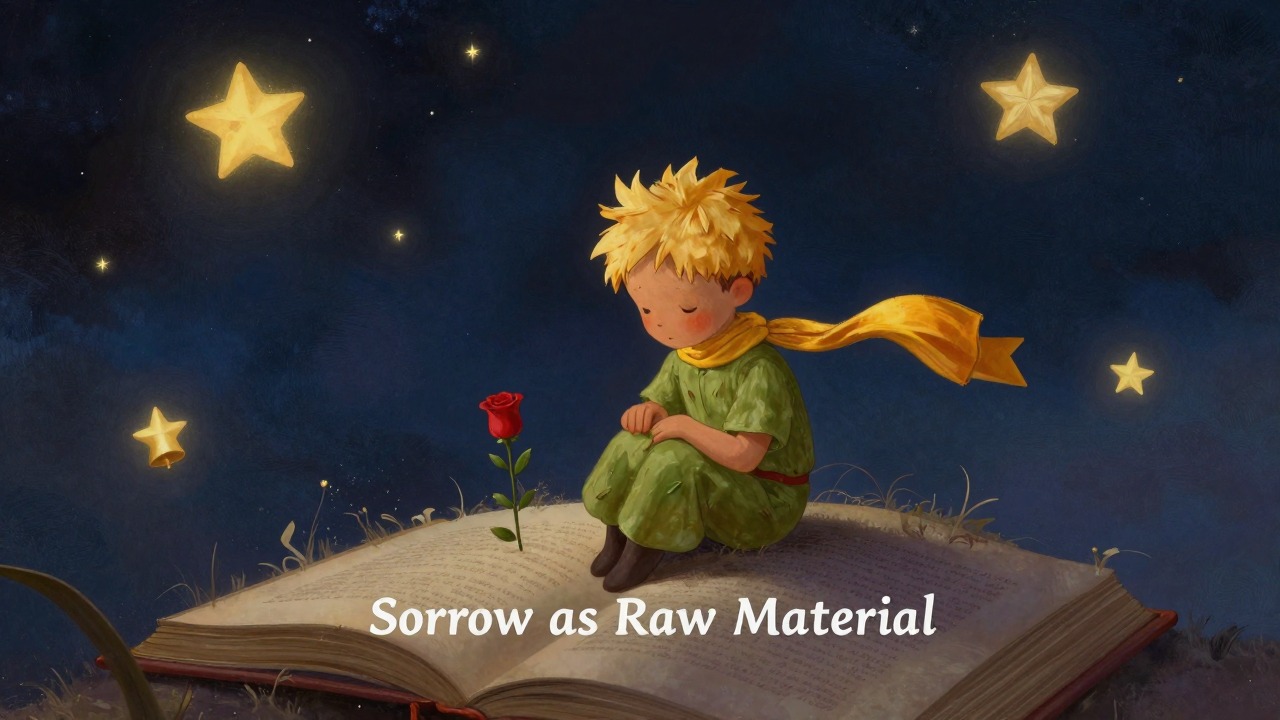
Sorrow as Raw Material
Context
The narrator's initial state after returning is raw sorrow. The grief is unprocessed, hidden behind the word "tired." It is the raw material for later beauty.
Development
Without this sorrow, the stars would never become bells. The loss is what gives the night sky its music. The narrator must pass through grief to reach beauty.
Significance
Sorrow is not an obstacle but a necessary stage. It is the seed of the epilogue's aesthetic.
Star Music Born
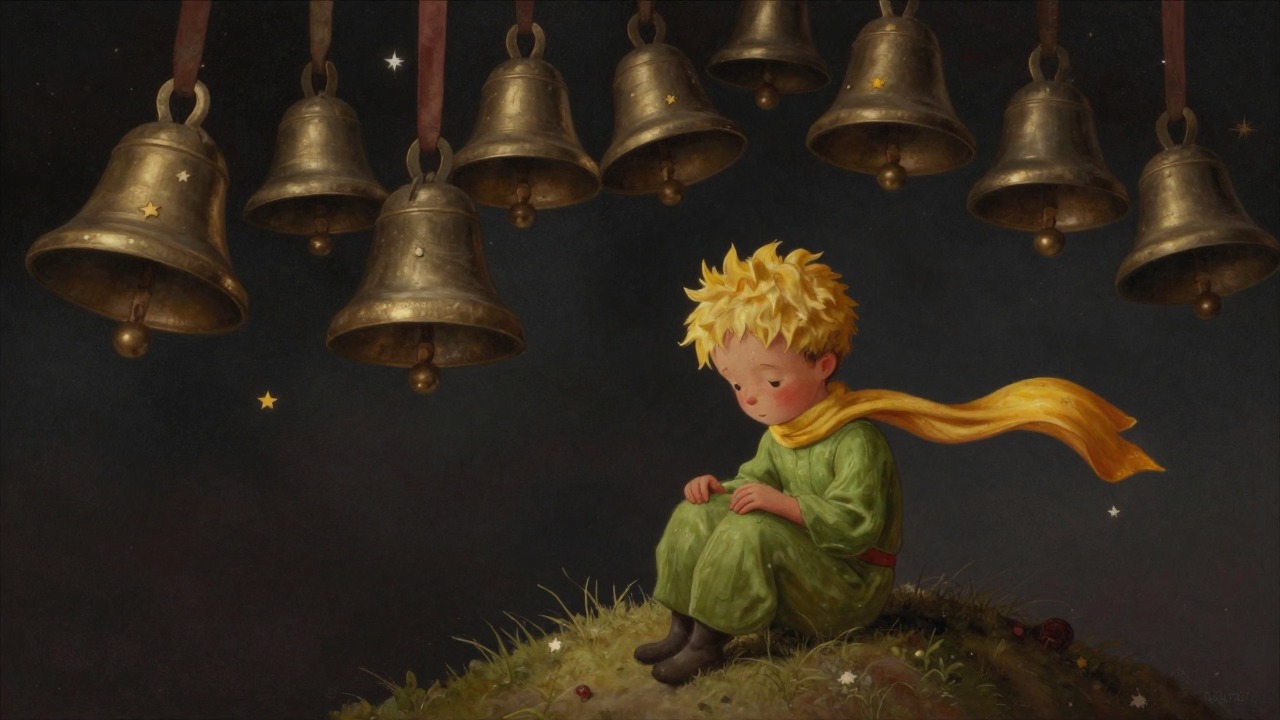
Star Music Born
Context
Six years later, the narrator hears the stars as five hundred million little bells. The transformation of grief into music is complete.
Development
The bells are not an escape from grief; they are grief's refined form. The narrator still feels sadness, but the sadness has become beautiful. The night sky now sings.
Significance
Star music born shows the alchemy of loss. Emotional pain can become an aesthetic treasure.
Sweet Laughter
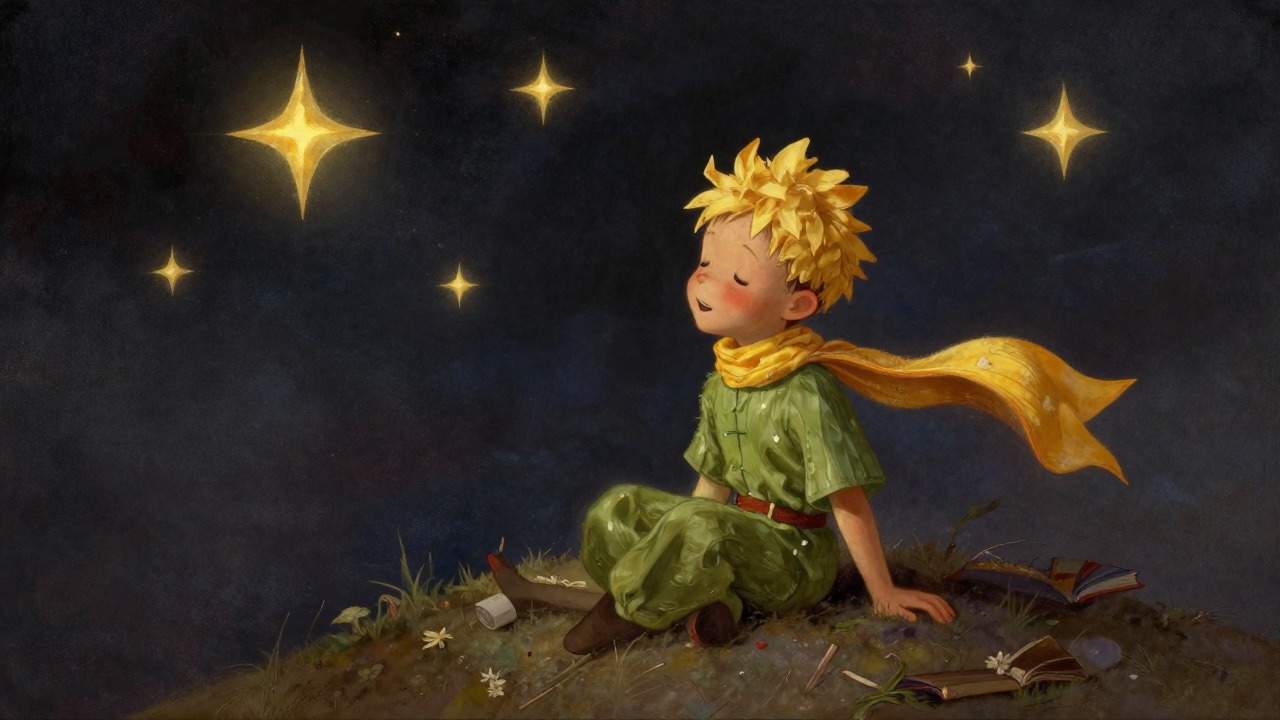
Sweet Laughter
Context
When the narrator imagines the prince's care, there is sweetness in the laughter of all the stars. The beauty of the stars intensifies with hope.
Development
Beauty is not static; it fluctuates with inner weather. The laughter is a projection of the narrator's relief. Grief has taught him to appreciate sweetness.
Significance
Sweet laughter is a positive peak of the transmutation. The stars can bring joy, not just melancholy.
Weeping Stars
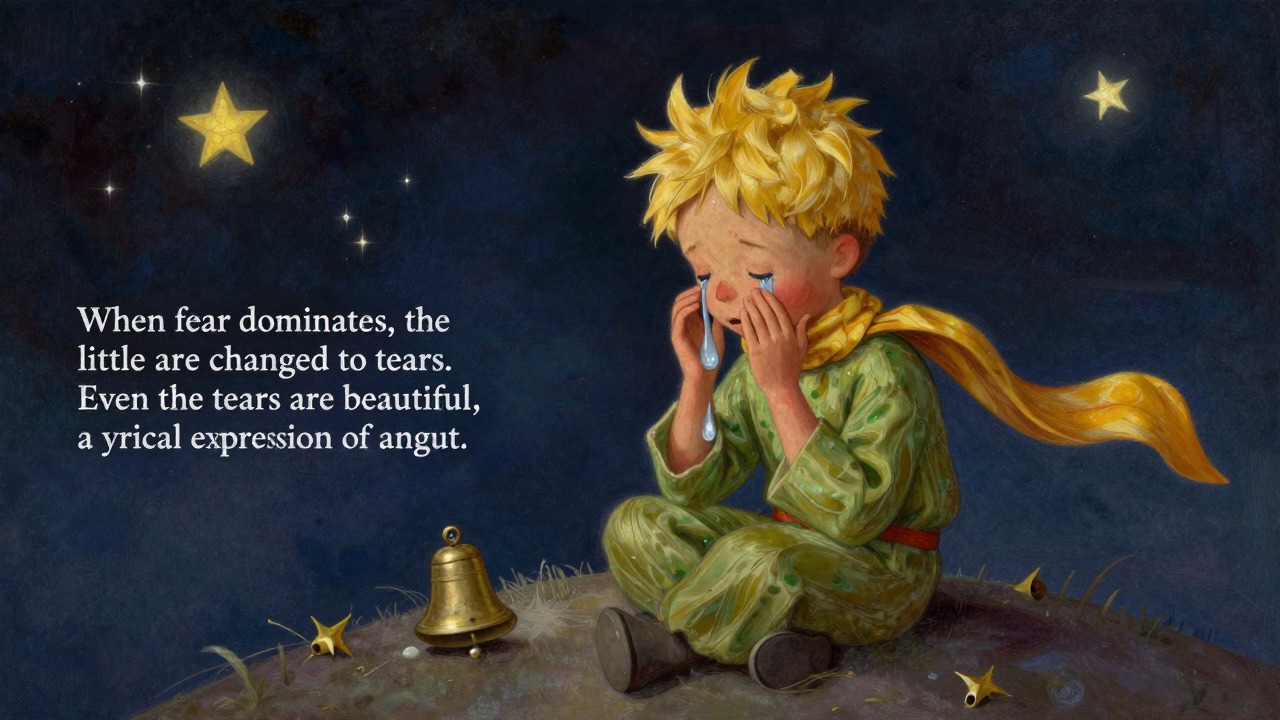
Weeping Stars
Context
When fear dominates, the little bells are changed to tears. Even the tears are beautiful, a lyrical expression of anguish.
Development
The ability to turn sorrow into tears-in-stars is itself an artistic act. The narrator does not become numb; he continues to transform pain into imagery.
Significance
Weeping stars shows that beauty coexists with despair. Transmutation is not the elimination of grief but its artistic expression.
Loveliest and Saddest
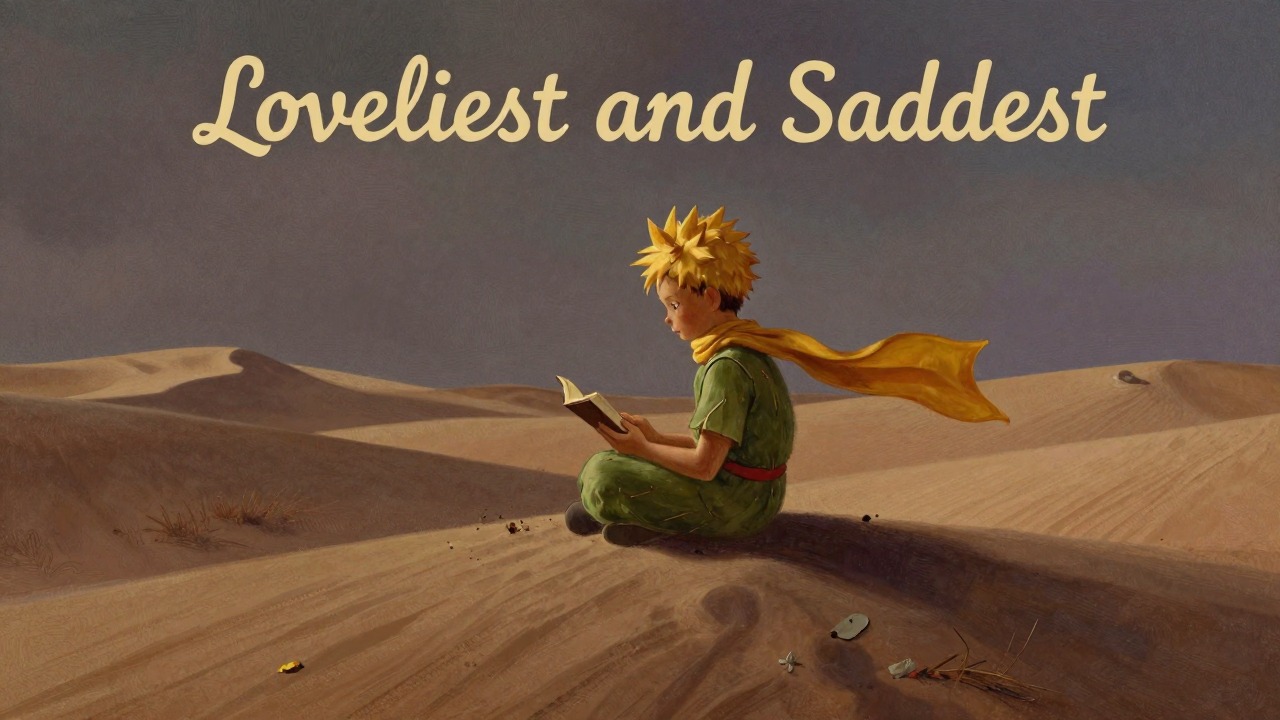
Loveliest and Saddest
Context
The narrator calls the desert landscape the loveliest and saddest in the world. The oxymoron is the final synthesis of grief and beauty.
Development
This phrase is the keynote of the theme. Loveliness arises from the memory of the prince, sadness from his absence. The two cannot be separated.
Significance
"Loveliest and saddest" is the epilogue's ultimate aesthetic formula. It names the place where beauty and sorrow are one.
in the early days after the prince's disappearance
at night, six years later
in hopeful moments when the Rose is safe
in fearful moments when the Sheep has perhaps eaten the flower
when the narrator names the landscape
