
The Unknowable Outcome as Permanent Wonder
The Little PrinceThe epilogue leaves the central question unanswered, turning uncertainty itself into a source of continual wonder and engagement.
increasing Bearing strength in each event
 decreasing
Bearing strength in each eventdecreasingUnresolved Question
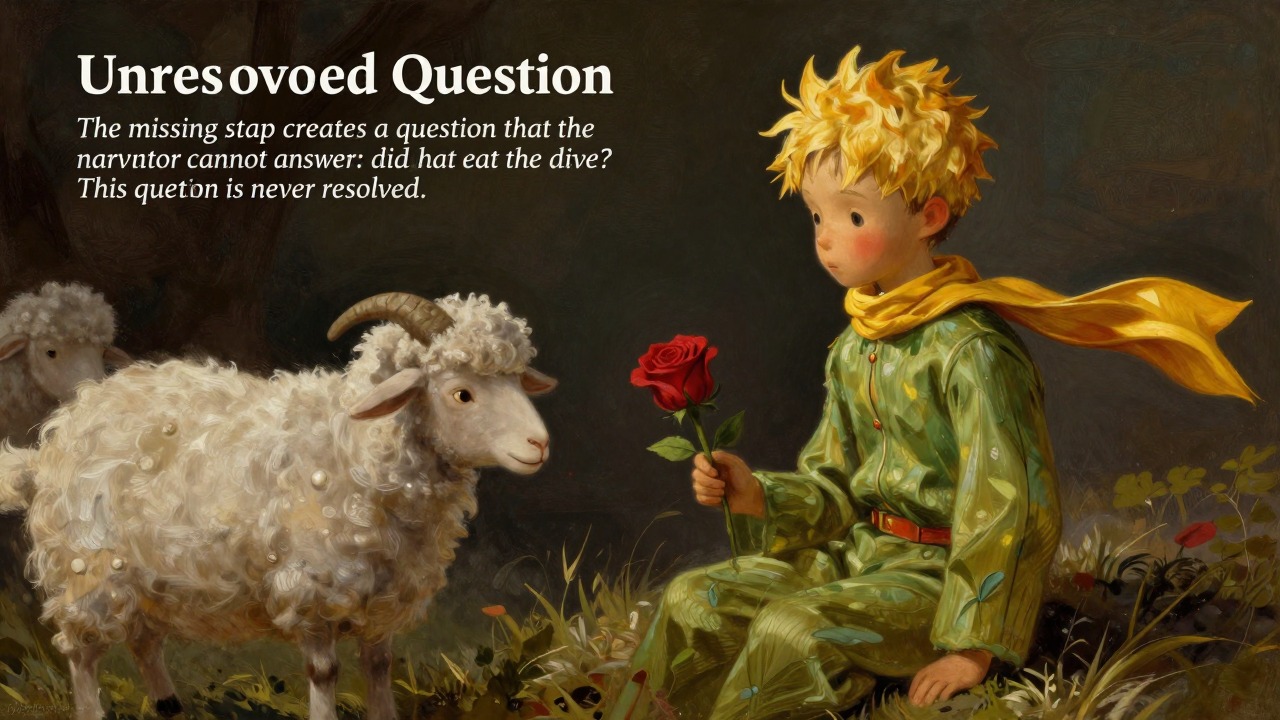
Unresolved Question
Context
The missing strap creates a question that the narrator cannot answer: did the Sheep eat the Rose? This question is never resolved.
Development
The narrator chooses not to invent an ending. He keeps the uncertainty alive, because it is the engine of wonder.
Significance
Unresolved question is the foundation of the theme: not knowing is a sustainable condition.
Two Scenarios
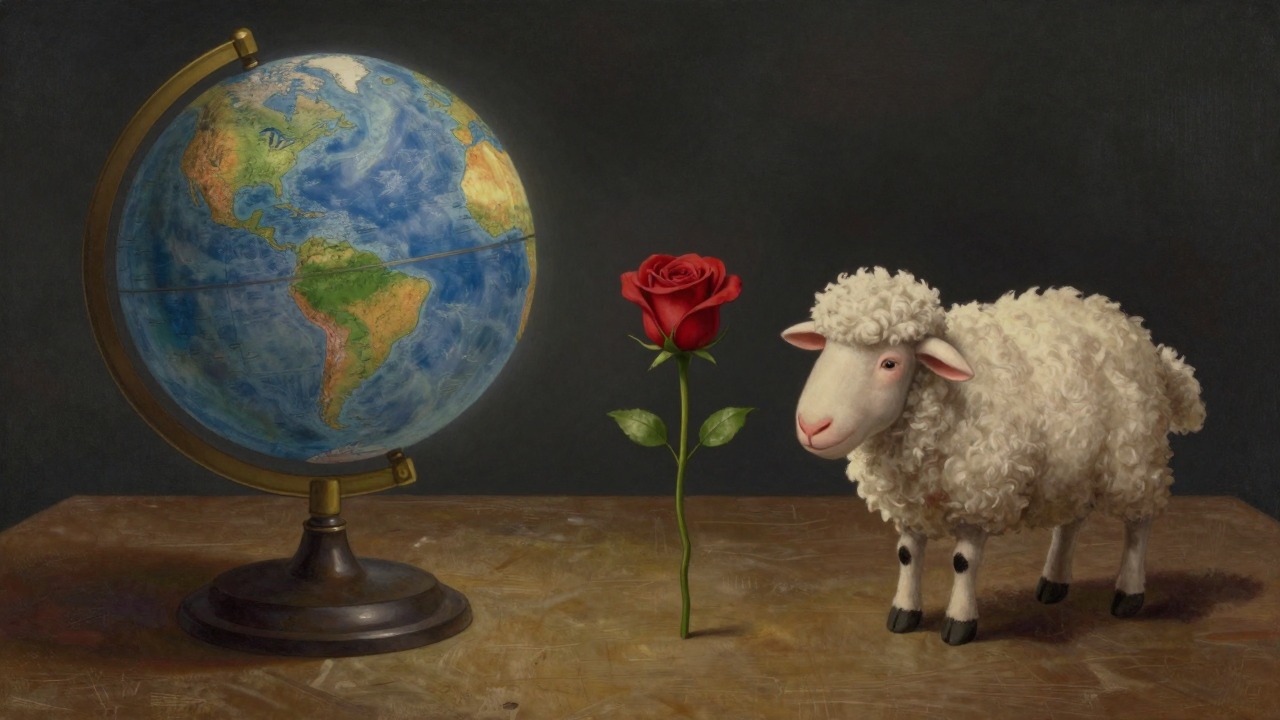
Two Scenarios
Context
The narrator presents two possible scenarios—the Rose safe under the globe, or the Rose eaten by the Sheep—without selecting one. Both remain on the table.
Development
This is not indecision but design. Keeping both scenarios open preserves the mystery. The reader is invited to inhabit each one.
Significance
Two scenarios turn the question into a perpetual oscillation. Wonder lives in the interval.
Universe in Suspense
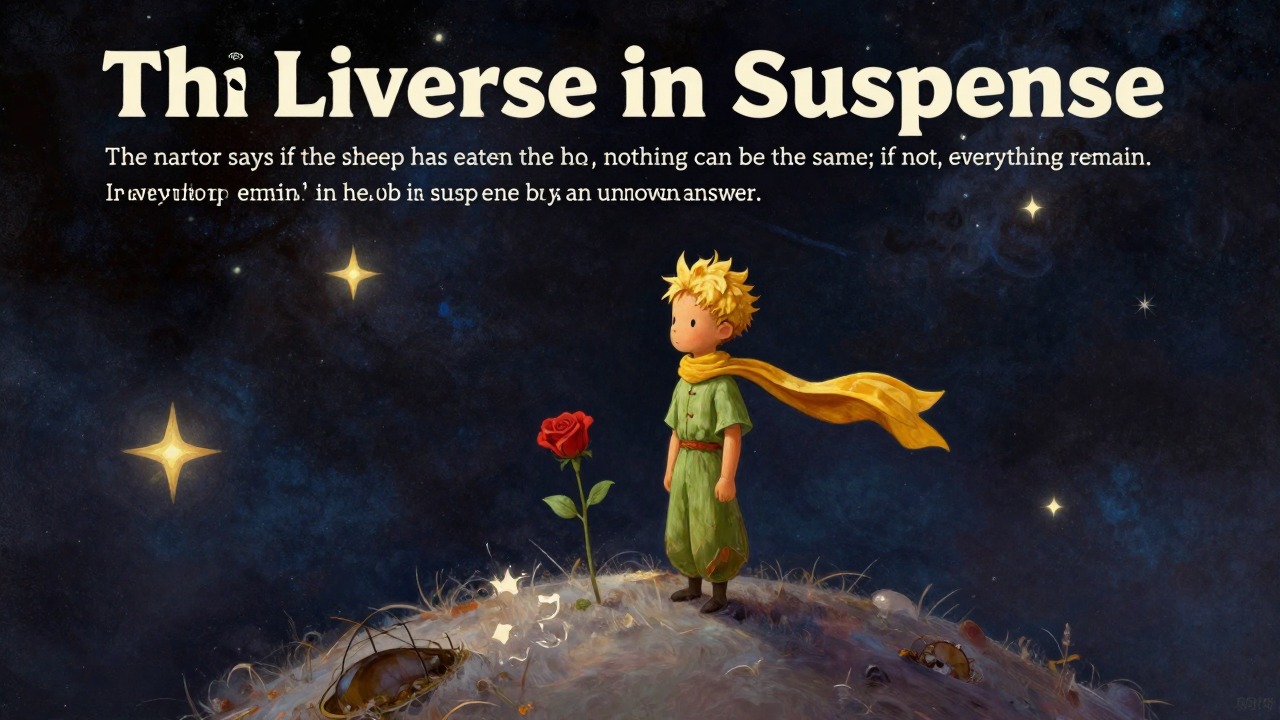
Universe in Suspense
Context
The narrator says if the Sheep has eaten the Rose, nothing can be the same; if not, everything remains. The universe is held in suspense by an unknown answer.
Development
This suspense applies to the reader too. The stars' meaning depends on yes or no. The cosmos is a book waiting to be finished.
Significance
Universe in suspense makes uncertainty a structural feature of reality.
Reader's Gaze
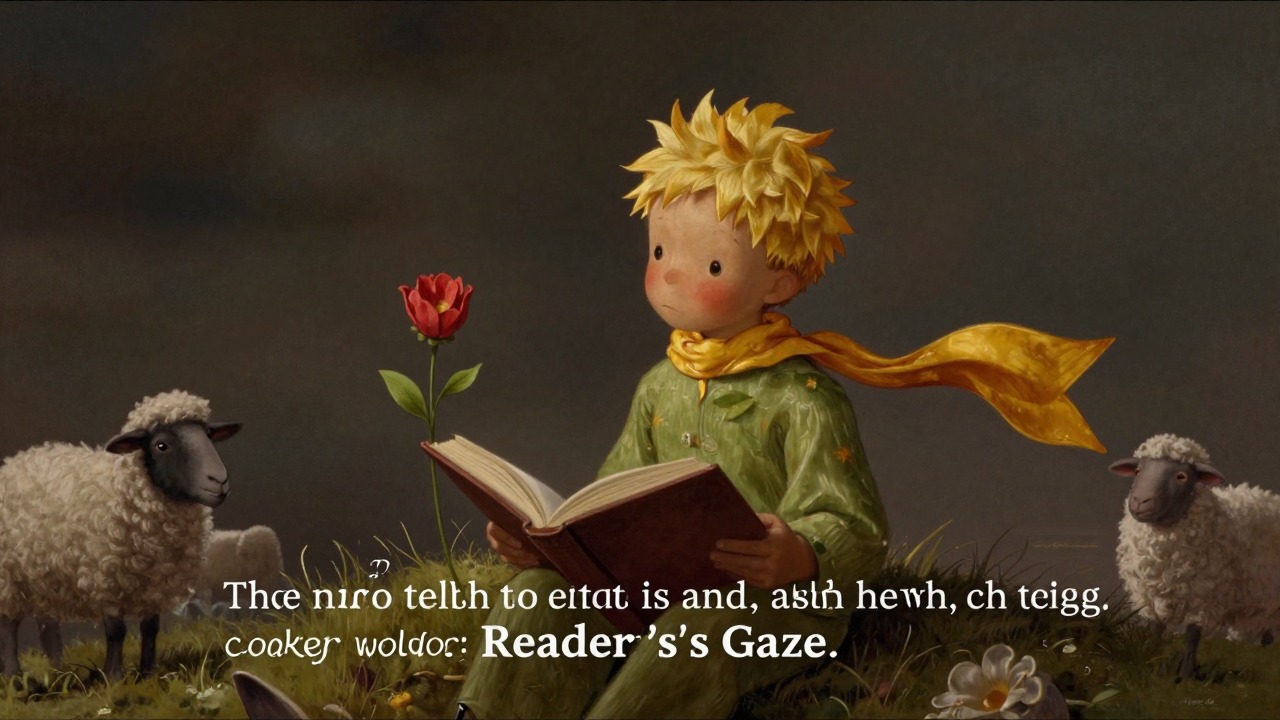
Reader's Gaze
Context
The narrator tells readers to look up at the sky and ask themselves whether the Sheep has eaten the flower. The act of asking perpetuates the wonder.
Development
Each new reader's gaze starts the question again. The unknowable outcome is reborn in every reading. The sky is a perpetual question mark.
Significance
Reader's gaze transfers the responsibility of wonder from the narrator to the audience.
Open Ending
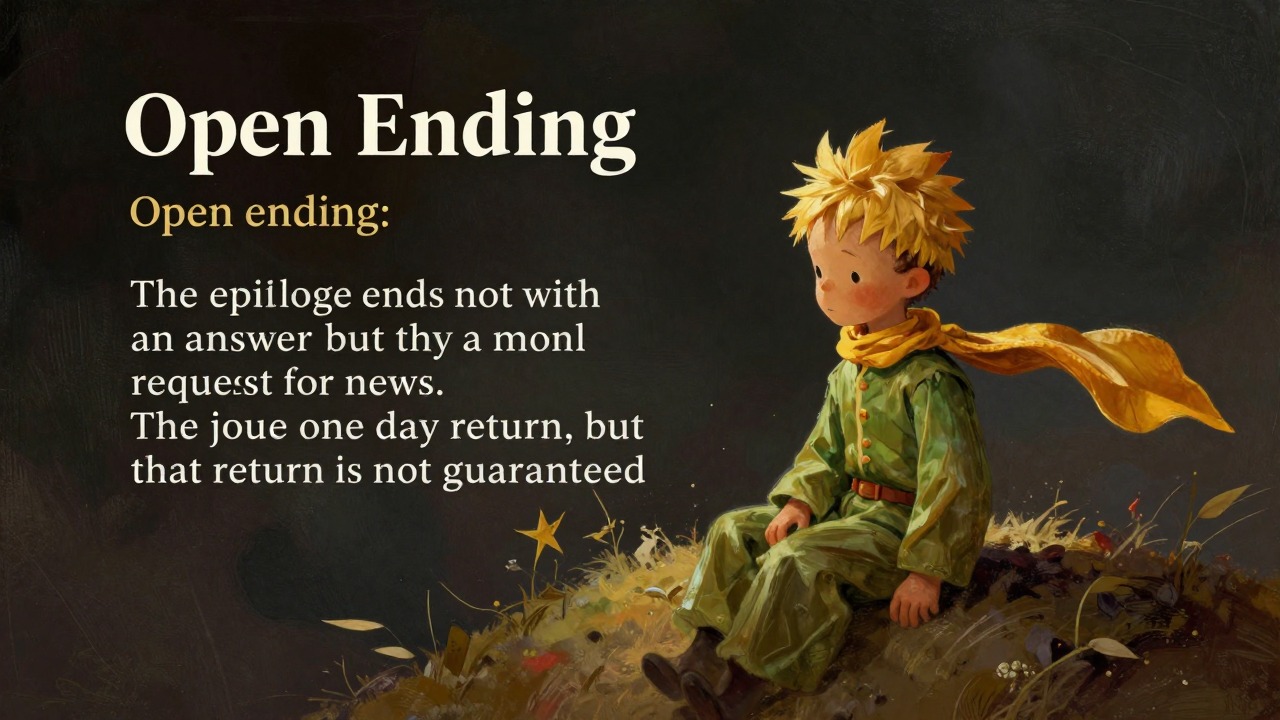
Open Ending
Context
The epilogue ends not with an answer but with a request for news. The prince may one day return, but that return is not guaranteed.
Development
The open ending maintains the unknowable outcome to the final sentence. The narrator remains waiting, and the reader is left with a sacred uncertainty.
Significance
Open ending is the thematic consummation: the story's power lies in its refusal to close the question.
when the narrator first introduces the missing strap
when the narrator alternates between hope and fear
when the narrator says everything changes
when the narrator tells readers to look up and ask
when the narrator asks for word of the prince's return
