Gollum
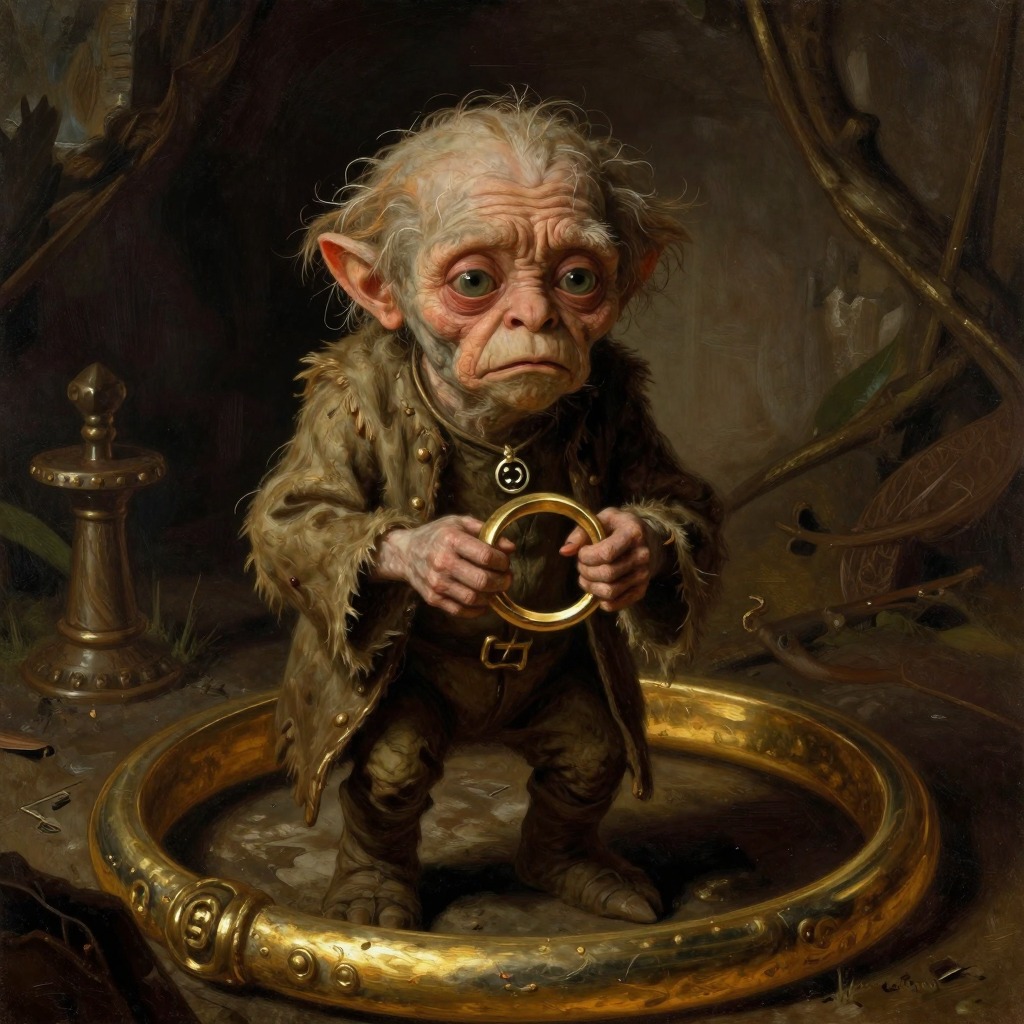
Gollum is one of the most tragic and pivotal figures in The Lord of the Rings, a creature whose entire existence is defined by his relationship to the One Ring. Once a hobbit-like creature named Sméagol, his discovery of the Ring in the Gladden Fields set him on a path of corruption that transformed him into a loathsome, schizoid being. His story is a dark mirror of what the Ring can do to its bearers, and his final, accidental destruction of the Ring at the Sammath Naur makes him an unwitting agent of the quest's success, even as he dies for it.
Identity and Origins
Gollum was not always the wretched creature that Frodo and Sam encounter. He was once Sméagol, a clever-handed and quiet-footed member of a small people akin to the hobbits, specifically related to the ancestors of the Stoors. He lived by the banks of the Great River Anduin, on the edge of Wilderland, in a family of high repute that was large and wealthier than most, ruled by a stern and wise grandmother. Sméagol was the most inquisitive and curious-minded of his family, interested in roots and beginnings, diving into deep pools, burrowing under trees, and tunnelling into green mounds. His gaze was always downward, toward the earth, rather than up at the hill-tops or the leaves on trees.
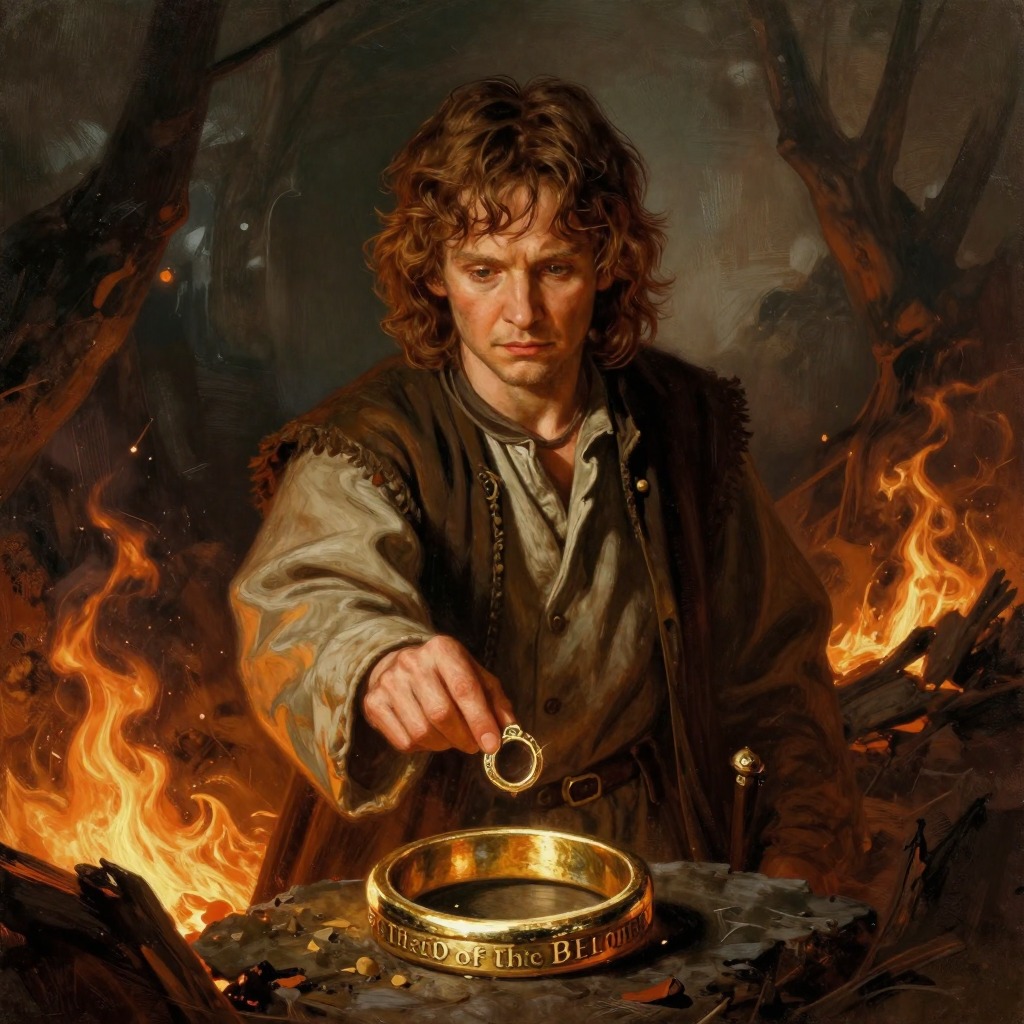
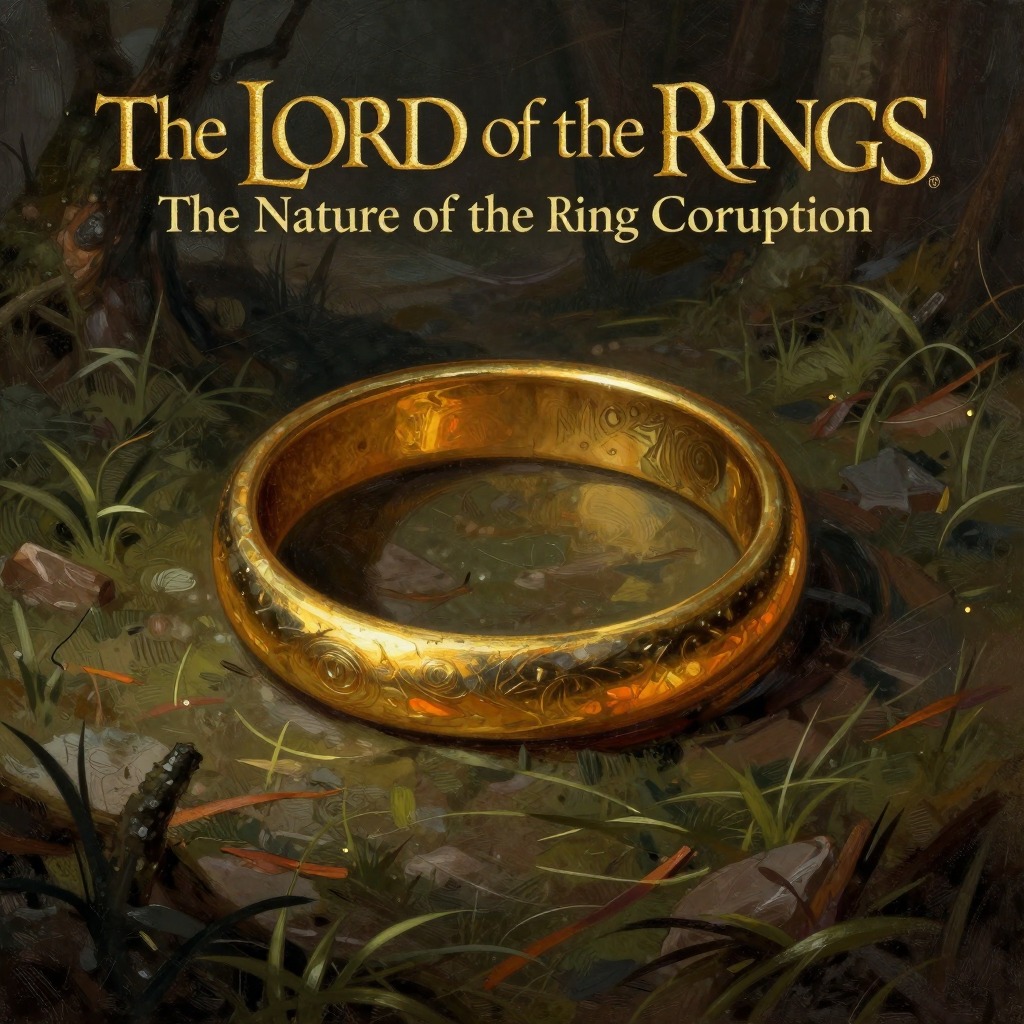
His transformation began when he and his friend Déagol went boating in the Gladden Fields. Déagol was dragged into the water by a great fish and, at the bottom of the river, discovered a beautiful golden ring shining in the river-bed. When Déagol surfaced with the ring, Sméagol, who had been watching from behind a tree, was overcome with desire and murdered his friend to take the Ring for himself. This act of violence, committed for the sake of the Ring, was the first step in his long corruption.
Life and Plot Trajectory
After murdering Déagol, Sméagol used the Ring to become a thief and a spy, but his new power brought him no peace. He was cast out by his people, and he wandered in loneliness, weeping for the hardness of the world. He journeyed up the River until he came to a stream flowing down from the Misty Mountains. There, he caught fish in deep pools with invisible fingers and ate them raw. One day, feeling the burning of the Sun on his head, he looked up and shook his fist at it for the last time, then decided to seek refuge in the cool, shady roots of the mountains. He wormed his way like a maggot into the heart of the hills and vanished out of all knowledge, taking the Ring with him into the shadows. Even Sauron, the Ring's maker, could learn nothing of it while his power was still growing.
In the darkness under the mountains, Sméagol became Gollum, a loathsome little creature who lived on a small island of rock in a cold lake far from the light. He paddled a small boat with his large flat feet, peering with pale luminous eyes and catching blind fish with his long fingers, eating them raw. He would eat any living thing, even orc, if he could catch it and strangle it without a struggle. The Ring was his only love, his 'Precious', and he talked to it even when it was not with him, keeping it hidden in a hole on his island except when he was hunting or spying.
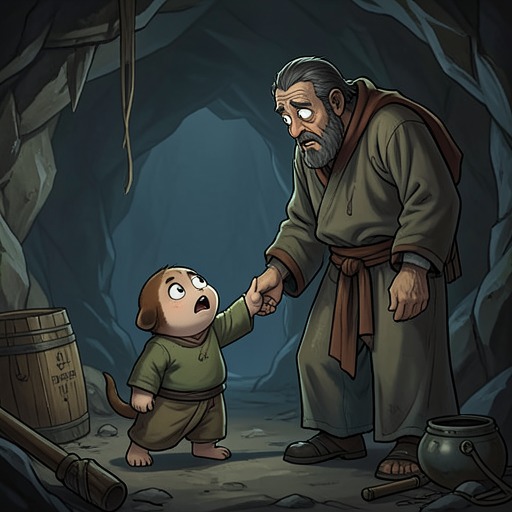
It was in these tunnels that Bilbo Baggins, lost and groping in the dark, found the Ring and put it in his pocket. When Gollum encountered Bilbo, he challenged him to the Riddle-game, promising to lead him out if Bilbo won and to kill and eat him if he lost. Bilbo won by luck, asking 'What have I got in my pocket?' when he was stumped for a riddle, and Gollum, unable to answer, was forced to guide him out. Bilbo escaped with the Ring, and Gollum was left alone, his Precious stolen.
Key Actions and Objectives
Gollum's primary objective throughout the story is to reclaim his Precious, the Ring. This obsession drives every action he takes. When he encounters Frodo and Sam in the Emyn Muil, he follows them, torn between his desire to serve the hobbits who now carry his Precious and his overwhelming urge to take it back. He becomes their guide, leading them through the Dead Marshes and toward Mordor, but his loyalty is constantly in question.
His internal conflict is most vividly portrayed in a scene where Sam, pretending to sleep, watches Gollum debate with himself. Sméagol, the remnant of his original self, promises to save the Precious and not let 'Him' (Sauron) have it, while the Gollum side, speaking in a squeaking, hissing voice, wonders what the hobbit is going to do with it. As the debate rages, Gollum's long hand creeps out slowly, pawing towards Frodo, only to be drawn back with a jerk when Sméagol speaks. Finally, both arms, with long fingers flexed and twitching, claw towards Frodo's neck. Sam realizes that Gollum is not merely hungry for hobbit flesh but is feeling the terrible call of the Ring, a force far more dangerous.
Relationships and Conflict
Gollum's relationship with the Ring is the central relationship of his existence, a pathological attachment that has consumed his identity. His relationship with Frodo is complex; Frodo shows him pity and kindness, which briefly allows Sméagol to emerge, but the pull of the Ring is too strong. His relationship with Sam is one of mutual suspicion and hostility, with Sam seeing through Gollum's treachery and Gollum resenting Sam's influence over Frodo.
Gollum's conflict with the wider world is also significant. He is a figure of fear and loathing, a creature who has fallen so far from his hobbit origins that Frodo initially refuses to believe he could be connected to hobbits at all. Gandalf, however, sees Gollum's story as a sad one, a warning that it could have happened to others, even to some hobbits he has known. Gollum's actions also have consequences for others; his escape from the orcs of the mines and his subsequent wanderings are part of the larger web of events that bring him into contact with the Fellowship.
Change and Ending
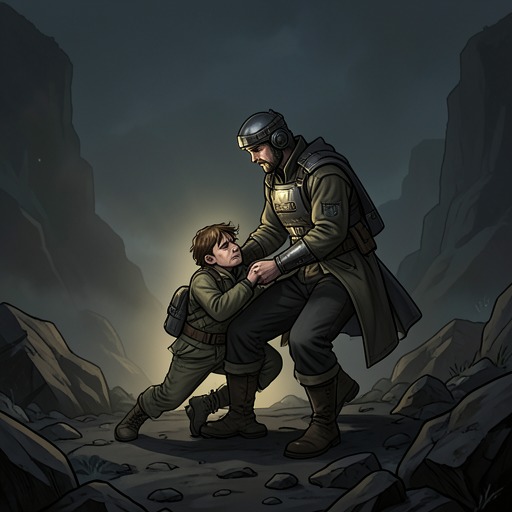
Gollum's final act is both his redemption and his doom. At the Sammath Naur, the Cracks of Doom, Frodo is unable to destroy the Ring, claiming it as his own. Gollum, who has been following them, attacks Frodo and bites off his finger to take the Ring. But in his moment of triumph, as he holds the Ring aloft and cries 'Precious, precious, precious!', he steps too far, topples, and falls into the fiery chasm, taking the Ring with him. His last wail, 'Precious', echoes from the depths as he is gone. The Ring is destroyed, and with it, Gollum's long torment ends.
His death is a strange and terrible thing, a moment of both victory and loss. He is the instrument of the Ring's destruction, the one who completes the quest that Frodo could not. Yet he dies in the very act of claiming his Precious, his obsession ultimately leading to his own end and the salvation of Middle-earth.
Narrative Role and Evaluation
Gollum serves as a dark foil to Frodo, showing what the Ring can do to a bearer over time. He is a cautionary tale, a warning of the fate that awaits Frodo if he fails. His internal struggle between Sméagol and Gollum is a powerful depiction of the Ring's corrupting influence, and his tragic end underscores the themes of pity, mercy, and the unpredictable nature of fate. Gandalf's words about Gollum, that his story is a sad one that might have happened to others, even to hobbits, highlight the idea that Gollum is not inherently evil but a victim of the Ring's power. His role in the destruction of the Ring, accidental as it is, fulfills the prophecy that Gollum has a part to play in the quest's outcome, making him an essential, if tragic, figure in the story.