Sauron
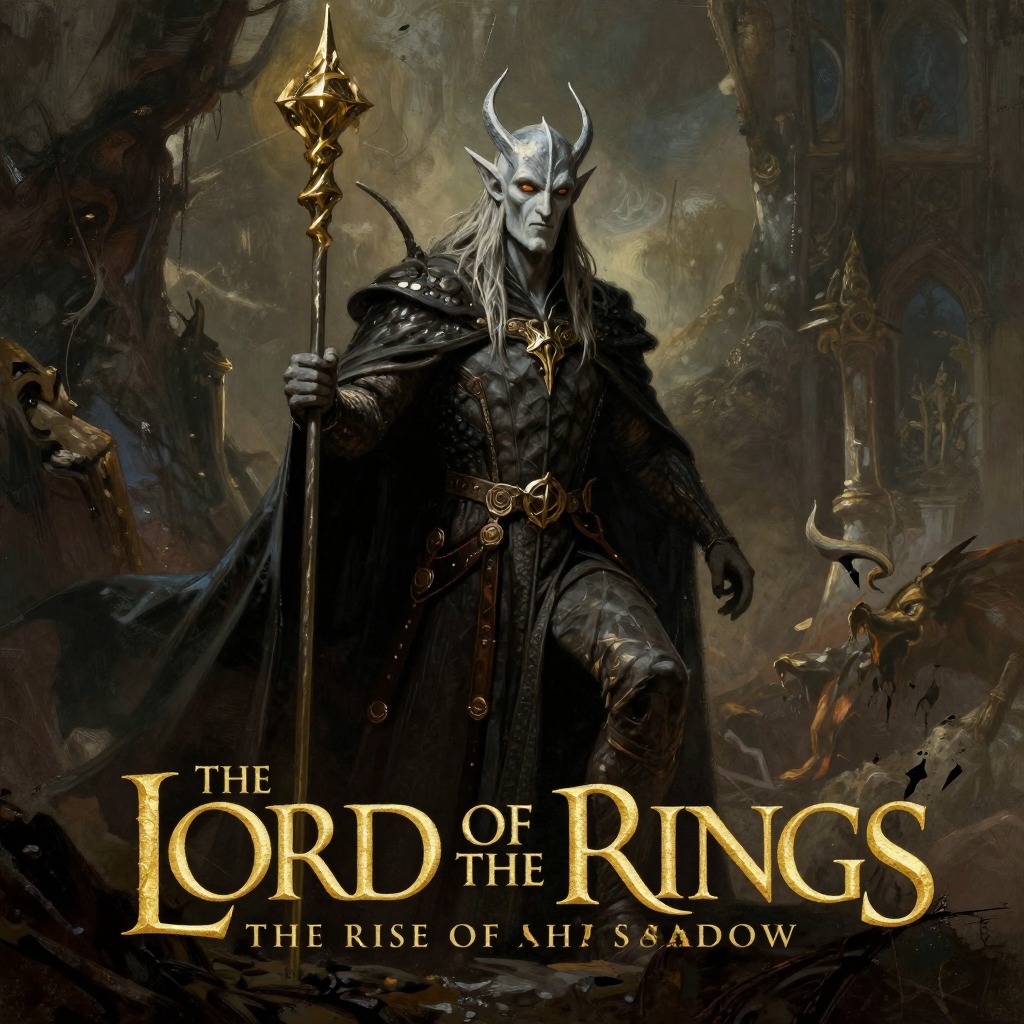
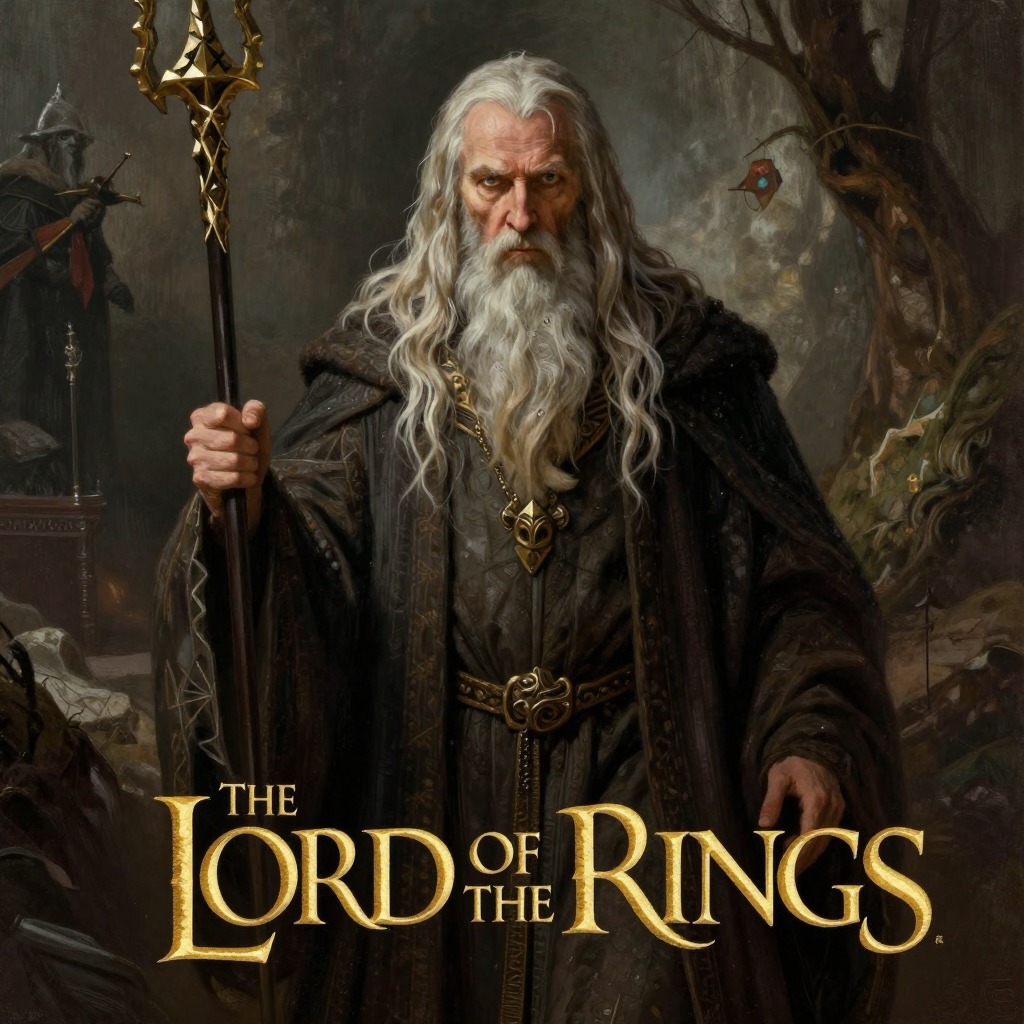
Sauron, called the Dark Lord, the Enemy, and the Great Eye, is the supreme antagonist of The Lord of the Rings. He is the maker of the One Ring, the object whose fate determines the fate of all Middle-earth. His presence looms over the entire story, not merely as a military threat but as a corrupting spiritual force whose influence extends from the dark fastness of Mordor to the quiet lanes of the Shire. His defeat at the end of the Third Age marks the decisive turning point of the age and the beginning of the Dominion of Men.
Identity and Nature
Sauron is introduced through the Ring Verse, which establishes his place in the cosmic order of the Rings of Power. The verse describes how he forged the One Ring in the Land of Mordor where the Shadows lie, creating it to rule all the other rings: "One Ring to rule them all, One Ring to find them, One Ring to bring them all and in the darkness bind them." This is not merely a boast but a statement of his essential nature. He is the Dark Lord on his dark throne, a being of pure domination whose power is expressed through binding and control. Gandalf explains to Frodo that Sauron made the Ring himself and let a great part of his own former power pass into it, so that he could rule all the others. This act of self-diminishment is central to understanding him: he is powerful precisely because he has poured himself into an external object, and he is therefore vulnerable to its loss. The Ring is not a tool he uses; it is an extension of his being, and his history is inseparable from its history.
The Return and the Quest for the Ring
Gandalf's account to Frodo reveals the state of Sauron's power at the opening of the story. The rumours that Frodo has heard are true: Sauron has arisen again, left his hold in Mirkwood, and returned to his ancient fastness in the Dark Tower of Mordor. Gandalf describes this as a recurring pattern: "Always after a defeat and a respite, the Shadow takes another shape and grows again." This is the key to understanding Sauron's nature as a force of history. He is not a static villain but a cyclical threat that returns in new forms after every defeat. His plans are "far from ripe" but "ripening," and he is fast becoming very strong. What he still lacks is the One Ring itself. Gandalf explains that the Enemy lacks this one thing to beat down all resistance, break the last defences, and cover all the lands in a second darkness. The entire strategy of the free peoples is therefore built on denying him this object. Sauron has already gathered the Nine Rings to himself, creating the Ringwraiths as his most terrible servants, and he has recovered three of the Seven Dwarf-rings, while the others have been consumed by dragons. The Three Elven-rings remain hidden from him, but this no longer troubles him. He only needs the One, for if he recovers it he will command them all again, wherever they be, even the Three, and all that has been wrought with them will be laid bare, and he will be stronger than ever.
The Reach of His Influence
The evidence shows that Sauron's influence extends far beyond the battlefields of Gondor and Mordor. His corruption reaches into the Shire itself, the seemingly idyllic homeland of the hobbits. When Frodo and his companions return to the Shire, they find it under the control of ruffians who serve a master they call Sharkey. Frodo confronts one of these ruffians and tells him that his day is over: "The Dark Tower has fallen, and there is a King in Gondor. And Isengard has been destroyed, and your precious master is a beggar in the wilderness." This speech reveals the full scope of Sauron's enterprise. He has not only waged war on Gondor and Rohan but has also, through his servant Saruman, sought to subjugate the Shire, a place so remote that it barely appears on the maps of the great powers. The ruffian's mocking response, calling the Ring-bearer a "little cock-a-whoop," shows the contempt of Sauron's servants for the hobbits, a contempt that proves to be their undoing. The reach of Sauron's power is thus shown to be total, touching even the most distant and seemingly insignificant corners of Middle-earth.
The War Against Him
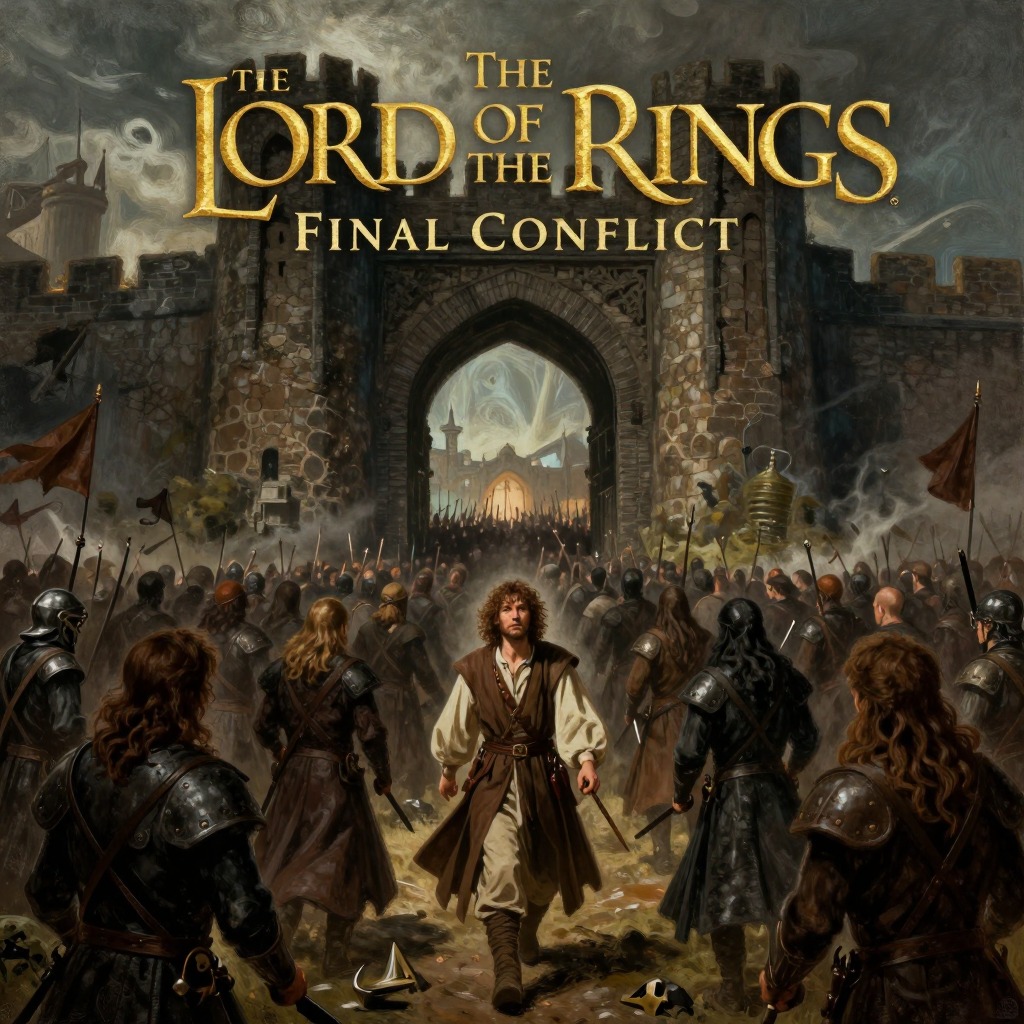
The war against Sauron is fought on multiple fronts, and the evidence shows how his enemies adapt to his methods. After the capture of Merry and Pippin, Aragorn, Legolas, and Gimli search for the hobbits and find evidence of a struggle. Aragorn discovers a mallorn-leaf of Lórien with crumbs on it, and Gimli finds a broken orc-knife that had been trampled into a tussock. Legolas reads the scene as a riddle: a bound prisoner escapes both from the Orcs and from the surrounding horsemen, then stops in the open to cut his bonds and eat waybread. This moment is significant because it shows the hobbits' resourcefulness, but it also reveals the nature of the enemy they face. The orc-weapon, with its handle carved like a hideous head with squinting eyes and leering mouth, is a product of Sauron's malice, and its presence marks the trail of his servants. The search for the hobbits is thus also a search for the traces of Sauron's power, and the discovery of the knife and the leaf shows how the war has touched even this small corner of the world. The battle against Sauron is not only a matter of great armies and sieges but also of small signs and careful reading of the land.
The Downfall
The final evidence of Sauron's fate comes from Frodo's confrontation with the ruffian in the Shire. Frodo's words, "The Dark Tower has fallen, and there is a King in Gondor," are a summary of the entire conclusion of the war. Sauron's power is broken, his fortress destroyed, and his servant Saruman reduced to a beggar in the wilderness. The King's messengers will ride up the Greenway now, not bullies from Isengard. This is the complete reversal of the situation that Gandalf described at the beginning of the story. The Enemy who was fast becoming very strong, whose plans were ripening, has been utterly defeated. The destruction of the One Ring, which Sauron made and into which he passed a great part of his own former power, has undone him. The cyclical pattern of the Shadow taking another shape and growing again after a defeat is broken, at least for this age. The fall of Sauron is not merely a military victory but a cosmic one, the end of the Third Age and the beginning of the Dominion of Men. His defeat is announced not in the halls of Gondor but in the lanes of the Shire, by a hobbit who was once a simple farmer's son, and this is perhaps the most fitting end for the Dark Lord who sought to rule all the lands in a second darkness.
The novel's critical reception was initially mixed, with early reviewers divided sharply. W. H. Auden praised it as a "masterpiece" that surpassed Milton's Paradise Lost, while the Sunday Telegraph and Sunday Times hailed it as among the greatest imaginative fiction of the century. However, poet Edwin Muir dismissed the characters as "boys masquerading as adult heroes," and literary critic Edmund Wilson famously derided the work as "juvenile trash" in his 1956 review "Oo, Those Awful Orcs!" Within Tolkien's own literary circle, the Inklings, reactions were similarly polarized: Hugo Dyson complained loudly during readings, whereas C. S. Lewis wrote that the book "will break your heart." The work's enormous popularity, particularly after the 1965 unauthorized Ace Books edition prompted a revised authorized Second Edition, expanded the fantasy genre's demand and spawned countless imitations, including The Sword of Shannara and The Last Ringbearer. Its influence extended into gaming, inspiring Dungeons & Dragons, which incorporated hobbits (as halflings), elves, dwarves, orcs, and dragons, as well as video game series such as The Legend of Zelda, Dragon Quest, EverQuest, Warcraft, and The Elder Scrolls.