One Ring
The One Ring, also known as the Ruling Ring, the Master-ring, and Isildur's Bane, is the supreme artifact of J.R.R. Tolkien's The Lord of the Rings, a deceptively plain golden band that holds within it a great part of the Dark Lord Sauron's own power. It is the linchpin of the entire war against Mordor, for its recovery by Sauron would mean the utter domination of Middle-earth, while its destruction is the only hope of the free peoples. The Ring's nature as both a physical object and a sentient, corrupting force drives the quest of the Fellowship of the Ring and tests every character who comes near it, making it the true protagonist of the story's moral and physical conflict.
Forging and the Verse of Power
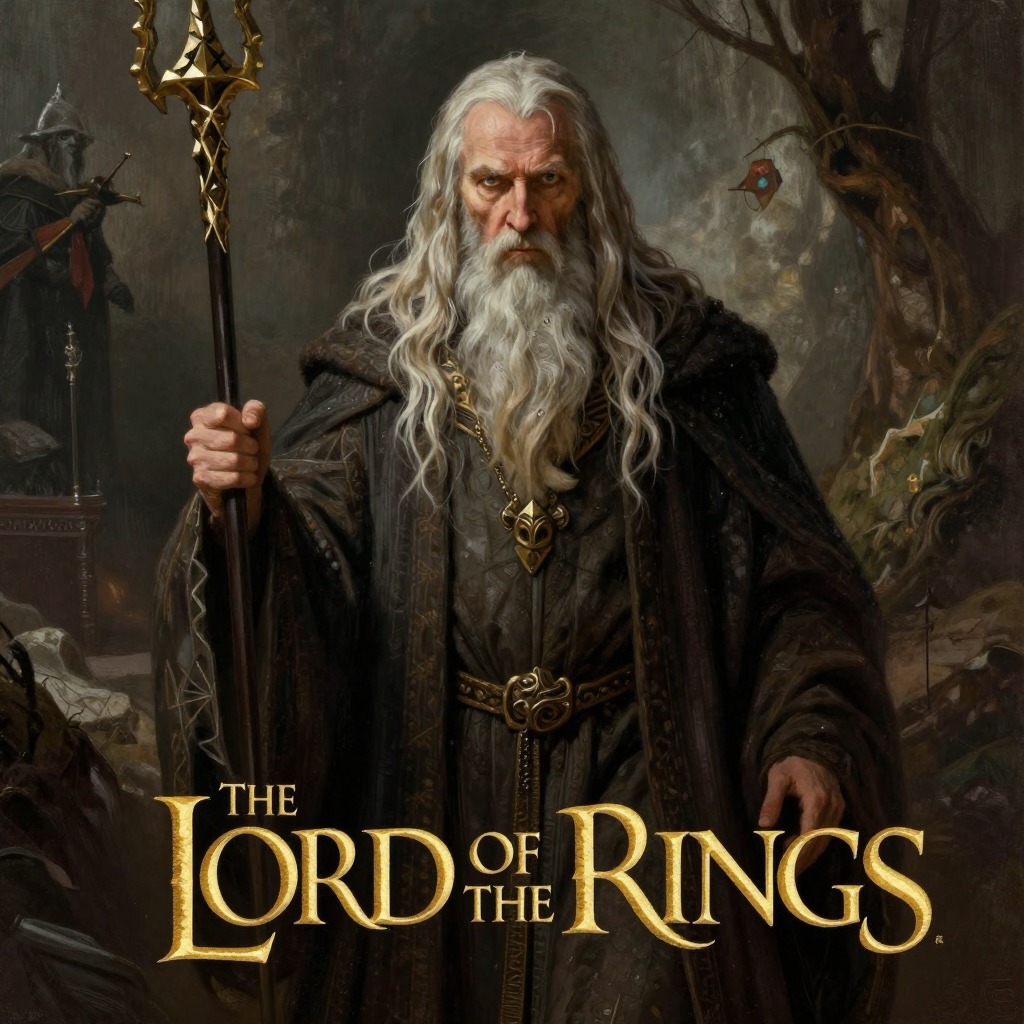
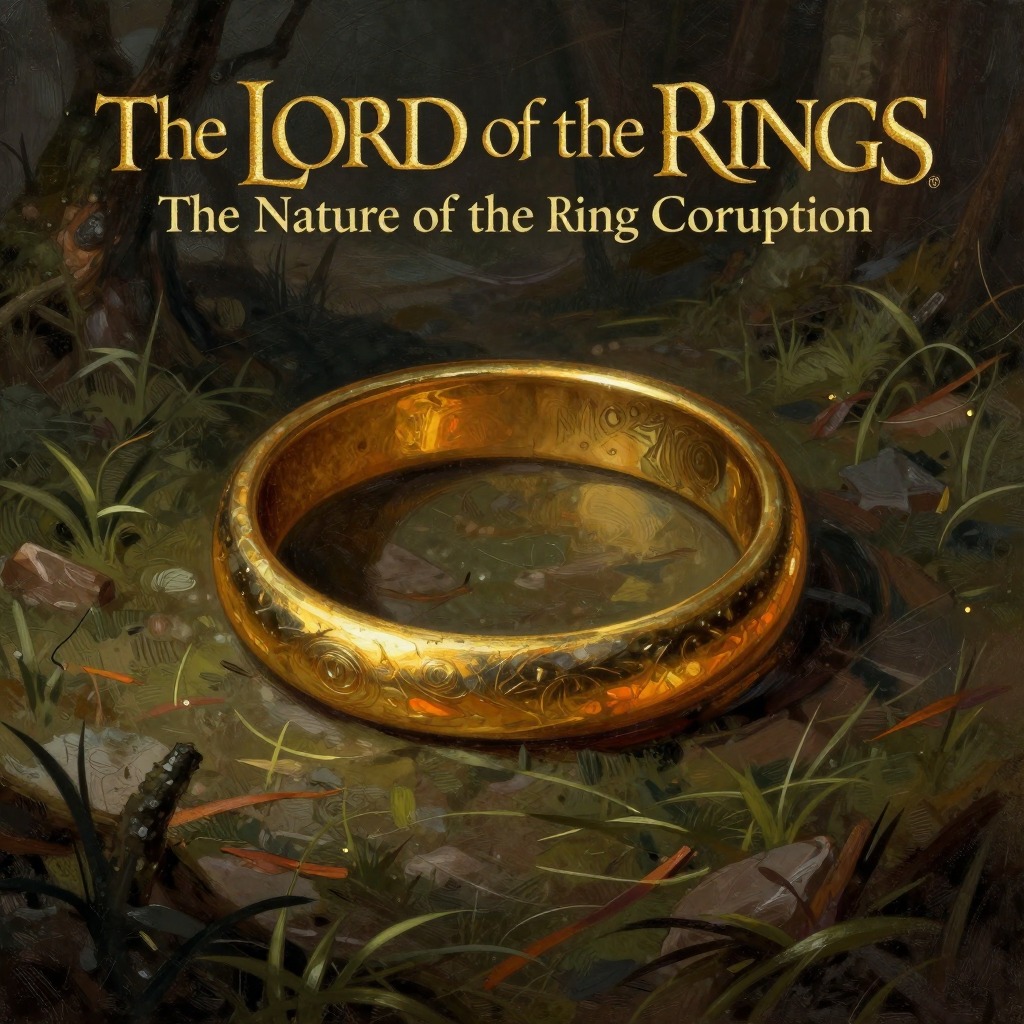
The Ring was made by Sauron himself in the fires of Mount Doom, and its creation is encapsulated in a verse long known in Elven-lore, which Gandalf recites to Frodo Baggins. The verse speaks of three Rings for the Elven-kings under the sky, seven for the Dwarf-lords in their halls of stone, nine for Mortal Men doomed to die, and one for the Dark Lord on his dark throne in the Land of Mordor where the Shadows lie. The final lines, which Gandalf translates from the Black Speech of Mordor, declare: "One Ring to rule them all, One Ring to find them, One Ring to bring them all and in the darkness bind them." This inscription, written in Elvish letters of an ancient mode but in the language of Mordor, appears as lines of fire, finer than the finest pen-strokes, running along the ring both outside and inside. When Frodo first sees these fiery letters, he cannot read them, but Gandalf can, and he explains that this is the Master-ring, the One Ring that Sauron lost many ages ago, to the great weakening of his power. Gandalf warns that Sauron greatly desires it, but he must not get it.
The Ring's Nature and Sauron's Need
The Ring is not merely a tool but a vessel of Sauron's own essence. Gandalf explains that Sauron let a great part of his own former power pass into the Ring when he made it, so that he could rule all the others. The Three Rings, the fairest of all, were hidden from Sauron by the Elf-lords, and his hand never touched or sullied them. The Seven were possessed by the Dwarf-kings, but Sauron has recovered three, and the others have been consumed by dragons. The Nine he gave to proud and great Mortal Men, and so ensnared them; long ago they fell under the dominion of the One and became Ringwraiths, shadows under his great Shadow, his most terrible servants. Gandalf notes that it is many a year since the Nine walked abroad, but as the Shadow grows once more, they may walk again. Sauron has now gathered the Nine to himself, and the Seven also, or else they are destroyed, but the Three are hidden still. This no longer troubles him, for he only needs the One. If he recovers it, he will command them all again, wherever they be, even the Three, and all that has been wrought with them will be laid bare, and he will be stronger than ever. Gandalf tells Frodo that Sauron had believed the One had perished, that the Elves had destroyed it as should have been done, but he now knows it has been found, and so he is seeking it with all his thought bent on it. It is his great hope and the great fear of all who oppose him.
The Ring's Corrupting Influence on Frodo
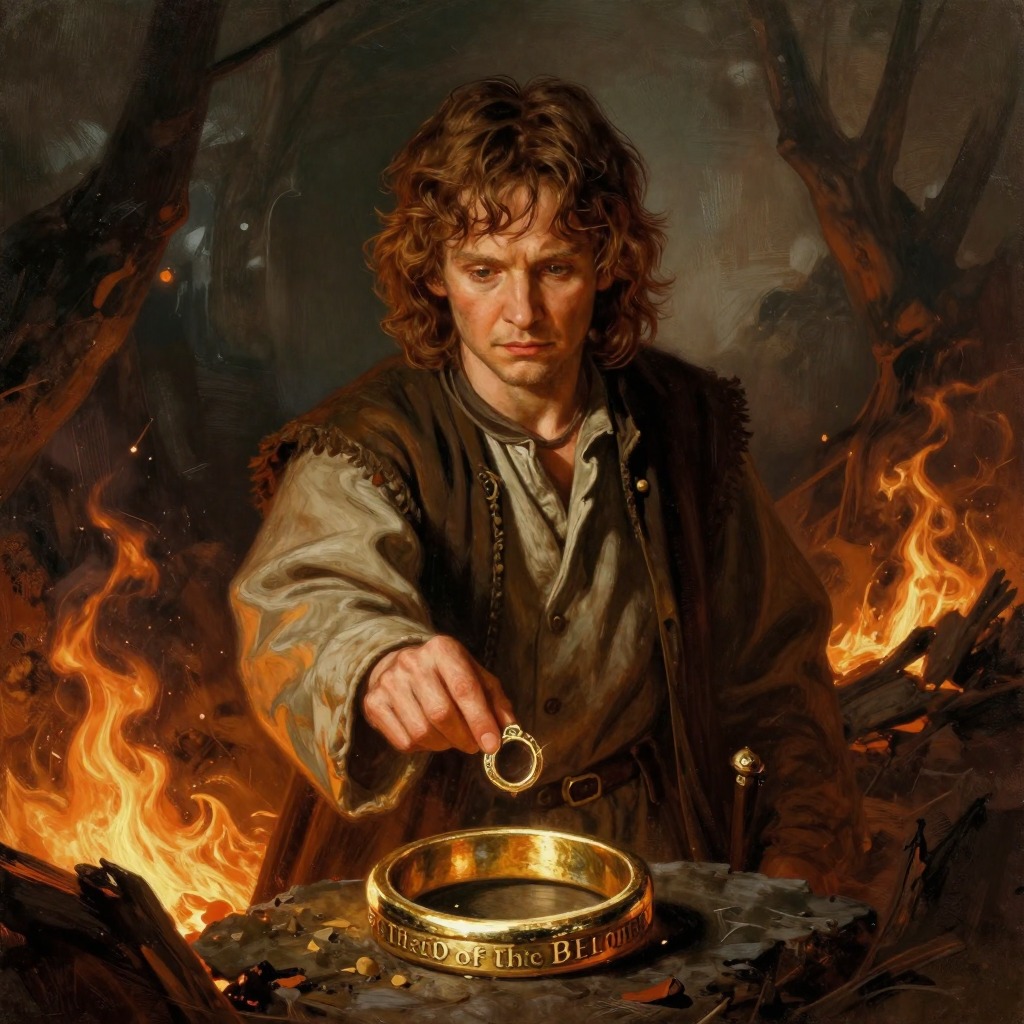
The Ring's power over its bearer is demonstrated vividly when Gandalf tests Frodo's resolve to destroy it. Frodo draws the Ring out of his pocket and looks at it, and it now appears plain and smooth, without mark or device that he can see. The gold looks very fair and pure, and Frodo thinks how rich and beautiful is its colour, how perfect is its roundness; it is an admirable thing and altogether precious. He had intended to fling it into the very hottest part of the fire, but he finds that he cannot do so without a great struggle. He weighs the Ring in his hand, hesitating, and forcing himself to remember all that Gandalf has told him, and then with an effort of will he makes a movement as if to cast it away, but he finds that he has put it back in his pocket. Gandalf laughs grimly and points out that already Frodo cannot easily let it go, nor will to damage it. He could not make Frodo do so except by force, which would break his mind. As for breaking the Ring, force is useless; even a heavy sledge-hammer would make no dint in it. It cannot be unmade by Frodo's hands or by Gandalf's. The small fire of the Shire would not melt even ordinary gold, and this Ring has already passed through it unscathed and even unheated. There is no smith's forge in the Shire that could change it at all, not even the anvils and furnaces of the Dwarves. It has been said that dragon-fire could melt and consume the Rings of Power, but there is not now any dragon left on earth in which the old fire is hot enough, nor was there ever any dragon, not even Ancalagon the Black, who could have harmed the One Ring, the Ruling Ring, for that was made by Sauron himself.
The Ring as a Symbol of Temptation and the Burden of Choice
The Ring functions as a powerful symbol of temptation and the moral burden of choice. When Frodo learns of the Ring's true nature, he sits silent and motionless, and fear seems to stretch out a vast hand, like a dark cloud rising in the East and looming up to engulf him. He stammers, asking how on earth it came to him, and Gandalf replies that it is a very long story, with beginnings lying back in the Black Years, which only the lore-masters now remember. Gandalf reflects that all who live to see such times would wish they had not, but that is not for them to decide; all they have to decide is what to do with the time that is given them. The Enemy is fast becoming very strong, his plans are ripening, and they shall be hard put to it, even if it were not for this dreadful chance. The Ring thus represents the encroaching darkness and the necessity of individual choice in the face of overwhelming evil. It is a test of will and character, and its corrupting influence is so great that even the most well-intentioned bearer, like Frodo, finds it nearly impossible to give it up. The Ring's presence forces every character to confront their own desires and weaknesses, and its ultimate fate hinges on the choices made by those who carry it, making it the central moral and narrative engine of the entire work.