Emile Dulaq
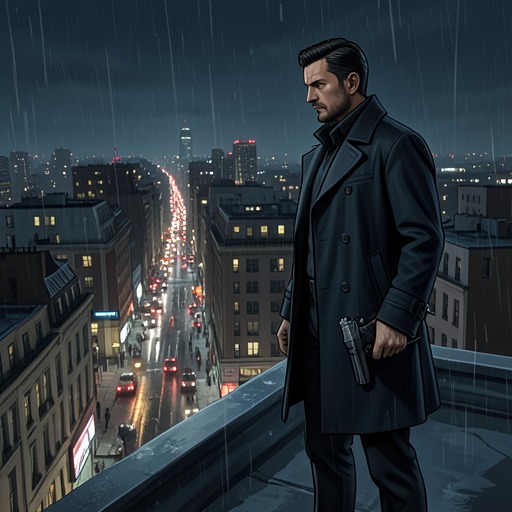
WatchmenEmile Dulaq is the Prime Minister of the Acquataine Cluster and the acknowledged leader of the coalition opposing Chancellor Kanus of the Kerak Worlds. His confrontation with Major Par Odal is the decisive political duel of the Acquataine crisis: Dulaq enters it as a statesman defending a fragile alliance system, but emerges psychologically broken, leaving the government without effective leadership while Kerak exploits the resulting paralysis.
Political Position and Introduction
Emile Dulaq stands at the center of a coalition resisting the rearmament of the Kerak Worlds. Fernd Massan explains that Dulaq’s authority is not merely ceremonial: neighboring states are smaller and weaker, and without the prime minister their alliances may dissolve. The political stakes therefore exceed the personal quarrel that brings Dulaq into conflict with Odal. His mind and public authority have become part of the defensive structure holding the Acquataine Cluster together.
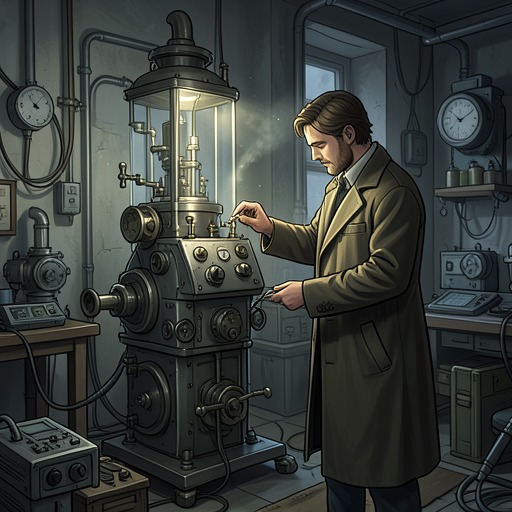
The novel introduces Dulaq through the technology of the Dueling machine rather than through an ordinary political scene. The machine allows antagonists to settle aggressive feelings without ordinary mental or physical injury, yet Dulaq’s case demonstrates how dangerous that promise becomes when a duel is attached to state power. His contest with Odal is presented publicly as an event of international consequence, not as a private quarrel safely contained by machinery.
The Challenge to Major Par Odal
Three days before the duel, Major Par Odal, serving as a military attaché of the Kerak embassy on Acquatainia, engaged Dulaq in a bitter personal argument at an embassy party. The dispute became so loud, and occurred before such a large group, that Dulaq had no practical alternative but to challenge him. The apparent spontaneity of the challenge conceals its strategic importance: Odal’s previous duel with a Safad Federation trade minister had already helped produce a favorable trade arrangement for Chancellor Kanus, and the defeated minister later became psychologically incapable of opposing Kerak before dying in an apparent suicide.
Dulaq’s challenge thus repeats a pattern that has already damaged another government. Odal’s method turns personal confrontation into political leverage. By drawing Dulaq into the Dueling machine, Kerak places the Acquataine leader in a contest whose formal rules may forbid ordinary injury but whose psychological effects can cripple a state. The duel makes the private emotions of two men consequential for an entire diplomatic coalition.
Defeat and Psychological Collapse
The news report announcing the duel identifies Dulaq as the Prime Minister of the Acquataine Cluster and the leader of the coalition against Chancellor Kanus, then states that he has failed in the first part of his psychonic duel against Major Par Odal. The antagonists are sent through routine medical and psychological checks before the contest can be renewed, making the duel a staged, monitored public event whose phases are treated as both spectacle and state business.
Dulaq’s defeat does not end when the first part of the contest ends. During Leoh’s later attempt to enter and analyze Dulaq’s damaged mind, the machine projects an immense barren plain beneath a harsh yellow sky. At Dulaq’s feet lies the primitive club he had chosen, while Odal approaches across the empty ground carrying another club. Leoh recognizes that Dulaq is reliving the portion of the duel that caused the shock and has erected a protective mental barrier around it. The scene converts Dulaq’s political defeat into a recurring psychic landscape: the statesman is trapped inside the decisive moment rather than simply recovering from it.
Three hours after Dulaq has been removed from the Dueling machine, Fernd Massan tells Leoh that Dulaq is dead. The account describes the immediate condition more precisely as a catastrophic psychological collapse, and the surrounding narrative shows Dulaq’s absence continuing to govern events. His government is literally falling apart because no one is willing to assume leadership and expose himself to the same danger. Whether described as shock, catatonic incapacity, or death in the immediate report, Dulaq has been removed from political action, which is the result Odal’s victory makes unavoidable.
Consequences for Acquatainia and the Region
The consequences of Dulaq’s defeat are swift. Without him, the Acquataine government totters and its alliances with neighboring nations risk dissolution. The crisis also gives Kerak the opportunity to expand without facing a unified diplomatic response. One hour after the duel, Chancellor Kanus’s troops land on all the major planets of the Szarno Confederacy, and the annexation is complete. Dulaq’s personal collapse therefore coincides with the disappearance of an entire political buffer, linking the duel directly to Kerak’s territorial expansion.
The episode also clarifies why the Dueling machine cannot be treated as harmless simply because it ordinarily prevents physical injury. Its projected environments reproduce and amplify thought patterns, and later experiments show that it projects personality as well as knowledge and technique. Dulaq’s trauma becomes evidence that a machine designed to externalize conflict can also preserve, intensify, and repeatedly impose a destructive mental experience. His defeat exposes the gap between technical safety and political safety: a participant may not be physically wounded, yet a government can still be incapacitated through the destruction of its leader’s capacity to act.
Narrative Role and Significance
Dulaq functions as both a character and a political pressure point. He embodies the vulnerability of a coalition whose stability depends heavily on one leader, while his duel with Odal reveals how Kerak’s military policy operates through psychological domination as much as through conventional force. The earlier case of the Safad trade minister provides a grim precedent; Dulaq’s fate enlarges that pattern from a diplomatic concession to the collapse of a regional government.
His ordeal also motivates Leoh’s developing understanding of the Dueling machine. At first, Leoh treats the machine as an academic instrument for observing and testing thought patterns. Entering Dulaq’s shock-created mental armor forces him to confront the human and political consequences of that research. Dulaq’s barren battlefield is therefore more than a record of defeat: it is the point at which the novel’s technological experiment becomes an ethical and historical crisis. The machine does not merely display conflict. In the hands of powerful adversaries, it can make one person’s fear, aggression, and collapse radiate outward into the fate of worlds.