Clanthas
WatchmenClanthas is a merchant of Katan whose transformation from prosperous civilian to acting leader of the Shinarian resistance gives the rebellion a political center. He begins as a quick-witted businessman, but the displacement of farmers, the violence of imperial pacification, and the arrival of the Komani force him to convert private conviction into public action. His leadership remains precarious because he must oppose Terran domination without surrendering Shinar’s future to another power.
Identity and Background
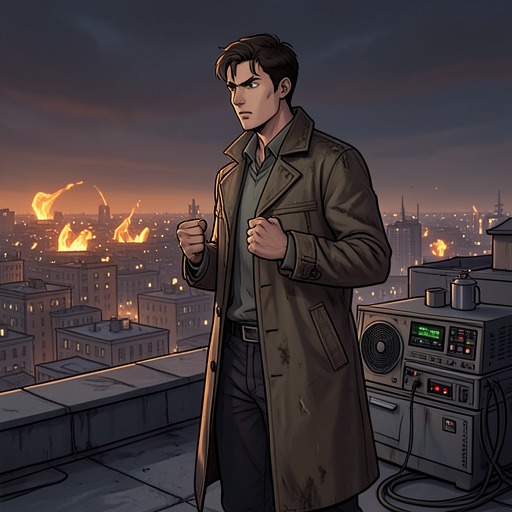
Clanthas lives in a moderately sized, plainly furnished house on a hill overlooking the harbor of Katan. The port is unusual among Shinar’s cities because it has no Terran garrison. Before the rebellion, he was distinguished from other merchants mainly by being somewhat quicker-witted and more fortunate. On warm summer afternoons he could be found on the balcony spanning his house, either resting or conducting business. This domestic and commercial setting establishes him as a civilian whose authority initially comes from local standing rather than military rank.
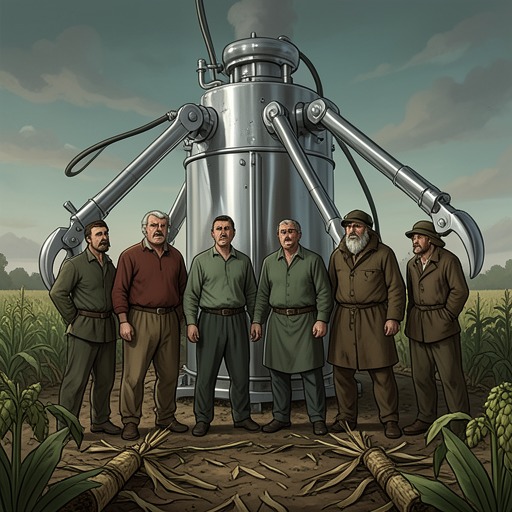
His position changes when farmers begin arriving in Katan after Terran authorities drive them from their land to make room for factories producing synthetic foodstuffs. The complaints reveal that imperial rule is not merely an abstract political arrangement: it reorganizes property, labor, food production, and the lives of ordinary Shinarians. Clanthas responds by treating the farmers’ grievance as a political question rather than an isolated economic dispute.
From Merchant to Rebel Leader
Clanthas organizes the farmers and stages a demonstration in Katan, then arranges similar demonstrations in Shinar’s major cities. The protests do not remain peaceful. Some larger gatherings become riots; troops arrive, shots are fired, and unarmed civilians are killed. As tempers rise, violent men take action, the Terran governor is murdered, Imperial Marines land on the planet, and Komani warriors follow. The sequence turns Clanthas’s civic organizing into a rebellion whose consequences exceed his control.
He is influenced by the principle that freedom depends on the intelligence and courage to stand independently and on a community’s strength to resist enslavement. The irony is that this principle was spoken by Geoffrey Knowland, the Terran conqueror who defeated the Masters and established Terran rule over Shinar. Clanthas applies the conqueror’s language against the conquerors themselves, exposing a contradiction at the center of imperial ideology: a doctrine of resistance can become a justification for domination when its promised freedom is reserved for the ruling power.
Clanthas consequently becomes the acting leader of his people before he has fully grasped what that role entails. His situation is divided between two dangerous forces. The Terrans seek to pacify Shinar and restore it as a docile colony, while the Komani pursue objectives of their own. Even within the Shinarian movement, hotheads and opportunists act beyond his authority. Clanthas’s leadership therefore consists less in commanding a unified nation than in trying to prevent a fragmented resistance from being captured by competing powers.
Conflicting Legal and Political Orders
Clanthas’s story unfolds amid rival claims of authority. The Terrans invoke imperial control and military pacification; the Komani invoke their own customs and the authority of Okatar Kang; local Shinarians defend community protection and the right to determine their political future. When a Komani officer claims, in Okatar’s name, that Terrans sheltered in a religious refuge are prisoners, Sittas rejects the claim with emphatic force. The incident shows the practical danger of Clanthas’s political environment: the rebellion is not governed by one accepted law but by overlapping and incompatible jurisdictions.
The same tension appears in the Star Watch’s intervention. Vorgens states that he possesses authority, while acknowledging that a future Star Watch court may decide whether he was entitled to exercise it on his own initiative. Clanthas’s later political role belongs to this unsettled space between formal imperial law, emergency authority, local sanctuary, and customary power. His movement seeks self-determination, but it must negotiate with institutions that each claim a different right to define order.
When Sittas introduces the representatives of the groups attending a political meeting, he identifies Clanthas as the spokesman for all those represented. The designation confirms that Clanthas has become more than the leader of a single demonstration or the representative of Katan’s merchants. He is presented as a negotiator capable of speaking across factions, although the earlier history of uncontrolled violence makes clear that representation does not equal complete command.
Negotiation with the Terrans and the Komani
Clanthas eventually chooses cooperation with Vorgens against the Komani. In a communication with Vorgens and Altai, he explains that the delay has been caused by consultation with the other leaders, then announces that they have accepted Vorgens’s word and will work against the Komani in every possible way. This decision is strategically consequential. The Shinarians do not simply return to Terran obedience; they enter a temporary alignment in order to prevent the Komani from exploiting the rebellion.
That choice answers a larger political problem posed by Vorgens’s mission. Vorgens is instructed to negotiate with the Komani chief, offering the raiders a peaceful return home if they stop attacking Oran VI. He is also to remind them that the Komani chieftains have pledged loyalty to the Terran Council and that the Komani were once allies of the Terrans during the Galactic War. Clanthas’s decision to oppose the raiders therefore intersects with an imperial diplomatic effort, but his own position is rooted in Shinar’s survival rather than in simple loyalty to the Empire.
Clanthas also asks Vorgens whether he understands the real cause of the rebellion. He traces that cause back more than a century, to the period when Shinar was dominated by the Masters. The Masters maintained Shinar as a static nation and held its population at roughly five hundred million. By directing attention beyond the immediate clashes, Clanthas presents the rebellion as the product of a long history of externally imposed stagnation and control. His explanation places Terran abuses within a deeper pattern: Shinar has repeatedly been treated as a population to be managed rather than a society entitled to shape its own development.
Narrative Role and Significance
Clanthas embodies the political middle ground that the military actors around him struggle to occupy. He is neither a Terran officer nor a Komani warrior, but a local civilian forced to negotiate between imperial power, foreign invasion, and internal extremism. His merchant background matters because it gives his rebellion a language of organization, consultation, and practical alliance rather than purely martial glory. He begins by arranging demonstrations and ends by serving as the recognized spokesman of several Shinarian groups.
His significance also lies in the instability of his success. He can organize farmers, demonstrations, and intergroup negotiations, but he cannot prevent riots, murders, opportunism, or the arrival of outside armies. The rebellion’s political legitimacy is therefore shown as something continually constructed under pressure. Clanthas’s adoption of a Terran conqueror’s words against Terran rule makes him a figure of ideological reversal, while his cooperation with Vorgens against the Komani shows that resistance cannot be reduced to a single opposition between colonized and colonizer. His decisive objective is the preservation of Shinarian agency: not passive peace, not Komani domination, and not a return to a docile colony, but the possibility that Shinar may determine its own future.