Viserys Targaryen
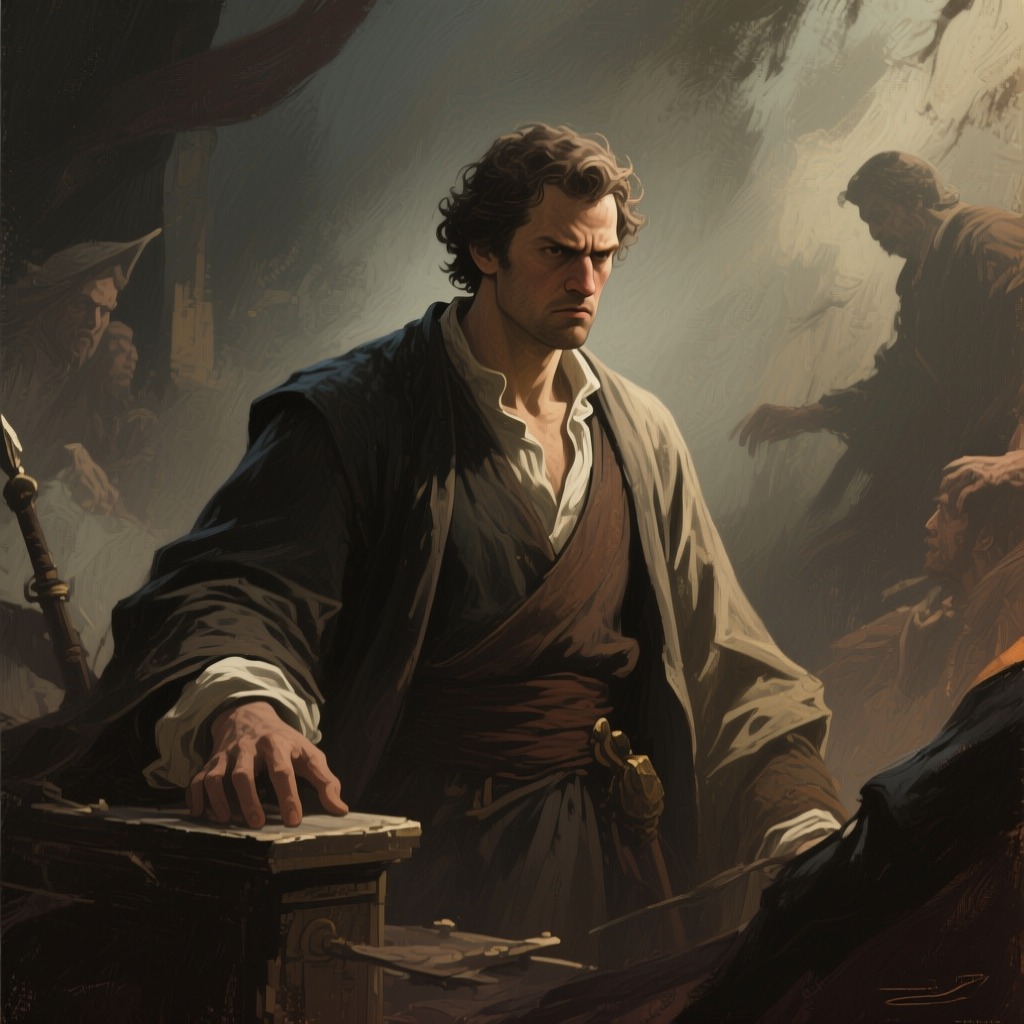
Viserys Targaryen, the self-styled King of the Seven Kingdoms, is a study in the corrosion of entitlement. The elder surviving child of Aerys II Targaryen, he fled King's Landing as a boy of eight during the Sack of the city, carrying with him nothing but a claim to a throne and a sister born in the chaos of their escape. By the time the narrative begins, he has spent more than a decade as a wandering exile, living on the charity of magisters and merchants in the Free Cities, his royal lineage his only currency and his temper his only weapon. He is a gaunt young man with nervous hands and a feverish look in his pale lilac eyes, and his obsession with reclaiming his birthright has curdled into a brittle, dangerous pride that he calls 'waking the dragon.'
The Beggar King and the Sale of a Princess
Viserys's life in exile has been a long, humiliating decline. After the death of Ser Willem Darry, the loyal knight who spirited him and Daenerys to safety in Braavos, the servants stole what little money remained and the Targaryen children were cast out of the house with the red door. They wandered from city to city—Myr, Tyrosh, Qohor, Volantis, Lys—never staying long, as Viserys insisted the Usurper's hired knives were close behind. The doors of the powerful gradually closed; the last treasures were sold, and in the alleys and winesinks of Pentos, men called him 'the beggar king.' It is in Pentos that the magister Illyrio Mopatis takes them in, and it is Illyrio who brokers the deal that will define Viserys's final act: the sale of his thirteen-year-old sister Daenerys to Khal Drogo, a Dothraki horselord, in exchange for an army. Viserys believes this is the moment his reign will begin. He tells Daenerys that when the histories are written, they will say it began tonight. He does not see the transaction as a betrayal; he sees it as the first step toward the throne, and he is willing to pay any price.
The Illusion of Power and the Reality of Contempt
Once the marriage is made, Viserys's position within the khalasar becomes a slow-motion catastrophe. He is impatient, contemptuous of Dothraki customs, and utterly unable to grasp that he is no longer in control. He seethes at being seated below Daenerys at the wedding feast, fumes when the khal does not immediately deliver the promised army, and wears his borrowed sword like a prop, having never used one in earnest. The Dothraki mock him openly, calling him 'Khal Rhae Mhar' (the Sorefoot King) after Daenerys forces him to walk behind the khalasar, and later 'Khal Rhaggat' (the Cart King) when he accepts a place in a cart meant for eunuchs, cripples, and women giving birth. He does not even understand that he is being mocked. Ser Jorah Mormont, the exiled knight who has sworn him his sword, comes to regard him with open disdain, telling Daenerys that Viserys is less than the shadow of a snake and that he could not sweep a stable with ten thousand brooms. The only person who still fears him is Daenerys herself, and that fear is rooted in years of abuse—the pinching, the twisting, the threats of waking the dragon—rather than any genuine power.
The Final Confrontation and the Golden Crown
The breaking point comes in Vaes Dothrak, the sacred city of the Dothraki, where no blade may be drawn and no blood may be shed. Viserys, drunk and desperate, storms into the feast hall where Khal Drogo and his warriors are celebrating the prophecy that Daenerys will bear the stallion who mounts the world. He demands the army he was promised, brandishing his sword in violation of the most sacred law of the city. When Drogo dismisses him to a place among the lowest of the low, Viserys draws his blade and presses its point against Daenerys's belly, threatening to cut the unborn child from her womb. It is the final, fatal miscalculation. Khal Drogo, in a gesture of terrible irony, promises Viserys the golden crown he has always wanted. His bloodriders seize Viserys, and Drogo melts his own heavy gold belt medallions in a stewpot. When the gold is half-molten, he upends the pot over Viserys's head. The sound Viserys makes is like nothing human. His feet hammer a frantic beat against the dirt floor, then slow, then stop. Thick globs of molten gold drip down onto his chest, setting his scarlet silk to smoldering, yet no drop of blood is spilled. He is no dragon, Daenerys thinks, watching with a curious calm. Fire cannot kill a dragon.
Narrative Role and Thematic Significance
Viserys's arc is a brutal deconstruction of the entitled claimant. He embodies the hollow rhetoric of royal blood—the endless repetition of 'I am the dragon' and 'wake the dragon'—that masks a complete absence of the qualities that made his ancestors formidable. He is a figure of pure, impotent nostalgia, living entirely in a past he never experienced and a future he cannot build. His death is the necessary precondition for Daenerys's transformation; it severs her last tie to the abusive, diminished world of her childhood and forces her to confront the reality that the Targaryen legacy is not a birthright to be claimed but a burden to be borne. The golden crown that kills him is the only crown he ever receives, a grotesque parody of his ambition that reveals the fundamental truth of his character: he was never a king, only a beggar who believed his own lies.