Boychenko-loyal forces
AfterburnBoychenko-loyal forces are army units aligned with General Boychenko during the mutiny and ensuing fighting in Crimea. Their allegiance makes them one side of an increasingly fractured military contest, but it does not guarantee that every soldier shares Boychenko’s plans: troops in the 4th Spetsnaz Fleet Brigade are described as loyal to him personally while chiefly wanting a way out of Crimea.
Identity and Position
The forces are identified by their allegiance to General Boychenko, rather than by a single stated unit structure. In the fighting that follows the mutiny, they are described as army units opposed to naval infantry and air force units commanded by Nikolai Sergeivich Dmitriev. The distinction is both organizational and political: competing military formations are no longer operating under a common authority, and loyalty to Boychenko marks one side of that fracture.
The available account gives no complete order of battle or total strength for Boychenko’s forces. It does, however, single out the 4th Spetsnaz Fleet Brigade when the feasibility of taking Arsincevo and Boychenko’s ability to trust his troops are discussed. That reference places the brigade among the forces central to the proposed operation without establishing that the whole army contingent has the same composition or role.
Mutiny and Rival Command
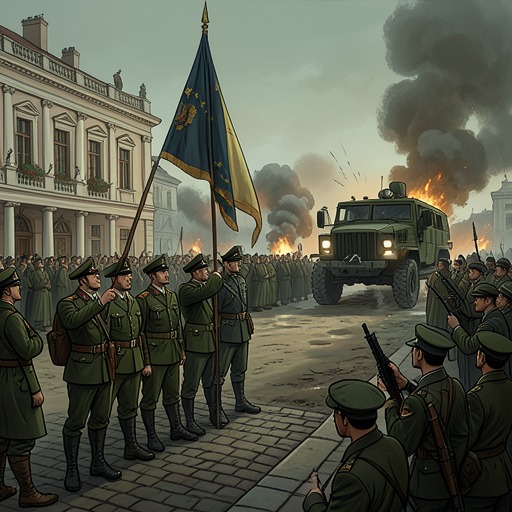
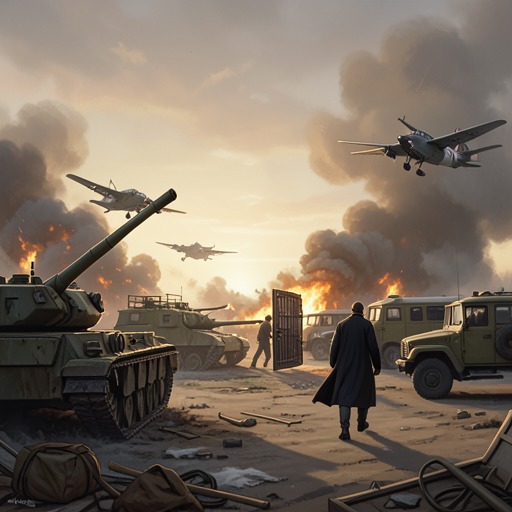
The mutiny precipitates sharp fighting between army units loyal to Boychenko and the naval infantry and air force under Dmitriev. Casualties are reported to be heavy, making the division more than a dispute over titles or command procedure: it becomes an armed internal conflict among Russian forces.
Dmitriev responds by declaring Boychenko a rebel employed by antigovernment forces and assuming full command of all military units in Crimea. His claim directly contests the loyalty on which Boychenko’s forces are identified. The two sides thus present the same crisis in opposite terms: Boychenko’s units are described by their allegiance to him, while Dmitriev asserts a broader authority over the peninsula’s military and casts Boychenko as an enemy of the government.
Loyalty, Trust, and the Prospect of Leaving
In discussion of an operation against Arsincevo, Boychenko is reported to understand the risks and believe the objective can be taken. The accompanying question of whether he can trust his people gives the proposed action a second stake: its success depends not only on the military assessment but on the reliability of forces caught in a struggle between Russians.
The account makes that uncertainty concrete through the 4th Spetsnaz Fleet Brigade. Its troops are said to be loyal to Boychenko specifically because he promised to find a way for them to go home. They do not want to remain in Crimea; after Arsincevo, their stated plan is to cross the Kerch Strait and join Krasilnikov’s forces. Their loyalty is therefore personal and conditional in practical terms, tied to a promised departure rather than to a stated desire to continue fighting for control of Crimea.
That promise also has a concealed cost. Boychenko’s troops do not know that he will be leaving them. The contrast between their expectation of a route home and his undisclosed departure complicates the meaning of their allegiance: he can count on their commitment to him, but they are acting without knowing the full terms of his own plan.
Wider Command and Political Stakes
The force’s internal conflict unfolds alongside an international operation whose command arrangements concern other troops. The National Command Authority directs that U.S. forces must not involve themselves in fighting between the Russian Red and Blue factions, while U.S. operational authority in the Crimean Peacekeeping Operational Zone is later granted to the UN for the mission. These decisions frame the outside intervention, but they do not establish that the UN commands Boychenko-loyal forces.
The factional violence also makes the limits of political and military authority visible. Dmitriev claims command over every military unit in Crimea; Boychenko’s forces remain defined by personal loyalty; and the brigade’s plan to leave depends on a promise Boychenko does not fully disclose. The organization’s position is consequently unstable: it is a fighting force in a severe internal conflict, but its cohesion is shadowed by competing claims to command and by its soldiers’ desire to go home.