Koichi Sakakibara
AnotherKoichi Sakakibara is the transfer student through whose perception the hidden mechanisms of third-year Class 3 become legible. His decisive significance lies in the contradiction he embodies: the class attempts to erase him socially, yet his position as an outsider enables him to question rules that insiders have accepted. What begins as a manageable school irregularity develops into an investigation involving altered records, concealed identities, suicide, murder, and the destruction of the class’s protective fiction.
Identity and Introduction
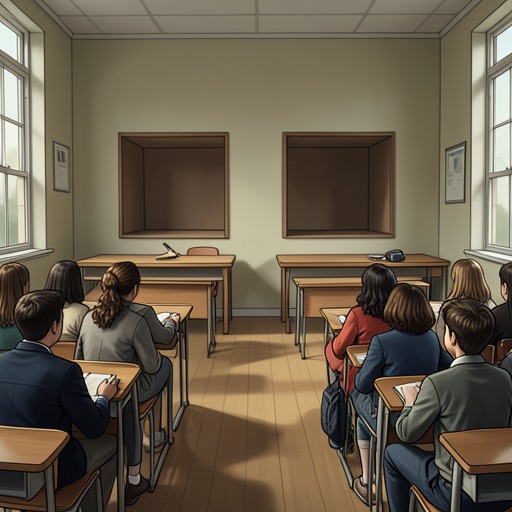
Koichi Sakakibara enters the 1998 third-year Class 3 after transferring late, a circumstance recorded directly in the class-list binder: his name is handwritten in the very last row of the current class list. He is studying normally, expects high-school placement to be uncomplicated because of his father’s connections, and initially regards the adults’ handling of his attendance as an odd but tolerable accommodation. Teachers appear willing to massage the record, and his academic performance is not impaired, so he interprets his small acts of resistance as the only options available to him rather than as open rebellion against the school.
The class’s response changes when Koichi becomes associated with Mei Misaki, the student everyone is required to treat as “not there.” In the art club room, Mei introduces him to younger students simply as her classmate, Sakakibara, and as a friend of Yuya Mochizuki. The exchange exposes the artificiality of his exclusion: outside the class’s closed system, other students recognize him as an ordinary boy. The art club room itself, located at the western end of the first floor of Building Zero and formed from a classroom divided in two, becomes one of the first spaces where Koichi can observe the difference between normal school life and the class’s abnormal rules.
Investigation and Discovery
Koichi’s curiosity draws him toward the secondary library, where he and Mei eat lunch and find no one present except the possibility of Mr. Chibiki’s records and knowledge. Mr. Chibiki explains that people with no direct connection to third-year Class 3 are comparatively safe: ordinary interaction with the class should not affect them. This principle clarifies why Mei has been able to obtain information from him and why the library functions as a protected investigative space rather than merely a school facility.
Koichi then asks whether the presence of the extra person, also called the casualty, really causes records and memories to be tampered with. Mr. Chibiki confirms without hesitation that details which should not make sense are made to seem coherent, preventing anyone from recognizing the casualty’s true identity. The answer transforms Koichi’s suspicion into a method of inquiry. The danger is not only that the class has forgotten something; the social world itself has been adjusted to make the false version appear natural.
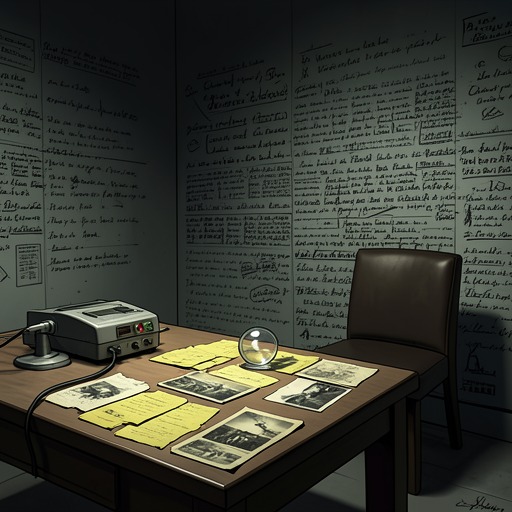
The class-list binder gives that abstraction a material form. The first pages list the current 1998 class, including Mr. Kubodera and Ms. Mikami as the teachers and Koichi’s own name among the students. Red X marks appear beside Yukari Sakuragi and Ikuo Takabayashi, with their deaths or fatal illnesses recorded alongside dates and circumstances. The list also records the workplace accident involving Sanae Mizuno, the older sister of Takeru Mizuno. Koichi reads the archive as a pattern of casualties rather than as isolated misfortunes, and the ordinary administrative document becomes evidence of a disaster operating beneath the school’s surface.
Exclusion and Class Rules
Koichi is not merely researching the class’s system; he is temporarily subjected to it. Because increasing the number of students treated as “not there” from one to two has no effect, the class eventually abandons the attempt to ignore both Mei and Koichi. The change is not announced as a formal reversal. Instead, the students’ behavior gradually shifts, and Koichi notices that Naoya Teshigawara begins acting as though Mei genuinely exists, even addressing her directly during lunch. Koichi therefore experiences the class’s rules as a collective practice that can dissolve as invisibly as it was imposed.
The arrangement is more painful for Ms. Mikami, who is simultaneously Koichi’s teacher at school and his aunt and guardian at home. The Fourth of the North Yomi fundamentals requires them to treat these identities as separate. At school she calls him by his surname and treats him as the transfer student; at home the two share a household. Mr. Kubodera and most of the class know the truth from the beginning, which makes the demand that she ignore Koichi especially severe. Her “difficult position” is not abstract: she must participate in the public erasure of a nephew she must acknowledge privately.
Koichi’s experience thus reveals the class as an exceptional social space in which ordinary relationships are suspended. Membership brings exposure to the disaster, while exclusion from normal recognition is presented as protection. Adults enforce the arrangement, students reproduce it, and the supposed remedy depends on everyone acting against what they know. Koichi’s outsider status allows him to see the coercion in that structure, but it also places him inside its danger.
Encounters with Violence
Koichi becomes a direct witness to the collapse of the class’s protective order when Mr. Kubodera’s speech breaks into inhuman-sounding fragments and the teacher slowly withdraws a sharp-bladed object from the bag on his desk. The object is violently out of place in a middle-school classroom, and its appearance converts the classroom from a site of instruction into a scene of imminent self-destruction. Koichi’s attention to the hand, the bag, and the blade gives the event its unbearable immediacy: institutional control has failed inside the very room that was supposed to contain the problem.
Later, Koichi responds to another crisis rather than remaining a passive observer. Although he has the option of withdrawing after the others rush ahead, he enters the dark dining hall step by step, feeling along the wall, after noticing blood. Something grabs his ankle, turning investigation into physical peril. When he finds a heated doorknob and forces the door open, he recognizes that the strange sound and smell come from a fire. Flames occupy the entire room, and hot air and smoke drive him back. His movement into danger is characteristic of his role: knowledge is never safely separated from action, and each attempt to verify the truth places his own body at risk.
At the climax, Koichi acts on the belief that Reiko Mikami is the extra person and raises a pickax over her. He plants his feet, gathers his strength, and repeats to himself that there is no other way before aiming at the place where her heart would be as she lies face down. The action is both an attempted killing and the culmination of the class’s logic: to restore the living order, the suspected dead person must be returned to death. Koichi is therefore forced to confront the moral cost of accepting a rule that has been presented as necessity.
Recognition and Narrative Role
Koichi’s understanding of the disaster depends on the tension between what he personally sees and what the surrounding community insists is normal. The class’s records, memories, and social rituals repeatedly offer an apparently coherent reality, while fragments of evidence expose its fabrication. His position as a transfer student makes him especially vulnerable to the label of “not there,” but it also gives him the distance required to notice that the class’s consensus has been manufactured.
His narrative role changes from reluctant participant to investigator, witness, and combatant. He begins by accepting the practical advantages of being ignored: if he can attend lessons, take examinations, and advance to high school, the distorted attendance record seems harmless. He then learns that the same system conceals deaths, protects a false identity, and permits the class to interpret violent consequences as an inevitable recurrence. By asking Mr. Chibiki direct questions, reading the binder, following signs of blood and fire, and confronting the suspected casualty, Koichi converts passive exclusion into a search for causes.
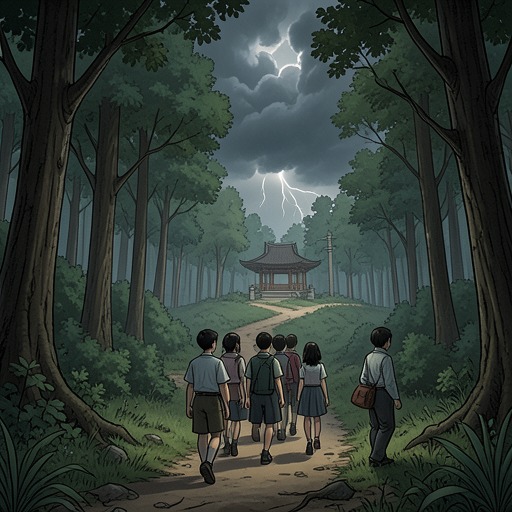
The consequences of that search extend beyond the classroom. The later account of the Sakitani Memorial Hall massacre establishes that all six victims died before the fire: Mr. Numata was stabbed in the neck with metal cooking skewers, four students died from repeated stabbing and cutting, and Akazawa died after her spine snapped in a fall from the second-floor balcony. Mieko Numata was found conclusively responsible for the deaths and for spreading kerosene to start the fire, but she died after biting through her tongue in an apparent suicide attempt before she could be surrendered to the police. Koichi’s passage through the disaster therefore ends not with a simple restoration of order, but with a world in which the visible catastrophe—the fire—had concealed a prior chain of killings.
Koichi’s importance lies in his refusal to let social unanimity substitute for truth. He is repeatedly told, directly or indirectly, that the class’s exceptional rules must be respected, yet his questions expose the human decisions beneath those rules: who is ignored, who is recorded as dead, who is permitted to speak, and who is authorized to decide that violence is the only remedy. His arc makes recognition inseparable from responsibility. To discover the hidden person is also to decide what must be done with that knowledge, and Koichi’s most consequential choices arise precisely where explanation can no longer protect him from action.