Sakuma
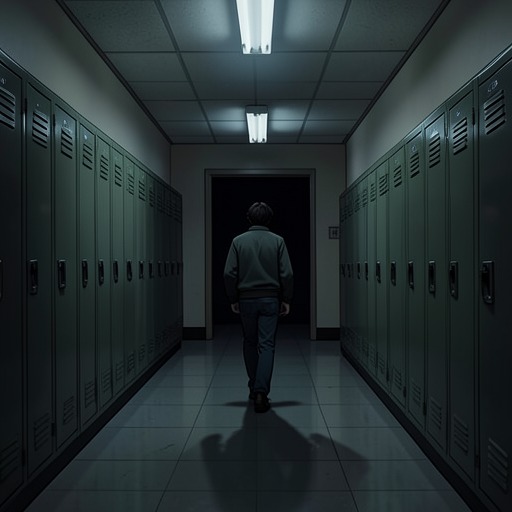
AnotherSakuma was a quiet, unobtrusive boy who belonged to Yomiyama North Middle School Third-Year Class 3 two years before Koichi Sakakibara’s year. He is not encountered directly in the main action; instead, his identity and fate are recovered through testimony that has survived the class’s distorted memories and records. That indirect presence is central to his significance: Sakuma is both a person who endured the class’s “not there” strategy and a nearly erased trace of the disaster that followed its failure.
Identity and Role
Sakuma served as the student designated to be “not there” in his class. The arrangement was intended to counter the extra person, or casualty, whose presence supposedly causes the recurring “disasters” in Third-Year Class 3. The evidence about Sakuma reaches Koichi and Mei Misaki through an interview with a former class member, who identifies him as the student made “not there” two years earlier and describes him as consistently quiet and unobtrusive.
His case belongs to the same system of manipulated recognition that affects the current class. Mr. Chibiki explains that, while the casualty is hidden in the class, records and memories are tampered with so extensively that contradictions become ordinary and the casualty’s identity remains unrecognized. Sakuma’s history is therefore not simply forgotten by chance. It has been absorbed into the phenomenon’s broader falsification of social reality, leaving later investigators dependent on fragments and uncertain recollection.
Abandonment of the Strategy
Sakuma abandoned his role shortly after the beginning of the second semester. The timing was decisive. According to the recovered account, the “disasters” began at the start of October, after he stopped being “not there.” The class’s decision had therefore failed to contain the phenomenon: once the assigned absence was broken, the danger was understood to have returned.
His withdrawal also exposes the coercive structure of the strategy. The class treated absence as a collective obligation, and its members were expected to preserve an artificial social arrangement rather than acknowledge an individual student normally. In Koichi’s year, the same logic leads the class to ignore both Mei and Koichi when increasing the number of students designated “not there” proves ineffective. Sakuma’s earlier experience provides the precedent behind that decision, but it also shows its cost: the strategy does not restore safety so much as place an unbearable burden on the person required to disappear.
Death and the 1996 Disasters
After the disasters began, people died in November and December. Sakuma then killed himself after New Year’s. Mei reports the sequence without embellishment, but the chronology gives his fate the force of a final entry in the class’s death pattern. Koichi speculates that Sakuma may himself have been the “death for January” in 1996, although the available account does not establish that point with certainty.
Sakuma’s suicide is consequently both a personal death and a continuation of the cycle that the class had tried to prevent. The attempt to designate one student as absent did not end the phenomenon; abandoning the role was followed by deaths, and the student associated with the failed arrangement became its last known casualty. His fate turns the class’s supposedly rational “decision” into a structure that produces isolation first and explanation only afterward.
Relation to the 1998 Class
Sakuma’s story shapes the decisions made by the 1998 Third-Year Class 3, even though most members do not consciously remember him. Mr. Chibiki is treated as safe because he has no direct connection to the class, allowing him to discuss its history with Mei and Koichi. His account makes the earlier case available to them, while the current students’ investigation confirms that the phenomenon can erase not only a casualty’s identity but also the memory of a student who occupied the opposing role.
The 1998 class repeats the same pattern of collective exclusion. The students try to increase the number of children regarded as “not there” to two, then abandon that attempt after it has no effect. After Mr. Kubodera’s death, the class gradually stops treating Mei as absent and begins addressing her as someone who is “there.” This reversal contrasts with Sakuma’s earlier trajectory: in his case, the withdrawal of the assigned absence is followed by the October disasters and a chain of deaths, whereas in the current year the strategy’s failure exposes its inadequacy before the class fully understands the truth.
Narrative Significance
Sakuma functions as a concealed historical double for the students confronting the 1998 disaster. His name surfaces only when Mei searches backward through damaged records and memories, and his quiet personality makes the tragedy more disturbing rather than less: the available account offers no dramatic explanation for why he was chosen or how he endured the role. He appears as an ordinary student converted by the class into an administrative absence.
His story also clarifies the social mechanics of the Yomiyama phenomenon. The class can declare someone “not there,” while the phenomenon can simultaneously erase the declaration’s history and corrupt the records that might expose it. Sakuma’s disappearance from collective memory is therefore part of the same machinery that conceals the extra person. His abandonment of the role, the deaths that followed, and his suicide reveal the limits of treating catastrophe as a problem of recognition alone. The class may alter whom it acknowledges, but the consequences remain embodied in people like Sakuma, whose existence survives only as a damaged recollection of an earlier disaster.