Mami Asakura
AnotherMami Asakura is the casualty of the 1996 third-year Class 3 disaster, a girl who had already died three years earlier yet was made to appear, to everyone around her, as an ordinary member of the class. Her case gives the phenomenon its most concrete and disturbing shape: the dead are not merely remembered incorrectly, but are temporarily restored to social existence while documents, memories, and the past itself are altered to accommodate them.
Identity and Original Death
Mami Asakura was originally a student in third-year Class 3 in 1993. The class list for that year records her name beside a red X and the notation “October 9—illness,” establishing that she died at fourteen during the disasters of 1993. Her death was therefore an ordinary fact within the historical record before the later phenomenon interfered with it. The same name nevertheless reappeared in the file associated with 1996, where it was identified as that year’s casualty.
The contradiction is precise rather than merely symbolic. Mami did not become a new living student after the 1993 disasters; she was the same fourteen-year-old girl who had already died. Yet in 1996 she was treated as though she were beginning her third year, and the class accepted that false age and status without recognizing anything wrong. Her presence thus crossed both chronological and institutional boundaries: she belonged to an earlier class, had already been marked dead, and still entered the later class as if she had always been entitled to be there.
The 1996 Casualty
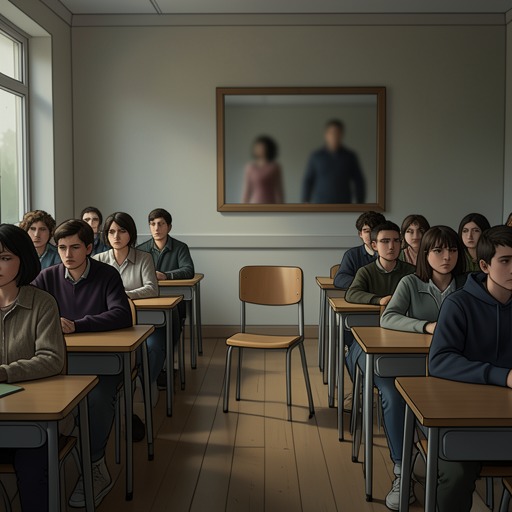
Mami was mixed into the class from the beginning of April through the graduation ceremony the following March. During that entire period, no one realized that she was an extra person who could not possibly have been present. The casualty was not concealed by a simple disguise or by deliberate cooperation among the students. Instead, the phenomenon supplied a complete false reality in which Mami’s attendance, relationships, and apparent educational history all seemed consistent.
The deception extended beyond the school register. Records, official documents, diaries, notes, photographs, videotapes, and computer data could all be tampered with or corrupted so that contradictions disappeared. Memories were altered by the same process. Even Tatsuji Chibiki, who served as an observer of the class and therefore might have been expected to notice an anomaly, had no suspicion that Mami was present. Her family, friends, teachers, and classmates had likewise forgotten that she had died.
The phenomenon also supplied Mami with a false continuity. Everyone believed that she was starting her third year, despite the fact that she had died at fourteen in October 1993 and was still fourteen when she appeared in 1996. The impossible details did not stand out because the phenomenon changed the surrounding past as well as the immediate present. It made the false reality feel complete, leaving no ordinary gap through which recognition could enter.
Restoration and Erasure
Mami’s presence lasted until the 1996 graduation ceremony. Once the casualty vanished, the records and memories returned to their proper condition. The class list no longer presented her as a current student, while the older 1993 record once again showed the red X and the notation identifying her death from illness. The restoration did not simply expose a hidden truth to everyone involved; it removed the false period from their experience.
Those who had been close to Mami lost their memories that she had ever appeared as the casualty. Her classmates and family therefore did not retain a conventional recollection of the year in which they had known her. The phenomenon corrected its contradiction by erasing the social consequences of her temporary return, leaving behind only the external testimony of records examined outside the altered period and the testimony of people capable of recognizing what had happened.
Mami’s case also demonstrates the cost of allowing the casualty to remain undiscovered. The person assigned to be “not there” in 1996 abandoned that role partway through the year. As a result, seven people linked to the class lost their lives. Mami herself was not the agent who caused those deaths, but her presence became the hidden condition around which the year’s disaster formed: the class could not identify the extra person, and the deaths continued until the year’s mechanism ran its course.
Place in the Phenomenon’s Logic
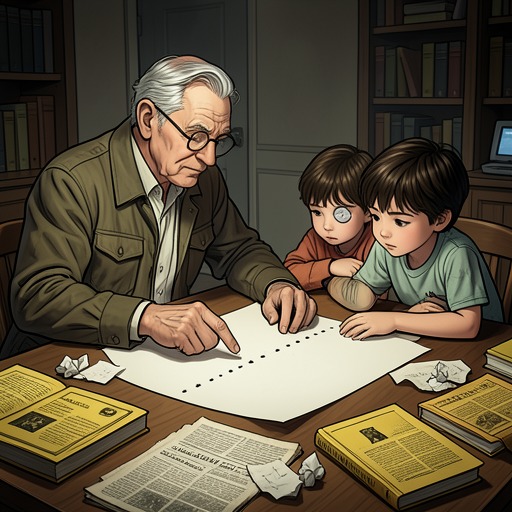
Mami Asakura is the clearest historical precedent for the danger faced by the current third-year Class 3. The class’s countermeasures depend on treating selected people as “not there,” and the students understand that a failure to identify the casualty can produce fatal consequences. Tatsuji Chibiki’s explanation of Mami’s year turns an abstract warning into a documented case: the name at the bottom of a binder page, the red X in the 1993 list, and the illness notation together reveal how the same person can occupy mutually exclusive positions in the school’s history.
Her example also explains why investigation is so difficult. While the phenomenon is active, searching more thoroughly does not necessarily uncover the truth, because every medium of verification may have been altered. The problem includes not only institutional records but also the memories of the people who might ordinarily correct them. The class’s reality is therefore governed by a temporary exception in which ordinary rules of identity, age, death, and evidence no longer hold.
Mami’s return is consequently both inclusion and exclusion. She is admitted into the class so completely that nobody questions her membership, yet she remains fundamentally outside the living order because her death has already occurred. When the phenomenon ends, that impossible inclusion is withdrawn, and even the people who loved or taught her are deprived of the memory that she came back. Her story gives the casualty its full meaning: the extra person is not merely someone hidden among the students, but a dead presence whose temporary recognition by the world threatens the lives of everyone connected to the class.