Grand Inquisitor of Portugal
CandideThe Grand Inquisitor of Portugal turns religious authority into personal power: he uses the threat of an auto-da-fé to secure a share in Cunegonde, then presides over a public ceremony that punishes people in the name of averting disaster. His arrival at her lodging ends in his death at Candide’s hand, making him a sharply concentrated example of the institutional violence that the tale sets against Pangloss’s optimism.
Office and Claim to Authority
Cunegonde recounts that the Grand Inquisitor first noticed her at Mass and summoned her to his palace for a private conversation. After hearing about her family, he argued that her rank made it beneath her to belong to Don Issachar, a Jewish court banker. His claim to moral and religious authority thus becomes a claim over her person, backed not by persuasion but by the power of his office.
When Don Issachar refused to give her up, the Grand Inquisitor threatened him with an auto-da-fé. The threat produced an agreement that the house and Cunegonde would be shared between the two men, with each assigned particular days of the week. Their arrangement even generated a dispute about whether Saturday night into Sunday belonged to the old law or the new. Cunegonde says she resisted both men; the account presents the agreement not as a resolution of her circumstances, but as a bargain imposed through competing claims of wealth and religious authority.
The Auto-da-fé in Lisbon
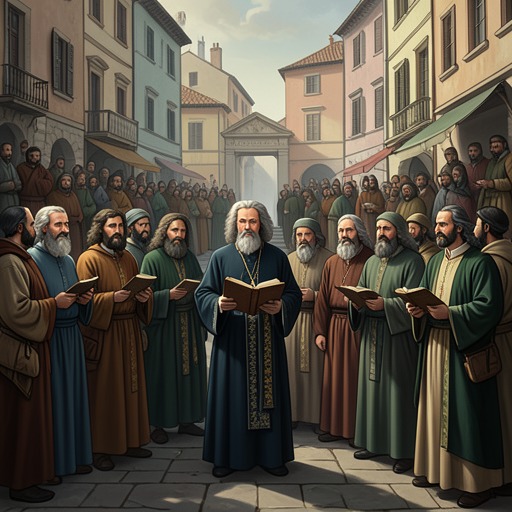
The Grand Inquisitor stages an auto-da-fé as a means both to intimidate Don Issachar and to avert earthquakes. Cunegonde is invited to the ceremony and given a good seat; refreshments are served to the ladies between Mass and the executions. The ceremony’s orderly public setting contrasts with the violence it authorizes, making the spectacle itself part of the tale’s satire of institutions that present punishment as a remedy for disaster.
At the ceremony, two Jews and a Biscayan are executed, and Pangloss is hanged. Candide, meanwhile, is punished with a hundred lashes. Cunegonde recognizes Pangloss and Candide among those being punished, and her account makes the consequences of the Grand Inquisitor’s authority personal: the philosopher who taught that everything was for the best and the man she loves are both caught in the same machinery of punishment.
The Encounter with Candide
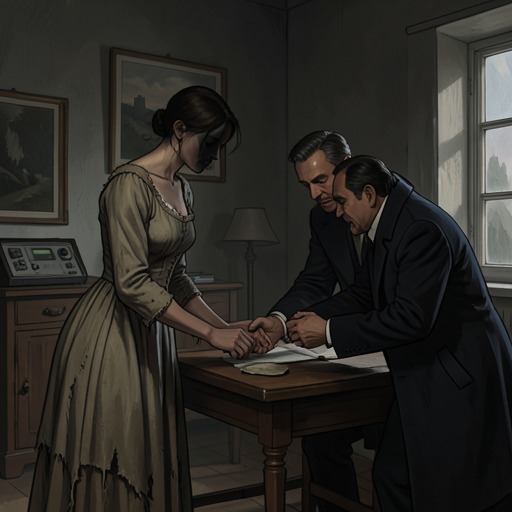
Later, at an hour after midnight on the beginning of Sunday, the Grand Inquisitor enters Cunegonde’s lodging. The timing follows the men’s unresolved dispute over who has a claim to Sunday. He finds Candide still bearing the punishment inflicted on him, with a sword in hand, Don Issachar dead, Cunegonde aghast, and the Old Woman offering counsel.
Candide fears that the Grand Inquisitor will summon help and have him—and perhaps Cunegonde—punished. He also holds the Inquisitor responsible for his whipping and sees him as a rival. Acting without delay, Candide kills him and casts him beside Don Issachar. The Inquisitor’s religious office does not protect him from the violence of the system he has wielded; instead, his arrival converts the earlier coercive bargain into the immediate cause of his death.
Narrative Function
The Grand Inquisitor appears through Cunegonde’s recollection and the fast-moving sequence around the auto-da-fé and its aftermath. The episode links grand claims about providence to concrete abuses: an earthquake is invoked to justify a public ritual, while the Inquisitor’s religious status helps him pursue private control. Against Pangloss’s doctrine that the world is arranged for the best, the ceremony offers a brutal counterexample, and Candide’s retaliatory killing shows how quickly institutional violence spills into personal violence.