Friar Giroflée
CandideFriar Giroflée is a Theatin encountered by Candide and Martin in Venice, where his robust appearance and intimate company initially make him seem contented. His account overturns that impression: forced into religious life at fifteen to benefit his elder brother, he resents the convent and finds little satisfaction in his work or relationships. His later return to the farm in misery gives the episode a second, sharper force, exposing how little money or apparent good fortune guarantees happiness.
Identity and Appearance
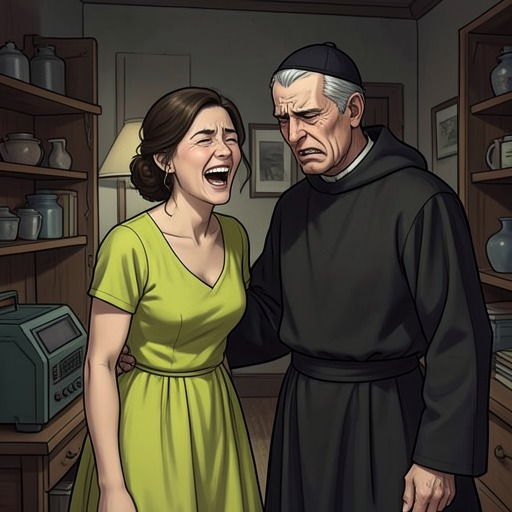
Candide first sees Friar Giroflée in St. Mark’s Piazza, holding a pretty young woman on his arm. The Theatin looks healthy and vigorous: his eyes sparkle, his bearing is assured, and he walks boldly. His companion sings, looks at him amorously, and sometimes pinches his cheeks. The scene offers Candide a picture of ease and mutual pleasure, seemingly unlike the misfortune he has encountered elsewhere.
Candide reads the pair’s appearance as evidence of their happiness. He tells Martin that the friar’s health and expression, together with his pretty companion and apparent satisfaction in the Theatine Order, make him seem enviably fortunate. The judgment is immediate but mistaken: the friar’s own account reveals that a lively exterior and an affectionate scene disclose little about the conditions of his life.
An Imposed Religious Vocation
Friar Giroflée says that his parents forced him to enter the Theatine Order at fifteen so that his elder brother’s fortune could be increased. He describes the habit as detestable and says he has often been tempted to set fire to the convent and become a Turk. His vocation is thus presented not as a chosen calling but as the consequence of family advantage, a decision made for him while still a child.
He depicts the convent as a place of jealousy, discord, and fury, and says his fellow religious are in the same unhappy condition. His small income offers no escape: he has preached a few bad sermons that brought in money, but the prior took half, while the remainder went to maintain his girls. When he returns to the monastery at night, he says, he feels ready to dash his head against the dormitory walls. His confession replaces the Piazza’s bright display with a life divided between a resented institution and an unstable private existence.
Paquette and the Failure of Appearance
The woman with the friar is Paquette. Her own account supplies a concrete measure of the insecurity behind their encounter: the previous day an officer robbed and beat her, while the next day she had to appear cheerful to please a friar. Candide no longer needs persuasion that Martin’s bleak assessment of earthly happiness may be right. The meal they share is entertaining, and the conversation becomes frank, but its cordiality does not amount to security or contentment.
The contrast is central to Friar Giroflée’s episode. Candide sees a healthy man and a pretty companion and infers happiness; the two accounts that follow disclose coercion, violence, and economic dependence. The encounter tests Candide’s tendency to treat visible comfort as proof that suffering has been escaped, and gives Martin’s skepticism new support without making the friar’s life a mere abstract argument.
Return in Misery
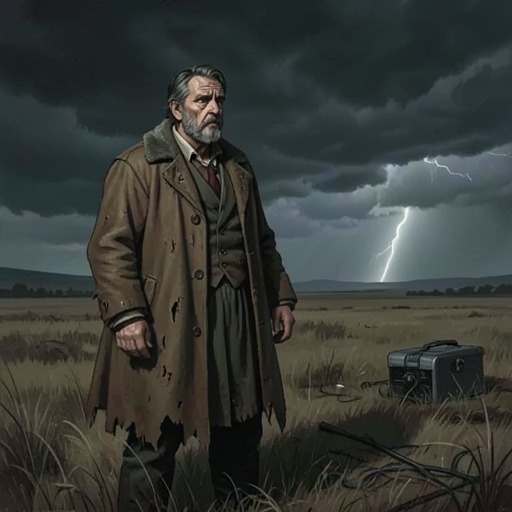
Friar Giroflée and Paquette later arrive at the farm in extreme misery. They have squandered three thousand piastres, parted, become reconciled, quarrelled again, been thrown into gaol, and escaped. Friar Giroflée has at length become a Turk; Paquette continues her trade wherever she goes, but makes nothing of it. The rapid sequence does not resolve their relationship into stable companionship: reconciliation is followed by renewed conflict, and escape from prison does not bring material security.
Martin points to their return as evidence that Candide’s gifts have failed to make them happier. Pangloss instead interprets Paquette’s arrival through Providence, then recalls that she cost him the tip of his nose, an eye, and an ear. The competing responses keep the episode within the book’s larger dispute over how suffering should be explained. For Friar Giroflée, the outcome is starkly practical: money has disappeared, his relationship with Paquette has remained unsettled, and his religious status has changed without the evidence offering any account of a happier life.
Narrative Role
Friar Giroflée’s brief, recurring appearance turns the book’s satire of facile optimism into a comparison of lived conditions. At first, Candide takes a cheerful-looking pair for proof that happiness exists beyond the unreachable El Dorado. The friar’s disclosure and later return undo that inference in stages: the religious habit conceals an imposed vocation, the apparent romance exists alongside Paquette’s exposure to violence, and a large sum of money is followed by renewed misery.
The episode also sharpens the contrast between Pangloss’s habit of preserving his claims and Martin’s insistence on suffering’s persistence. When Friar Giroflée and Paquette reappear, Pangloss invokes Providence even as their material circumstances contradict a simple reading of good fortune. Their arrival contributes to the movement toward the farm’s concluding emphasis on work: rather than supplying a philosophical explanation for their miseries, the narrative places them among the people whose circumstances make abstract assurances difficult to sustain.