The Jesuit Baron
CandideThe Jesuit Baron is Cunegonde’s brother, presumed dead after the Bulgarian attack on his family and later encountered by Candide as a Jesuit commander in Paraguay. His return overturns Candide’s expectations of who survived, but their tearful reunion gives way to a sharp dispute: the man who calls Candide his savior refuses to accept him as a suitable husband for his sister because of her noble ancestry.
Identity and Survival
The Jesuit Baron recounts that he saw his father and mother killed and his sister ravished during the Bulgarian assault. He, too, was taken for dead: placed with other slain members of the household in a hearse bound for a Jesuit chapel, he stirred when holy water fell into his eyes. A priest noticed the movement of his eyelids and felt his heartbeat. After receiving care, he recovered within three weeks. The family’s apparent destruction thus becomes the unlikely beginning of his new life within the religious order.
The Jesuit Baron says that, after he grew older, Father Didrie, the superior of the Jesuit house, gave him the habit of the order. He was later sent to Rome, where the Father-General was seeking young German Jesuits for service. The account ties his survival to a succession of institutional transfers: from the chapel where he was recognized as alive, to Rome, and then across the Atlantic to Paraguay.
Rank and Command in Paraguay
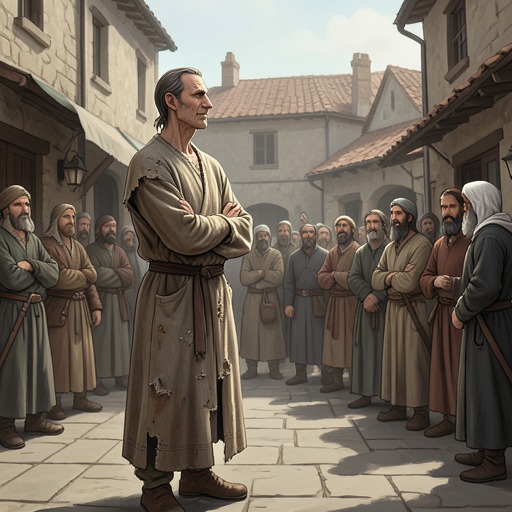
The Jesuit Baron explains that the rulers of Paraguay admitted as few Spanish Jesuits as possible, preferring Jesuits from other nations whom they considered more subordinate to their commands. He was sent to work there with a Pole and a Tyrolese. On arrival, he received both a sub-deaconship and a lieutenancy; by the time Candide meets him, he is a colonel as well as a priest. His dual religious and military offices make him a commander preparing to oppose the troops of the King of Spain. He expects the Jesuit forces to excommunicate and defeat them, and interprets Candide’s arrival as Providence sending assistance.
Reunion and Dispute over Cunegonde
When Candide recognizes him as Cunegonde’s brother and the son of the Baron of Thunder-ten-Tronckh, the two men draw back, embrace, and weep. The Jesuit Baron returns the embrace, thanks God and St. Ignatius, and calls Candide his brother and savior. Candide tells him that Cunegonde, whom he believes was killed, is alive and nearby with the Governor of Buenos Ayres. The revelation renews their tears, and the Jesuit Baron imagines entering the town together as conquerors to recover his sister.
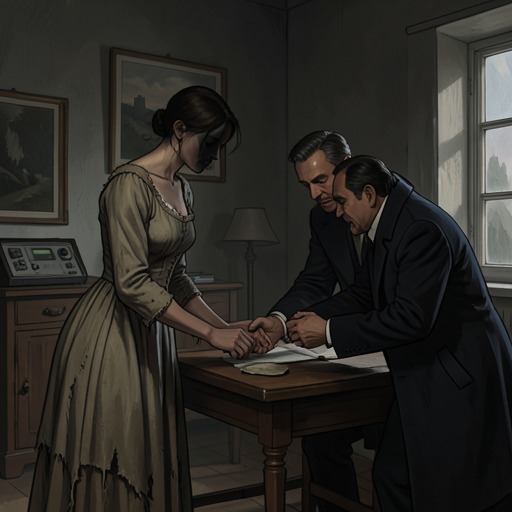
The reunion turns into confrontation when Candide says that he intends to marry Cunegonde and still hopes to do so. The Jesuit Baron rejects the proposal as insolent: Cunegonde has seventy-two quarterings, and he treats her lineage as grounds for refusing Candide. Candide counters that rank signifies nothing beside his claim that he rescued her from a Jew and an Inquisitor, that she owes him much, and that she wishes to marry him. He also invokes Pangloss’s teaching that all men are equal. The exchange sets Candide’s appeal to rescue, mutual obligation, and equality against the Jesuit Baron’s defense of hereditary status.
Narrative Role
The Jesuit Baron’s character is shaped by reversals. A survivor mistaken for a corpse becomes a priest and military colonel; a man who welcomes Candide as a savior then repudiates the marriage Candide seeks. His story also turns recognition into conflict: the shared grief of the reunion cannot overcome his insistence that noble ancestry determines who may marry his sister. The episode brings the question of Cunegonde’s recovery into the foreground while exposing the distance between the Jesuit Baron’s affectionate language toward Candide and his rigid judgment of Candide’s social standing.