Mynheer Vanderdendur
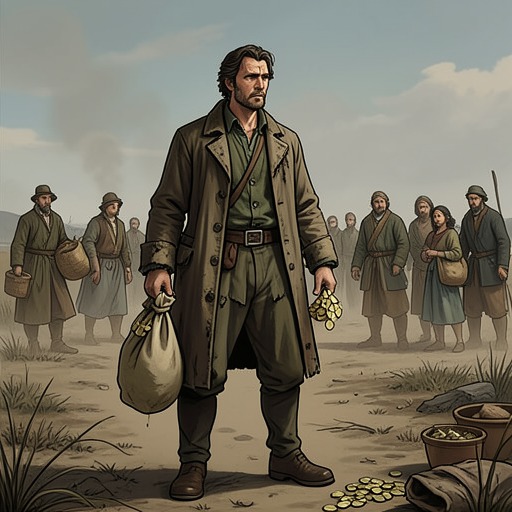
CandideMynheer Vanderdendur is a Dutch merchant and captain whose brief appearances expose the violence behind colonial commerce and turn Candide’s search for safe passage into another loss. First identified by an enslaved worker as his master, he later offers to carry Candide from Surinam to Venice; the voyage ends with Vanderdendur’s vessel sunk and its accumulated plunder lost beneath the sea.
Identity and Reputation
In Surinam, an enslaved man lying beside the road identifies himself as waiting for his master, Mynheer Vanderdendur, whom he calls a famous merchant. The man describes the severe punishments imposed on enslaved workers, including for mishaps during sugar production and attempts to escape. His account places Vanderdendur within a system in which commercial authority rests on coercion, while the comforts of European sugar are linked to the suffering of those forced to produce it.
The encounter gives Vanderdendur significance before he appears in person. Candide sees the worker’s condition and hears how slavery is defended through religious language even as it contradicts claims of common descent and kinship. The scene makes the merchant’s name a point of connection between Surinam’s plantation labor and the European market that profits from it.
The Passage Offered to Candide
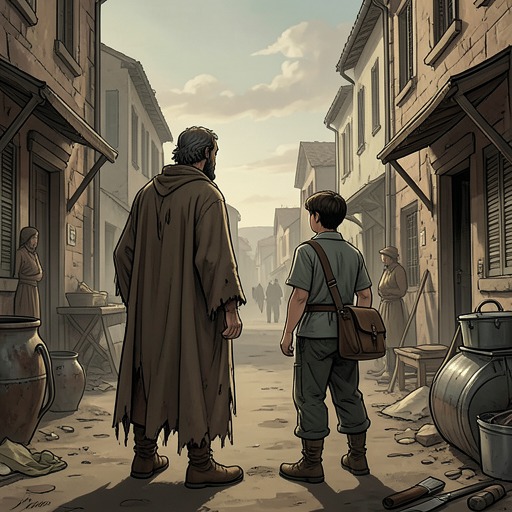
After Cacambo leaves to retrieve Cunegonde from Buenos Aires, Candide remains in Surinam with two surviving sheep, waiting for a ship to take him to Italy. He has hired servants and assembled provisions for the long voyage when Vanderdendur arrives with a large vessel and offers his services. Candide asks to be carried directly to Venice with his servants, baggage, and sheep; Vanderdendur quotes a price of ten thousand piastres, which Candide accepts without hesitation.
The offer appears to provide a practical route onward after Candide’s recent losses and separations. Instead, the captain’s commercial promise conceals a further betrayal: the vessel later identified as Vanderdendur’s is a Dutch pirate ship, and Candide recognizes its captain as the man who robbed him. The passage does not describe the mechanics of the robbery, but makes clear that the supposed carrier has taken Candide’s property rather than safely transporting it.
Shipwreck and Narrative Significance
A French captain identifies the victorious ship’s commander as a Spaniard and the defeated vessel as the Dutch pirate ship belonging to Vanderdendur. Vanderdendur dies in the encounter, and the immense plunder he had amassed sinks with him. Of Candide’s lost flock, only one sheep survives; Candide is more pleased to recover that animal than he had been distressed by the loss of the hundred sheep bearing El Dorado’s diamonds.
Candide interprets Vanderdendur’s death as an instance of crime receiving its due punishment. Martin immediately qualifies that conclusion: the other passengers have also perished, so the punishment of the guilty captain has brought destruction to people who did not share his guilt. Vanderdendur’s end therefore offers no simple assurance that justice governs events. His brief arc instead links exploitation, theft, and sudden reversal, while the contrast between his enormous lost hoard and the single recovered sheep exposes how little security wealth can provide.