Paquette
CandidePaquette is a former attendant to the Baroness of Thunder-ten-Tronckh whose sexual relationship with Pangloss links private desire to a spreading chain of illness and suffering. When she reappears alongside Friar Giroflée, her story turns again from intimacy to hardship: the pair spend their money, separate and reunite, quarrel, and are imprisoned before escaping. Her recurring misfortunes sharpen the novel’s contrast between Pangloss’s insistence on optimism and the unstable lives of the people around him.
Identity and Background
Paquette once waited on the Baroness of Thunder-ten-Tronckh. Pangloss recalls their intimacy as a source of pleasure that led to the torments of the infection with which Candide later sees him afflicted. He says the illness passed through a long chain of people before reaching him: Paquette had received it from a learned Grey Friar, who had traced it through a countess, a cavalry captain, a marchioness, a page, a Jesuit, and ultimately a companion of Christopher Columbus. Pangloss says he will pass the infection to no one because he is dying, and speculates that Paquette may already have died from it. Her later appearance overturns that speculation: she is alive and again encounters Candide.
Recognition and the Pangloss Connection
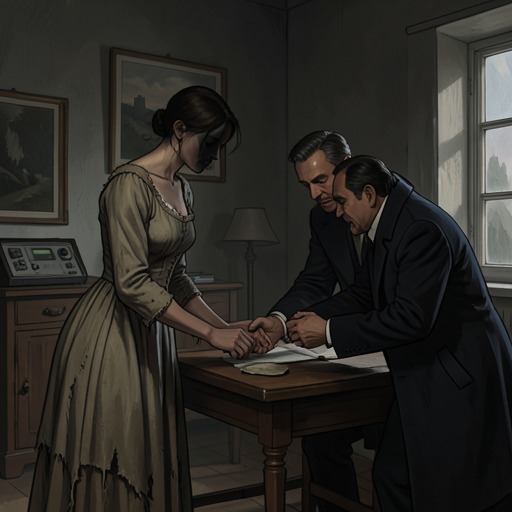
When Candide invites two strangers to dine, the girl blushes as she follows the Theatine to his lodging, looking at Candide with confusion and surprise and shedding a few tears. Once inside, she tells him that he has failed to recognize her. Candide has been absorbed in thoughts of Cunegonde and has not yet looked at her closely; her words bring her identity back to him. He then recognizes her as the woman he associates with Pangloss’s terrible physical condition. The scene makes Paquette’s return a personal reminder of a past episode that Candide had not connected to the people now before him.
Later Misfortunes
Paquette next appears at the farm with Friar Giroflée, and their circumstances confirm Martin’s bleak expectations. The pair have quickly squandered the three thousand piastres Candide gave them. They have parted, reconciled, quarrelled again, been thrown into gaol, and escaped; Friar Giroflée has eventually become a Turk. Paquette, meanwhile, continues her trade wherever she goes but makes no money from it. The sequence offers no stable recovery: money brings only brief possibility, while movement and renewed attachment fail to protect either companion from further reversals.
Narrative Role
Paquette’s appearances connect several strands of suffering through concrete consequences. Her past with Pangloss supplies part of the infection’s transmission history, while her return with Friar Giroflée shows that Candide’s generosity has not secured them lasting well-being. Pangloss responds to seeing her again by pointing to the loss of the tip of his nose, an eye, and an ear, and asking what kind of world could produce such a condition. His continued appeal to providence sits uneasily beside Paquette’s repeated poverty and trouble. Through her brief but recurring place in the story, the novel turns grand explanations of universal order against the material record of illness, lost money, confinement, and precarious work.