Edward Riggs
CurtainEdward Riggs is an agricultural labourer whose wife and her lodger, Ben Craig, are found shot with Riggs’s gun. Though he says he cannot remember the killings, he gives himself up; his case later serves as an example of a crime in which suspicion focused on one person and no real doubt about responsibility appeared to remain.
Identity and Circumstances
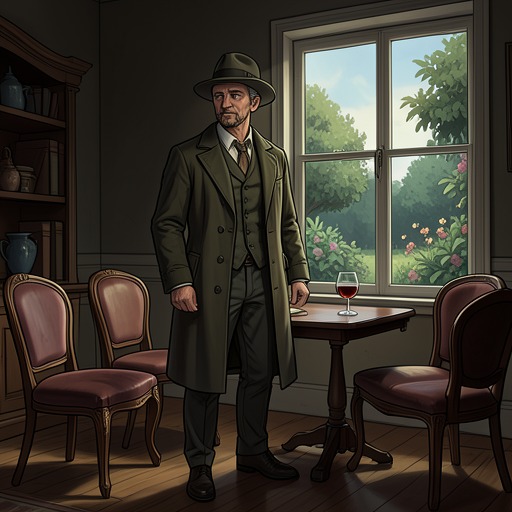
Riggs is identified as an agricultural labourer. The evidence gives his domestic circumstances only through the suspicion that preceded the shootings: he believed his wife was unfaithful with their lodger, Ben Craig. It does not supply further background about his life or the marriage.
The Shootings and Surrender
Riggs’s wife and Craig are found shot, and the shots are established as having come from Riggs’s gun. He surrenders to the police and says that he supposes he must have done it, but cannot remember doing so; he describes his mind as having gone blank. His account thus combines an apparent acceptance of responsibility with an asserted absence of memory.
Trial and Sentence
Riggs is sentenced to death, but the sentence is later commuted to penal servitude for life. The available account records the legal outcome without giving further details of the trial or the grounds for commutation.
Significance in the Later Reasoning
Hercule Poirot places the Riggs case among a group of earlier crimes in which one suspect stood out and no alternative culprit was seriously entertained. Riggs’s claim that he did not remember killing his wife and Craig does not, in that comparison, create doubt about who committed the shootings. Later, the narrator recalls the case while considering another shooting: the question there would be whether the gun had been fired accidentally or with criminal intent, a distinction that might never be resolved. Riggs’s case therefore anchors a recurring contrast between uncertainty about a perpetrator’s intention or memory and uncertainty about the perpetrator’s identity.