George Luttrell
CurtainGeorge Luttrell is a tall, mild-mannered older man whose anxious deference to his wife, Daisy, makes him a target for Stephen Norton’s calculated influence. Norton turns George’s embarrassment and resentment into a near-fatal crisis: George fires at Daisy, but does not kill her, and afterward the harmful influence is broken. The Luttrells’ renewed warmth shows that the incident has not erased their affection, while the explanation of Norton’s manipulation makes George’s moment of violence part of a larger pattern of induced crime.
Identity and Introduction
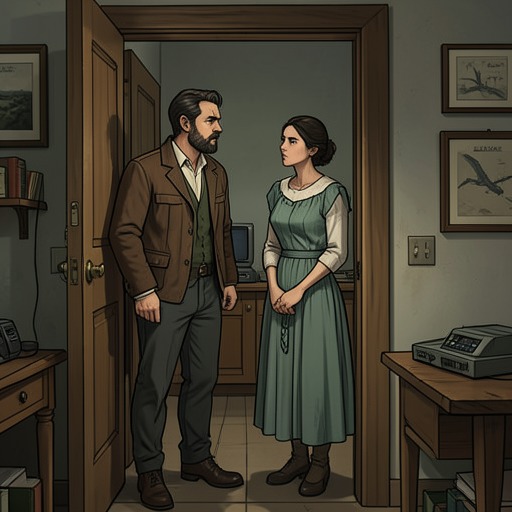
George is introduced as a very tall, attenuated old man with a cadaverous face, mild blue eyes, and a habit of tugging irresolutely at his small white moustache. His manner is vague and rather nervous. When he meets Arthur Hastings, he shakes hands and asks whether Hastings arrived by the five-forty train; Daisy sharply challenges the relevance of the question and directs George to show their guest to his room. The brief exchange establishes the imbalance between them: George is courteous and tentative, while Daisy assumes command of the conversation.
Marriage and Bridge
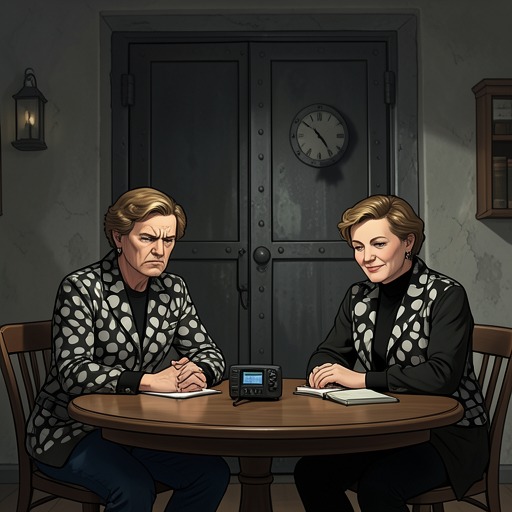
Bridge reveals how George’s nervousness intensifies in Daisy’s company. In games against Arthur Hastings and Norton, George is a moderate player who sometimes forgets and makes poor mistakes. When he partners or plays with Daisy, however, he makes errors repeatedly, playing about three times worse than usual because he is obviously nervous of her. Daisy is a very good player, but her competitive manner makes the game unpleasant: she takes advantages, applies rules selectively, and watches opponents’ hands. Her sharp criticism of George’s mistakes turns a pastime into a public display of their unequal relationship. Hastings finds the atmosphere uncomfortable, and he and Norton decline to play another rubber.
Daisy’s authority is not the whole story of their marriage. George is naturally open-handed and hospitable, and his instinct to offer drinks becomes important in Norton’s later design. The contrast between his ordinary generosity and his susceptibility to shame is central: the pressure does not arise from a sudden, independent plan to harm Daisy, but from Norton’s gradual exploitation of George’s distress at being belittled before others.
The Shooting Incident
Norton’s manipulation culminates in a scene arranged to make George feel exposed before the men gathered outside. When Norton says he is thirsty, George immediately offers drinks and goes inside to fetch them. Daisy enters, and the couple’s argument can be overheard. Norton then contributes to the embarrassment by speaking tactlessly about bridge and shooting accidents; he has also ensured that Sir William Boyd Carrington repeats a story about an Irish batman who shot his brother. These remarks bring together George’s humiliation as a player, the sense that others see him as submissive, and the suggestion of accidental shooting.
With the rook rifle in hand, George sees movement in the grass and fires. Daisy has been kneeling beside a small fruit tree, tying a stake to it, and the long grass and confusing light prevent him from seeing her clearly. She is struck in the shoulder. George drops the rifle and exclaims, “My God - it's Daisy.” His immediate recognition and alarm stand in sharp contrast to the apparent violence of the act. Norton’s scheme has pushed him to a breaking point, but, as the later account makes clear, George did not kill Daisy; Poirot believes that even as he fired, George instinctively missed because he wanted to miss.
Aftermath and Reconciliation
After the incident, the harmful spell is broken. Poirot interprets George’s response as evidence that, despite his resentment and humiliation, he still loves Daisy. That attachment becomes visible in the couple’s changed manner the following afternoon. Daisy is brought down to the verandah in good form, teasing George gently and without the earlier reserve of cutting criticism; George beams at her, appears years younger, and tugs less at his moustache. He suggests a game of bridge, and Daisy agrees to play one rubber, promising to behave herself while joking about how much pleasure she takes in badgering him. Their exchange recognizes the familiar source of tension without reproducing its earlier severity. Poirot is pleased to see them on friendly terms, and George’s renewed ease makes the reconciliation apparent.
Narrative Role and Significance
George’s story demonstrates the mechanism Poirot attributes to Norton: the instigator need not give a direct instruction, but can build pressure through insinuation, humiliation, and carefully arranged circumstances until another person supplies the decisive act. Norton’s influence on George begins before the shooting, in the repeated emphasis on his poor bridge play and his wife’s treatment of him, and reaches its climax through the overheard quarrel and talk of accidents. George’s failure to kill Daisy marks one of Norton’s attempts that did not quite succeed. His return to warmth with Daisy also prevents the episode from reducing him to the role of a would-be killer: the act emerges from a manipulated crisis, while his immediate horror and continuing affection reveal the limit Norton could not erase.