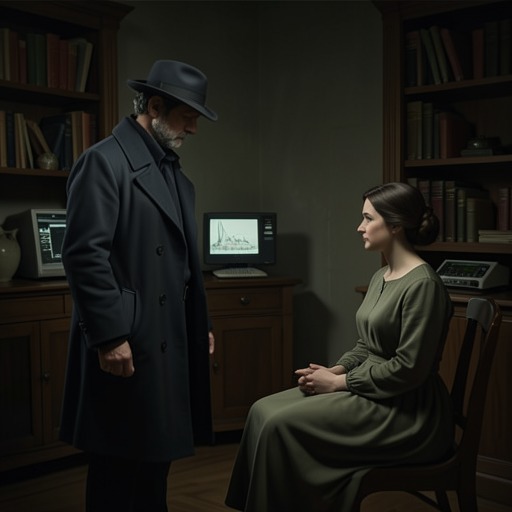
Mrs Etherington
CurtainMrs Etherington is remembered as the young, unhappy wife of Leonard Etherington, whose death by arsenic poisoning brought her to trial for murder. Though acquitted, she lived under the weight of public suspicion: the jury’s verdict did not settle the question in general opinion, and the people around her gradually turned cold.
Marriage and the poisoning
Leonard Etherington was described as unpleasant and sadistic, with habits of taking drugs and drinking. His wife was young and attractive, and desperately unhappy with him. He died apparently of food poisoning, but the doctor was dissatisfied with that explanation. An autopsy established arsenical poisoning.
A supply of weed killer found in the house had been ordered long before the death. Mrs Etherington had recently been close to a man in the Civil Service who was returning to India. The evidence suggested deep sympathy between them, but no actual infidelity. The man had since become engaged to a woman he had met on the voyage out. Whether the letter telling Mrs Etherington of that engagement reached her before or after her husband’s death remained uncertain; she said it arrived before.
Trial and acquittal
The case against Mrs Etherington was largely circumstantial. The prosecution had no other likely suspect, and an accident was considered highly unlikely. At trial, however, the unhappy circumstances of her marriage drew considerable sympathy. The judge’s summing-up emphasized that conviction required proof beyond any reasonable doubt, and Mrs Etherington was acquitted.
The acquittal did not produce a settled public belief in her innocence. The general opinion remained that she was guilty, despite the verdict. The distinction between a legal finding and social judgment shaped what followed: the trial ended, but suspicion continued to govern her standing among friends and acquaintances.
Life after the trial
Mrs Etherington’s life afterward was difficult because people cold-shouldered her. Two years after the trial, she died after taking an overdose of sleeping draught. At the inquest, the death was recorded as accidental. The account does not resolve whether that verdict reflected the circumstances conclusively; it records the official finding, set against the continuing uncertainty that had followed her acquittal.
Later recollection
In a later conversation, Stephen Norton described Etherington as a man who took drugs but, in his view, had overdone it. Norton called the case bad business and said Mrs Etherington had been lucky: without the jury’s sympathy, he suggested, she would have been hanged. His casual phrasing reduces the trial to a near escape, recalling how readily suspicion could be treated as a verdict even after the court had acquitted her.