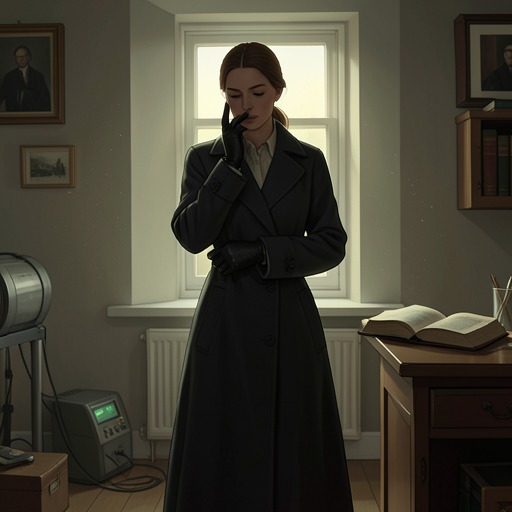
Matthew Litchfield
CurtainMatthew Litchfield is a deceased father whose tyranny shaped the family tragedy recalled in the novel: he kept his four daughters at home, denied them money and ordinary pleasures, and treated their household as a prison. His eldest daughter, Margaret, ultimately killed him and surrendered to the police, saying that she acted so her younger sisters could have lives of their own.
Identity and Family Life
Matthew Litchfield was an invalid and the father of four daughters. His wealth did not translate into freedom or comfort for them: he kept them short of money and barred them from a normal social life, including inviting friends to their home. Margaret later summarized their confinement as being like prisoners.
Death and Its Aftermath
One evening, as Matthew returned home, he was attacked outside the side door and killed by a blow to the head. After the police investigation, Margaret walked into a police station and confessed to his murder. She explained that she wanted her younger sisters to have a life of their own while there was still time. The account presents her confession as a deliberate act on their behalf, though it does not describe the circumstances of the killing beyond the fatal blow.
Matthew had left a large fortune, a contrast to the financial restrictions he had imposed on his daughters during his lifetime. Margaret was judged insane and committed to Broadmoor; she died shortly afterwards.
Recollection and Significance
Matthew is introduced through a case history read by Arthur Hastings and then recognized by Elizabeth Cole, who reveals that her real name is Litchfield. She explains that Cole was her mother's name and that she adopted it later. Her account confirms the family connection and gives the remembered case its personal force: the tyrant in the report was her father, and the daughter who confessed was her sister.
Matthew’s role in the story is defined less by a direct appearance than by the consequences of his rule over his household. The confinement he imposed becomes the motive Margaret gives for her crime, while Elizabeth’s disclosure shows that the old case remains bound to the living family members who survived it.