Daisy Luttrell
CurtainDaisy Luttrell is the elderly co-owner and business manager of Styles after she and her husband, George Luttrell, buy the estate and try to make it pay as a hotel. She presents herself as a welcoming hostess, but her business instincts, competitive habits, and harsh treatment of her husband reveal a harder side. Her changing public manner first makes the Luttrell marriage look like a private source of misery; later scenes complicate that impression, while the final account identifies Stephen Norton as the manipulator who turned the couple’s tensions into an opportunity for violence.
Identity and Introduction
When Arthur Hastings returns to Styles, he sees a woman stooping over a garden bed and briefly remembers Evelyn Howard; the contrast is immediate when the woman straightens and approaches. Daisy is frail and elderly, with curly white hair and pink cheeks. Her pale blue eyes seem at odds with her genial manner, which Hastings finds excessively effusive. She greets him as Captain Hastings, says she and her husband have heard a great deal about him, and introduces herself as Mrs Luttrell.
Her account of the couple’s circumstances is also a declaration of her character. They bought the place in what she calls a fit of madness and are trying to turn it into a paying concern. She says she never expected to become a hotelkeeper, but warns Hastings that she is businesslike and piles up the extras. He laughs with her, then suspects that the boast is quite literal: beneath her charming manner he sees a hard, flintlike quality. Her occasional Irish brogue is another part of the performance; the narration explicitly says she has no Irish blood and affects the accent.
The Hotelkeeper and Hostess
Daisy’s business priorities shape her view of the people staying at Styles. She praises Hastings’s daughter, Judith Hastings, as pretty and admired, but objects to Judith spending her time cutting up rabbits and working at a microscope instead of going to parties and dancing. Her remarks expose an old-fashioned conception of what a young woman ought to do, as well as her impatience with the scientific work taking place on the grounds.
When Hastings asks where Judith is, Daisy makes a face and says that the young woman is shut away in the studio at the bottom of the garden. Dr John Franklin rents the studio and has fitted it up with hutches of guinea pigs, mice, and rabbits. Daisy says she is unsure she likes all this science and turns the conversation to the arrival of her husband. Her dismissive description of Judith’s work and the animals contrasts with the practical, revenue-minded attention she gives to the hotel itself.
Marriage, Cards, and Public Temper
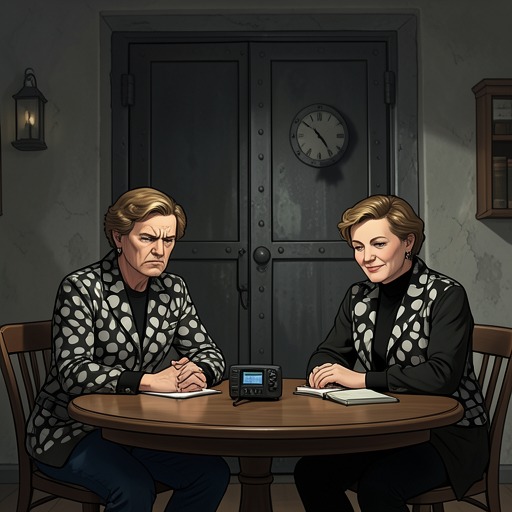
Daisy’s conduct at cards makes her businesslike nature more openly adversarial. In a game with Arthur Hastings and Stephen Norton against the Luttrells, she is displeased that Norton is paired with Hastings. Hastings later understands why playing with her husband is so uncomfortable: George is a moderate but forgetful player, and his mistakes multiply when Daisy is his partner because he is nervous of her. Daisy, by contrast, is a very good player. She takes every advantage, ignores rules when an opponent does not know them, enforces them when they benefit her, and is adept at glancing at an opponent’s hand. The narrator concludes that she plays to win.
As the game continues, her self-restraint gives way. Her Irish brogue and charm disappear, and she criticizes George for each mistake. Hastings and Norton are uncomfortable, and they decline to play another round when the game ends. The scene establishes a repeated imbalance in their public relationship: George’s uncertainty grows under Daisy’s criticism, while her competence at the table is joined to a readiness to use every advantage available.
A later exchange, overheard from the terrace outside the dining-room window, shows the same conflict through the couple’s argument about a bottle. George opens a cupboard and takes out a bottle; Daisy demands to know what he is doing. When he apparently intends to offer drinks to people outside, she objects that the drinks must be paid for if the hotel is to make money. She tells him he would be bankrupt without her, says she has to look after him like a child, and demands the bottle. Her words present her as both the household’s financial authority and the person who treats George as incapable of managing himself.
Crisis and Change in Manner
After a serious incident leaves Daisy under medical care, Nurse Craven tells Hastings that the old lady is conscious and worrying about her husband. Daisy wants to see him, but the nurse does not want to leave her patient. Hastings volunteers to find George. The request gives a different measure of Daisy’s attachment to her husband: even while recovering, her immediate concern is where he is.
The following afternoon, Daisy is brought down and sits on the verandah. The change in atmosphere is striking. She is in excellent form, with less gush than usual and no hint of her earlier sharpness. She teases George gently and affectionately, and he beams at her. Poirot, also wheeled outside, is in good spirits; Hastings observes that George looks years younger, seems less hesitant, and tugs less at his moustache. George even proposes a game of bridge.
Daisy says that she misses bridge and agrees to play one rubber, promising to behave and not criticize George. When he protests that he is a shocking player, she admits that she takes pleasure in badgering him about it. The exchange makes the pair laugh. Daisy then says she knows her faults but will not give them up at her age, adding that George will have to put up with her. George looks at her with evident affection. The scene does not erase the earlier evidence of their strain; instead, it reveals a mutually familiar intimacy beneath the public quarrels, and a temporary gentleness that Hastings finds a pleasure to witness.
The Luttrells in Norton’s Scheme
In the final explanation, Poirot connects Daisy and George’s relationship to Stephen Norton’s method of exploiting other people’s vulnerabilities. Norton first tries to influence John Franklin but fails: Franklin is described as resistant to outside pressure, certain of his own feelings, and absorbed in his work. Norton succeeds more readily with Judith Hastings, using the idea of useless lives while concealing the personal desires that make the argument potent for her.
Norton also finds an opening in the Luttrell marriage. Poirot directs Hastings back to the first evening he played bridge, recalling Norton’s remarks afterward, spoken loudly enough for George to hear. Norton intended George to hear them and repeatedly emphasized the point. The final account says that this effort culminated in success: the groundwork was an increasing sense of burden, shame at the figure George cut in front of other men, and deepening resentment toward his wife. Thus Daisy’s sharpness and George’s nervousness are not only domestic details; they become conditions Norton can use. The contrast between the couple’s earlier conflict and their affectionate afternoon on the verandah gives their relationship more than one register, while the revelation of Norton’s intervention places the marriage’s deterioration within the wider pattern of his deliberate psychological influence.