Georges
CurtainGeorges, Hercule Poirot’s former valet, is a practical, literal-minded observer whose small part in the final account exposes the care behind Poirot’s supposed helplessness. By confirming that Poirot sent him away rather than simply losing his services, Georges helps reveal why Poirot needed Arthur Hastings at Styles: unlike Georges, Hastings accepted the story that Poirot could no longer walk.
Identity and Background
Georges had served Poirot for many years and was competent and matter-of-fact. The account emphasizes that he had “absolutely no imagination”: he took what he saw and heard at face value and stated things literally. That quality makes him both an effective valet and an unusually reliable witness to the practical details of Poirot’s life.
At the time of the final events, Georges is in Eastbourne caring for his elderly father. Hastings travels there to see him and tell him of Poirot’s death. Georges is distressed and grieved, though he nearly conceals his feelings. His restrained manner is consistent with the practical reserve that Hastings associates with him, but the visit also shows the depth of the long service relationship: Poirot’s death is not merely news about a former employer.
Departure from Poirot’s Service
Hastings initially understands that Georges had left to look after his father. Georges corrects the impression: he had not wished to leave, and Poirot sent him away. He was not discharged; the understanding was that he would return to Poirot’s service later. Poirot also arranged suitable remuneration for Georges while he stayed with his father.
The distinction matters. Georges’s absence was not a casual consequence of family duty or a breakdown in the relationship. Poirot deliberately organized it, while preserving the possibility of Georges’s return and providing for him during the separation. Georges had not considered it his place to question the decision. He accepted that Poirot had his own ideas and remembered him as a clever and much-respected gentleman.
Knowledge of Poirot’s Appearance
In conversation with Hastings, Georges recalls Poirot’s fastidiousness about clothes, including garments that seemed foreign and fancy to an English observer. He also speaks of Poirot’s hair and moustache, describing the moustache as carefully tended and not especially fashionable, yet well suited to its owner. These details show how close attention to appearance belonged to Georges’s work as a valet: he noticed the ordinary habits Hastings, despite his intimacy with Poirot, had not fully understood.
That difference becomes explicit when Hastings disputes Georges’s description of the moustache. Hastings remembers it as so black and unnatural that it looked like a wig. Georges apologetically confirms that it was one: Poirot’s own hair had been coming out considerably, so he had taken to wearing a wig. Hastings recognizes the unsettling implication—that a valet could know more about a man’s daily physical presentation than his closest friend did. The anecdote turns an apparently trivial matter of grooming into evidence of how much Poirot’s carefully managed appearance could conceal.
Role in Poirot’s Deception
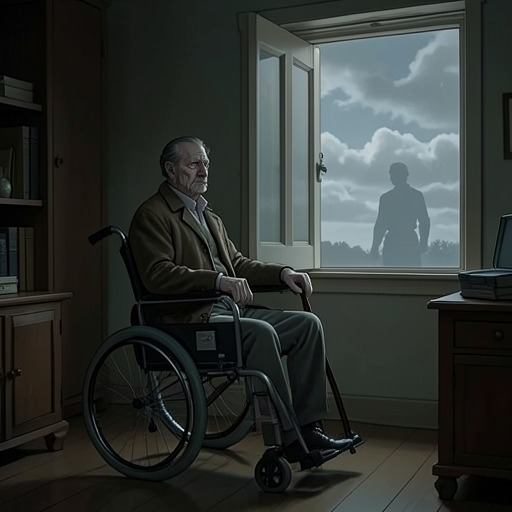
Georges’s most consequential importance becomes clear in Poirot’s explanation to Hastings. Poirot had sent him away because Georges was extremely intelligent about what he observed and would have recognized that Poirot was pretending to have lost the use of his limbs. Poirot needed someone at Styles who would accept his statements without question; Hastings believed that Poirot had returned from Egypt in worse condition, although Poirot says he had actually returned much better.
Poirot therefore replaced Georges with Curtiss, whom he describes as less experienced and clearly less intelligent. He also avoided seeing a doctor despite his supposed physical decline, even though he had always been careful about his health. Taken together, these circumstances make Georges’s removal part of the design that sustained the deception. Poirot was not helpless: he could walk, though with a limp. Georges’s literal attention would have threatened the disguise, while Hastings’s trust made him useful to it.
Narrative Significance
Georges appears only briefly in Hastings’s account, but his combination of loyalty, literalness, and perceptiveness gives his scene a decisive structural role. The reader first encounters him through a visit prompted by grief and a conversation about Poirot’s clothes; only later does Poirot explain why the valet had been sent away. The ordinary recollection of a wig thus gains the weight of a clue, and the earlier fact of Georges’s departure becomes legible as deliberate concealment.
The contrast is not simply between an intelligent servant and a trusting friend. Georges is observant about what is physically before him, while Hastings is willing to accept Poirot’s account without testing it. Poirot’s plan depends on that difference. Georges’s absence makes the performance possible, and his recollections afterward help Hastings understand how thoroughly Poirot controlled both his appearance and the people allowed to observe him.