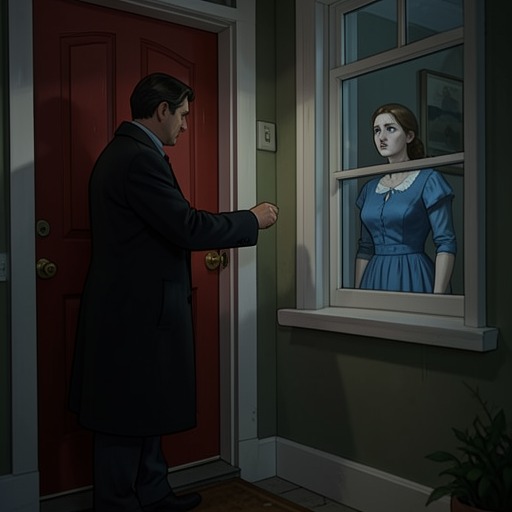
Billy Deener
HomunculusBilly Deener is a hired operative of Kelso Drake whose pursuit of the Keeble box repeatedly turns him into a direct threat to Langdon St. Ives and the people around him. Recognizable by his chimney-pipe hat, Deener moves through the story as both a practical criminal and a disruptive force: he attacks Bill Kraken, enters the silo to search for the box, abducts Dorothy Keeble, and ultimately dies during the struggle on Hampstead Heath.
Identity and First Identification
Deener first enters the investigation through Bill Kraken, who identifies him as the man who broke in at the window. When Langdon St. Ives and William Keeble ask what the name means, Kraken explains that Deener works for Drake and that he once did so himself. His warning is blunt: they should keep their distance. Kraken gives no fuller account of his former employment, but his recognition makes Deener an early link between the attempted break-in and Drake’s activities.
The connection becomes concrete when Deener finds Kraken in a lodging house. Kraken recognizes the man under the chimney-pipe hat, and Deener attacks him before drawing a pistol. The episode establishes a pattern that recurs throughout Deener’s appearances: he is willing to use force against anyone who might obstruct his pursuit, while the box remains the prize connecting him to Drake. Kraken later tells Langdon St. Ives that Deener took the box from him at gunpoint, confirming that the earlier encounter was part of an ongoing contest over its possession.
Deener’s hat is more than a passing disguise. It marks him across separate scenes, allowing characters and readers to identify the same operative as the action moves from London to Harrogate and back. At St. James’ Square, he waits in an alley with a bandage around his forehead and the hat perched on top. Later, during the rescue at Kelso Drake’s Wardour Street house, the same recognizable figure appears among the attackers. The repeated visual marker gives continuity to a character whose affiliations and objectives are clearer than any personal history supplied about him.
A Hireling in Pursuit of the Box
At Harrogate, Deener turns an unrelated pursuit into an opportunity. He watches a bandaged figure flee while a rifle-carrying man emerges from a house and fires after him. Deener has no clear identification of the fugitive, but he recognizes that the commotion has drawn attention away from the silo. He uses that diversion to enter the building, where the spacecraft is stored, and climb toward its cabin.
His immediate purpose is to find the box for Drake. Deener also considers the craft itself something worth damaging, and thinks of the people associated with it as enemies. Once inside, he opens the hatch and lights the cabin with matches and gaslamps. The setting presents a sharp contrast between his ordinary criminal objective and the unfamiliar machinery and plants inside the spacecraft: he does not understand the craft, but he is prepared to interfere with it. He finds a Keeble box fixed to the cabin wall, bringing his search directly into contact with the strange technology surrounding it.
The box remains the consistent object of his pursuit, but Deener’s conduct is not limited to quiet theft. His earlier assault on Kraken and his decision to enter the silo show that he combines opportunism with open aggression. At Harrogate he takes advantage of other people’s distraction; later, in London, he attacks a couple in the street and carries the conflict into the underground passages beneath the city. His role is therefore not simply to retrieve an object for Drake, but to keep the struggle over it active and dangerous.
The Abduction at St. James’ Square
At St. James’ Square, Deener waits in a foggy alley for a girl whose schedule he has been observing. He is under pressure because Drake has returned from Harrogate without the box, and Deener believes time is running short. When Dorothy Keeble appears with Jack Owlesby, Deener recognizes the box Jack is carrying. The sight recalls the earlier bandaged figure who had taken it from him, and he acts before the couple can leave.
Deener attacks Jack and seizes Dorothy, but the box lies on the ground beside them. Rather than continue the abduction without it, he breaks away from Dorothy long enough to take the box. This choice exposes the competing priorities of the moment: Dorothy is the intended captive, but recovering the object Drake wants is also essential to Deener’s task. He escapes with an accomplice through a cellar opening into the Kermit Street sewer, using the fog and the hidden passage to evade the crowd gathering at the alley mouth.
The route through the sewer is a practical extension of Deener’s criminal methods. The damaged cellar wall opens onto a lower, concealed passage, and he and his accomplice make their way over planks through the sewer toward Drake’s Wardour Street house. The route links the public assault to the guarded destination of the captive and the box. It also helps explain why an apparent search of the alley would not reveal where the abductors had gone: the escape depends on a passage beneath the street rather than an ordinary exit.
Kraken later supplies Langdon St. Ives with the other side of this theft. He admits that he had possessed the box, but handed it over when Deener confronted him with a pistol. Kraken says he had seen Deener before and was unwilling to risk another encounter. His account confirms Deener’s effectiveness as an enforcer, while also showing that the box changes hands through intimidation as well as stealth. The object’s passage among several characters repeatedly draws Deener back into the action.
The Wardour Street Raid
During the raid on Kelso Drake’s Wardour Street house, Deener appears among the men confronting Langdon St. Ives and William Keeble. The two rescuers are already trying to leave after reaching Dorothy, when they see Deener coming up the stairs with a carving knife. His presence turns their escape into a renewed confrontation. They use a heavy Jacobean trestle bench to block and disrupt the attackers, buying themselves room to continue upward.
Winnifred Keeble meets them on the stairs with Dorothy and a revolver. She warns Deener that she has the weapon, but he continues toward them. Winnifred fires several shots, and Deener falls back down the stairs before escaping toward the kitchen and out through the back door. His retreat does not end Drake’s effort to recover the boxes: shortly afterward, Drake says that Deener has taken the other box. That report places Deener’s theft within the wider confusion of the raid and suggests that he has again secured an object Drake wants even as the rescue breaks the immediate control of the house.
These scenes show Deener operating as part of Drake’s criminal network without making him a passive subordinate. Drake sets the purpose of the pursuit, but Deener acts independently when circumstances change: he exploits the diversion at Harrogate, seizes an opportunity at St. James’ Square, and escapes from the Wardour Street house when the rescue party gains the advantage. His repeated return to the box supplies a practical through-line amid a plot crowded with competing pursuers.
Death on Hampstead Heath
Deener’s final appearance comes on Hampstead Heath, where Langdon St. Ives has emerged from the spacecraft as a crowd gathers around the returning airship. Deener waits beneath an oak beside an empty horse and wagon and fires at St. Ives, using the commotion to conceal an attempted murder. St. Ives takes cover behind the craft and tries to draw Deener’s fire away from the assembled people. The scene makes Deener’s violence an immediate threat not only to his adversary but to anyone caught in the public spectacle.
Willis Pule intervenes from a tree, striking Deener with a cricket bat and knocking him down. Pule then continues the attack, but turns his attention to St. Ives when the latter approaches. The intervention is therefore no rescue born of loyalty: Pule has his own intention to kill St. Ives. In the confusion, he takes a Keeble box from Deener’s wagon and runs off with it, speaking incoherently. St. Ives discovers that Deener is dead, closing the career of a criminal whose pursuit of the box has repeatedly carried violence from private rooms and hidden passages into public spaces.
Deener’s narrative function rests on repetition and interruption. The chimney-pipe hat makes him recognizable; the box gives his appearances a continuing objective; and each apparent escape allows the threat to recur in a new setting. His end comes not through Drake’s orders or St. Ives’s intervention, but through Pule’s independent violence. Even then, the box changes hands again, so Deener’s death ends his part in the chase without settling the contest that defined it.